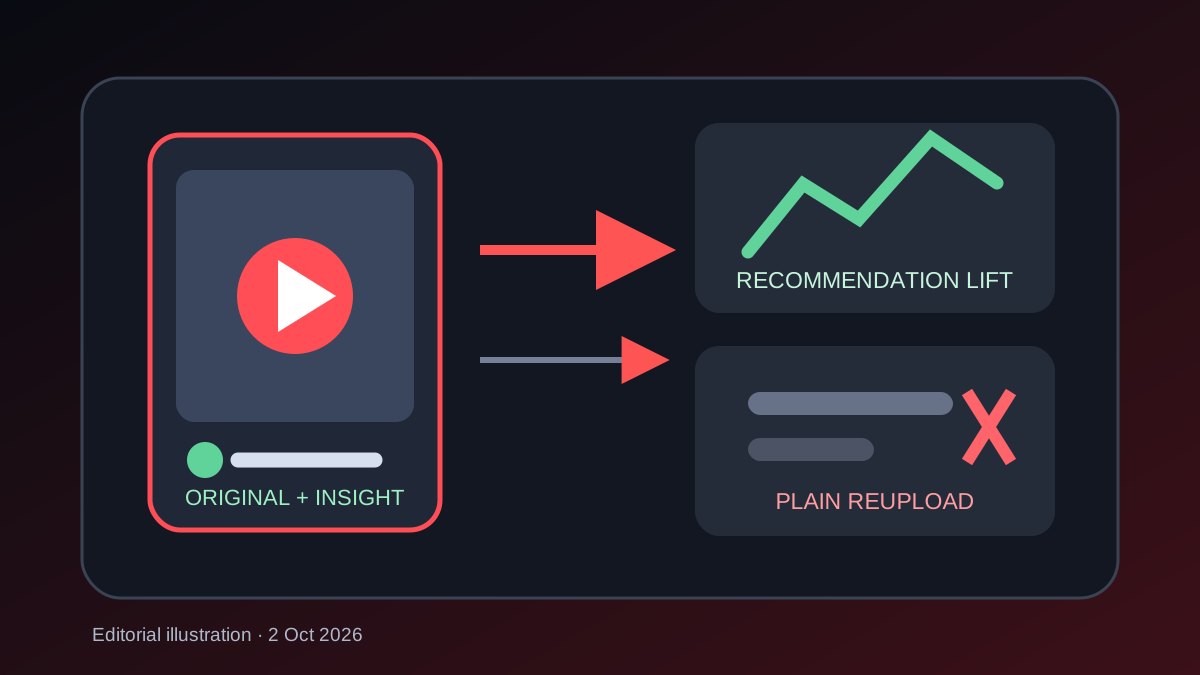
YouTube announced on 1 October 2026 that its Shorts recommendation systems would further prioritize original content and reduce the reach of videos re-uploaded from other creators without meaningful additions. The official YouTube notice says quotation and reuse remain possible when a publisher contributes original commentary, educational value, distinctive editing or storytelling. The change is therefore not a ban on references or remixes; it is a distribution penalty for accounts whose main proposition is duplication.
What the ranking change is trying to solve
Short-video feeds can fill quickly with the same successful clip copied across multiple accounts. That may produce views for aggregators while weakening the incentive for the person who researched, filmed or first explained the idea. YouTube is treating originality as a recommendation-quality signal: the platform wants the source or the version that adds a useful interpretation to have the better chance of reaching viewers.
For marketers, “original” should not be reduced to owning the camera file. A brand can film a unique video that says nothing distinctive, while an expert can quote a public clip and add an analysis viewers could not obtain from the original. The practical test is whether the new Short changes the viewer’s understanding through evidence, experience, commentary, demonstration or a clearly authored narrative.
Who wins and who carries more risk
Expert creators, educators and brands with access to genuine people, products and processes stand to benefit. Accounts built around compilations, lightly cropped videos, translated reposts without context, or automated clip harvesting carry greater distribution risk. Rights remain a separate issue: algorithmic eligibility does not grant permission to reuse copyrighted material.
Healthcare brands have a useful advantage because clinicians can explain mechanisms, correct misconceptions and demonstrate non-patient-identifiable processes. They also face a higher verification burden. A confident original opinion is still harmful if it overstates treatment outcomes or turns general education into personal diagnosis.
A four-week original-content test
Choose one audience problem and produce 12 Shorts in three formats: direct expert explanation, demonstration with narration, and evidence-led reaction to an existing claim. Give every video a specific opening promise and one next action. Record the three-second hold rate, average percentage viewed, rewatches, saves, qualified messages and completed bookings. Tag the source format in analytics so the team can see whether originality improves business outcomes rather than only reach.
Do not delete older repost-heavy videos merely because the policy changed. First identify which accounts and formats depend on them, secure reuse rights, and rebuild the strongest topics with original footage and a defensible viewpoint.
Karim’s strategic takeaway
Treat the update as a reason to build an owned knowledge library. Film clinicians, operators and strategists answering questions only they can answer, then adapt that primary material across platforms. The defensible asset is not a trending clip; it is a repeatable point of view connected to measurable customer action.
Comments
No published comments yet.