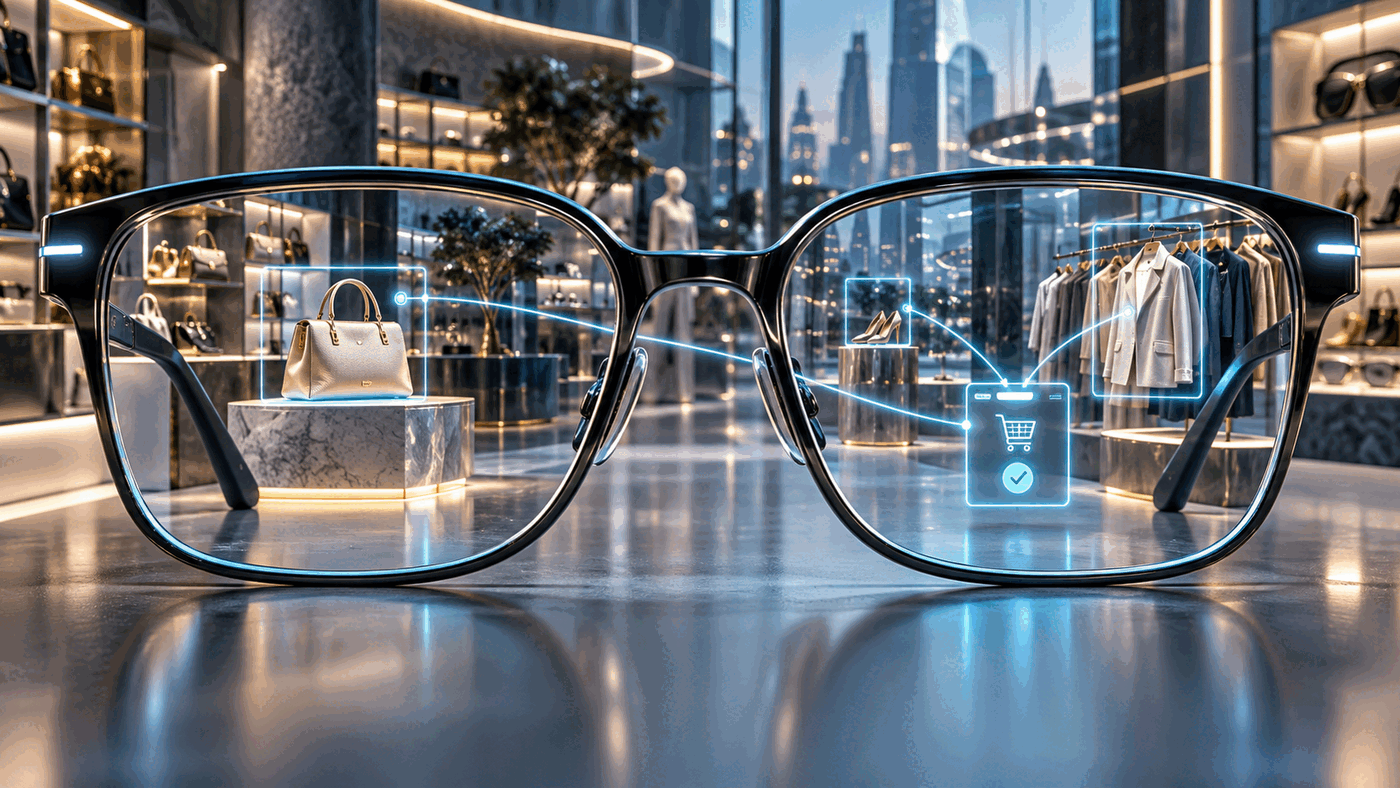
Meta is extending Muse, its personal AI agent, toward AI glasses. The concept is that a person can ask about what they are looking at and move from recognition to an action without opening a conventional search page. Meta also announced connectors for services including Shopify, PayPal, Shop Pay, Sephora, Ulta, Walmart, Best Buy, Notion and GitHub.
For commerce, this shifts the interface from typing a query to interpreting the physical moment. A product, sign, venue or object can become the input. The opportunity is significant, but the rollout is limited and evolving. Reuters also reported that some concierge-style interactions were being tested with human support, which means marketers should distinguish a polished demonstration from a fully autonomous product.
Sources: Meta Connect 2026 announcement and Reuters reporting on Muse testing.
The new visibility requirement
Brands will need accurate, machine-readable product and service information: availability, location, price, eligibility, policies and proof. An agent cannot recommend confidently when business data is fragmented or contradictory. Privacy is equally important because a glasses-based agent may combine visual context, location and personal history.
Karim strategic takeaway
Prepare for agent-led discovery by cleaning service pages, structured data, inventories and frequently asked questions in both Arabic and English. For healthcare, keep diagnosis and individualized treatment outside automated commerce flows; use the agent to explain services, verify practical details and hand the user to a qualified human at the right moment.
Comments
No published comments yet.