Meta announced the Meta Enterprise Platform on 28 September 2026, presenting a business-oriented stack that includes its Muse models, Muse API, Muse Code and Meta Business Agent. The announcement signals an ambition to provide more than ad distribution: Meta wants a place in the systems that answer customers and carry work forward.
Why this matters to marketers
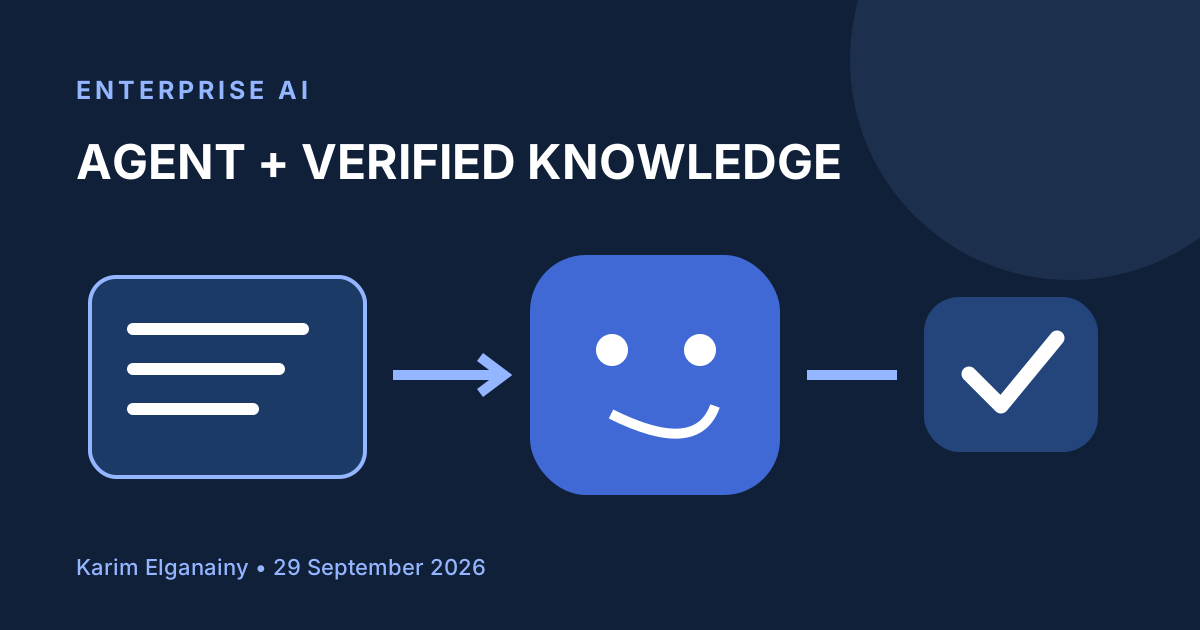
An agent can only answer as reliably as the information and permissions behind it. Product descriptions, prices, availability, returns, booking rules and escalation routes become marketing infrastructure when conversations influence purchase decisions. A polished ad may attract a prospect, but a wrong answer in chat can lose the conversion or damage trust.
Businesses should separate verified knowledge from generated wording, record when an agent acts, and send exceptions to a person. The platform announcement does not establish that every feature is available in every country or suited to every regulated workflow; procurement should verify availability, data handling and contractual controls.
GCC relevance
For Gulf brands, bilingual service accuracy is a practical differentiator. Arabic dialects, local offers, WhatsApp-style journeys and branch-specific availability need testing with real customer questions, not only English demonstrations.
Karim’s strategic takeaway
Before choosing an agent vendor, build a small approved knowledge base for one clinic or service: hours, prices, eligibility, preparation and booking rules. Test 100 anonymized questions in Arabic and English, score factual accuracy and handoff quality, and forbid medical diagnosis or treatment decisions without a clinician. Compare completed bookings and staff effort, not chatbot conversation counts.
Comments
No published comments yet.