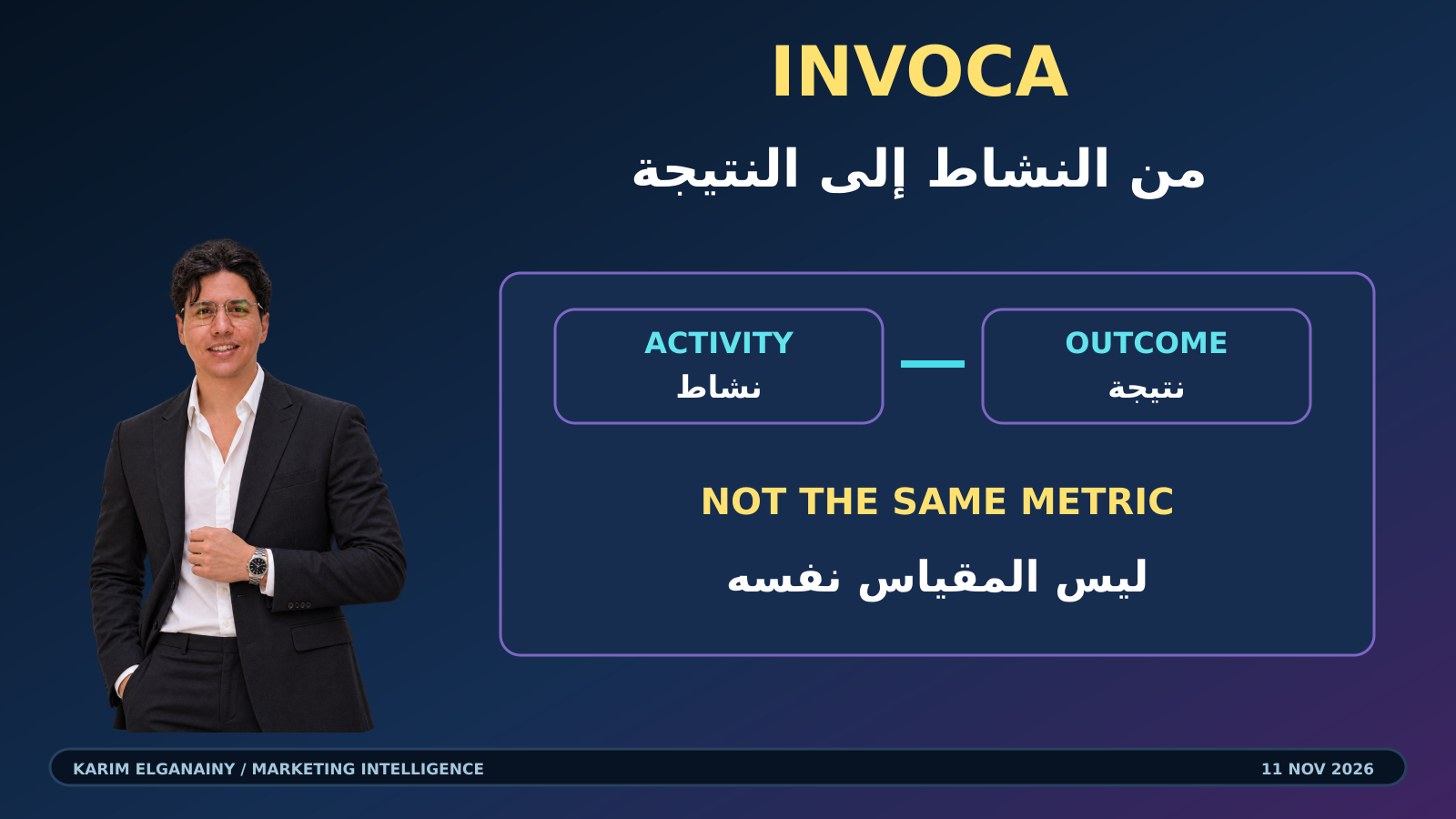
How should a marketing team measure an AI conversation that may lead to a sale or an appointment? Start by defining the outcome, following it through the operational handoff and showing how many cases remain unknown. A busy agent can be useful, but conversation volume alone cannot explain whether eligible customers received the service they wanted or whether the organization gained additional business.
Invoca’s newly announced Broken Funnel report provides a timely reason to inspect that chain. Its survey findings need careful interpretation, especially the difference between a primary performance indicator and every metric a team might track. After the factual digest below, this article develops an independent measurement framework. It does not describe additional Invoca product features or claim results from an implementation.
What the new research actually measures
Invoca announced the report on November 10, 2026. Its explanatory blog carries a November 9 date, so the announcement should not be presented as the research’s first possible public appearance. Invoca’s announcement; dated explanatory blog.
Invoca commissioned Gather to survey US B2C marketing leaders between September 14 and October 5, 2026. The cleaned sample comprises 451 respondents at manager level or above, from companies with at least 100 employees in five sectors: automotive, healthcare/dental, home services, financial services/insurance and telecom. Agent-specific questions use a subgroup of 323 respondents with agents live or in pilot.
In that subgroup, 27% selected revenue, bookings or conversation conversion rate as their primary agent KPI. The complementary 73% therefore does not establish that they never measure sales. The report also says 19% can return agent outcomes to advertising platforms as conversion signals. These are vendor-commissioned, self-reported findings, not audited integration results or GCC estimates. Report and methodology.
Decide which job the agent is doing
Begin with the purpose of the interaction. An agent answering opening-hour questions has a different job from one helping a customer request a quotation. A service workflow might properly prioritize resolution, accuracy or access to a person. A sales-oriented workflow also needs a commercial outcome. Applying one revenue target to every conversation can encourage unnecessary selling and obscure whether customers received useful help.
Write a short decision statement for the selected workflow: which audience it serves, which request it handles and what successful completion means. Record eligibility before comparing performance. A customer outside the service area, a duplicate inquiry and an existing customer checking an order should not automatically enter the same acquisition denominator. Keep those categories visible rather than deleting them from the operational picture.
Then select a primary measure and supporting safeguards. For quotation requests, the main outcome could be an accepted, serviceable request progressing to a completed order. Supporting measures could cover response quality, abandonment, transfer failures and complaints. This is an editorial example, not a universal scorecard. The organization should choose measures that reflect the actual job and explain why each one belongs.
Define the outcome before joining systems
Give every outcome a plain-language definition that operations and finance can recognize. A booking might mean a confirmed slot in the scheduling system. Attendance requires a later event. A completed sale may still be followed by cancellation or a return. When teams use the same word for different stages, a technically accurate data transfer can still produce a commercially misleading dashboard.
For each stage, identify the system of record, the responsible owner and the event time. Distinguish the moment something happened from the moment the reporting system received it. A delayed import should not appear to be a sudden burst of customer demand. Record corrections and reversals so a previously counted result can be adjusted without silently erasing the history that explains the change.
Agree how to treat partial completion. A person may request several services, change location or reschedule the same appointment. Decide whether the reporting unit is a person, an inquiry, an order or an appointment, and keep that choice stable. A measure becomes useful when another team can reproduce it from the documented rules, not merely when a dashboard displays an attractive number.
Build a small, reviewable outcome ledger
A practical starting point is a limited cohort with an identifiable inquiry record, permitted source information, conversation status, handoff status and final operational outcome. Add timestamps and the owner of each field. The purpose is to make the journey inspectable. It is not an instruction to collect every available personal detail or copy complete conversations into a broad marketing database.
Use stable identifiers where the systems support them and document what each identifier represents. Keep a reason for every cross-system match. When records cannot be linked confidently, retain an unresolved category instead of creating a connection from a similar name or approximate time. Matching rules should be explainable to the people who must correct the records later.
Start with enough cases to expose ordinary failure modes: duplicate submissions, a customer returning through another channel, a missed transfer and a later cancellation. Review the path manually before scaling the integration. This work can reveal whether the problem sits in the conversation, the operational handoff or the reporting process. Adding more data before locating that break may only make the confusion larger.
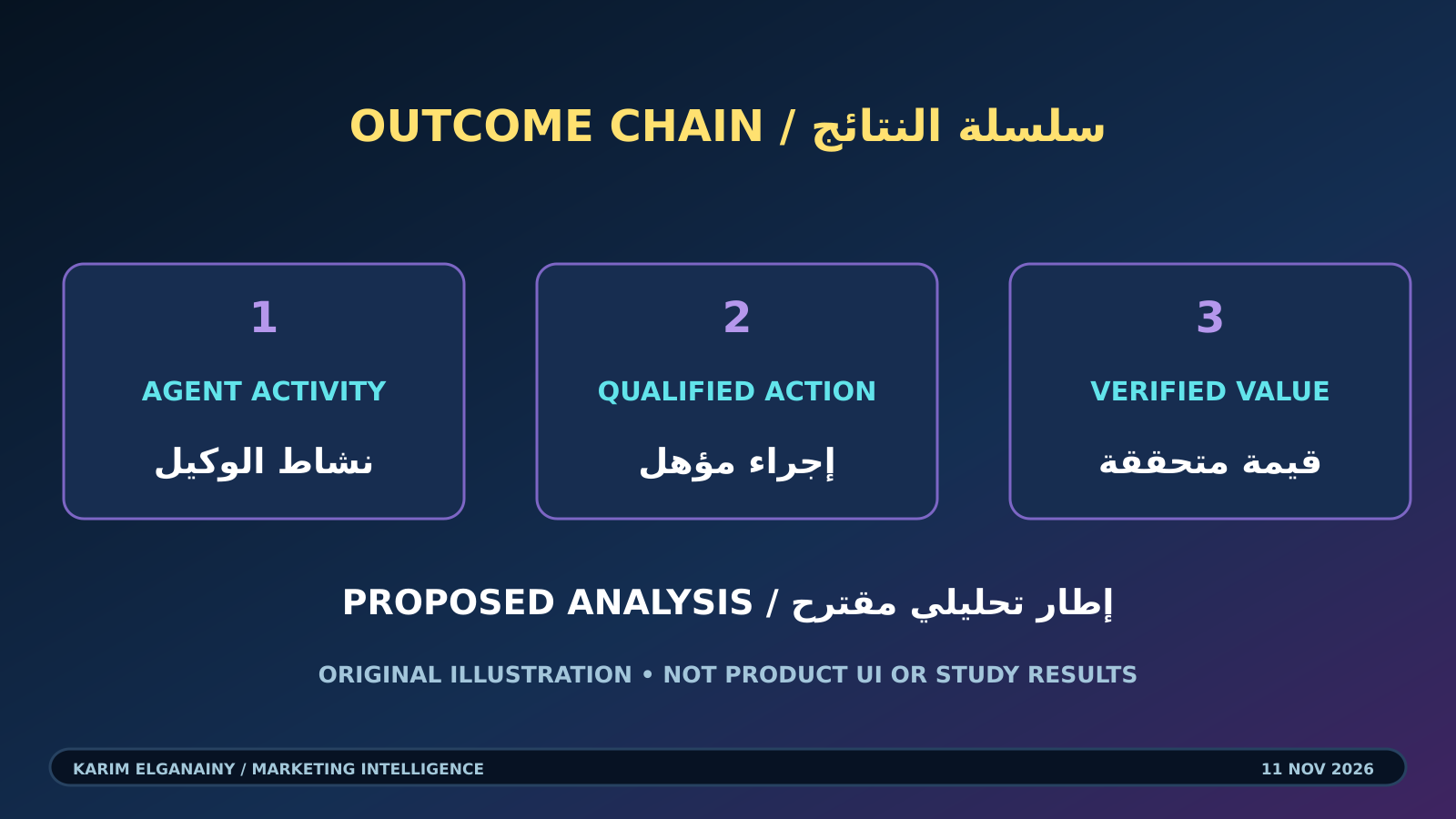
Original conceptual illustration by Karim Elganainy, not an Invoca interface or a presentation of survey results. The panels distinguish agent activity, qualified action and verified value. They explain the proposed measurement framework; assessing added value still requires a separate comparison. Research context: Invoca’s Broken Funnel report.
Treat missing outcomes as a measurement problem
Report the share of eligible records that can be followed to a defined stage. Show the unresolved share alongside it, with the main known reasons. A missing outcome might reflect an unintegrated branch, a delayed update, an identifier problem or an interaction that genuinely ended without a result. Those explanations require different remedies and should not be collapsed into one convenient failure label.
Inspect missingness by channel, location, device or workflow when the data and permissions allow it. If one branch records completions reliably while another does not, their apparent conversion difference may largely reflect reporting quality. A global average can hide that imbalance. Avoid shifting budget between such groups until the comparison is sufficiently consistent to support the decision.
Review a sample of unresolved cases with the operational owner using approved access. Record what was learned and whether the matching rule should change. Do not assume that unmatched cases behave like matched cases. People who switch channels, need human help or take longer to decide may be systematically different, which limits what the observed subset can tell you about the whole audience.
Read a worked example without overstating it
Consider a hypothetical cohort of 1,000 eligible inquiries. The team can link 800 inquiries to later records, while 200 remain unresolved. Among the linked cases, it observes 160 bookings and 120 completed appointments. These figures are invented solely to explain the calculation; they are not Invoca findings, a performance benchmark or results from a healthcare organization.
The recorded booking share is 160 divided by 800, or 20%, among linked inquiries. Using all eligible inquiries as the denominator produces 160 divided by 1,000, or 16%. The recorded completion share across all eligible inquiries is 120 divided by 1,000, or 12%. Each calculation answers a different question. Label the numerator, denominator and unresolved cases wherever the number appears.
The 16% figure is the observed booking share across the cohort, not a claim that the remaining inquiries all failed. Likewise, the gap between 160 bookings and 120 completions should not automatically be labeled no-shows: some appointments may still be pending or have been rescheduled. Before explaining performance, inspect those statuses. Accurate arithmetic cannot rescue an incorrect interpretation of the events being counted.
Give outcomes time to become meaningful
Choose a follow-up window suited to the workflow and state it before evaluating a cohort. A same-day purchase and an appointment scheduled several weeks ahead mature at different speeds. Comparing a recent cohort with a fully observed older cohort can make the new process look weaker simply because its customers have not yet had time to complete the intended action.
Keep preliminary and mature results separate. A weekly report can show bookings created, later completions and unresolved records without pretending they belong to the same completed journey. Where returns or cancellations matter, allow the relevant observation period before treating the result as retained value. Record the cutoff date so another analyst knows exactly which later events were available.
Revisit earlier cohorts as new information arrives, but preserve the previous view and explain material changes. A corrected outcome should update the management understanding, not disappear into an overwritten chart. This discipline also protects the team from celebrating a short-lived gain that later reversals remove, or rejecting a useful process before its intended outcomes have had time to emerge.
Send advertising systems signals they can use responsibly
Before returning any outcome to an advertising platform, confirm the permitted data, destination, purpose and implementation with the responsible privacy and technical teams. A valid internal business record does not automatically make every field suitable for advertising use. Use the minimum approved information needed for the specific integration, and keep sensitive conversation content outside routine marketing exports.
Test event delivery, deduplication, timestamps and reversals in a controlled workflow. Compare what the operational system records with what the receiving platform reports. A successful transmission receipt proves only that a request was accepted at that stage. It does not establish correct matching, complete reporting, sensible optimization or additional sales. Verify those questions separately before expanding the signal’s influence.
Choose the event according to its business meaning and reliability, not merely its volume. Optimizing toward a frequently recorded preliminary action can produce more of that action without improving completed outcomes. If the final event is too delayed or poorly recorded, explain the compromise and monitor downstream quality. Do not hide a measurement limitation behind a more impressive event name.
Separate attribution from additional impact
A connected record can explain which campaign preceded a conversation and which outcome followed it. That connection is useful for operations and reporting. It does not, by itself, show what would have happened without the agent or without the advertising. Customers may already intend to buy, and some may move between channels before choosing how to complete the transaction.
For an incremental-impact test, define the decision being evaluated and a credible comparison. Where feasible and appropriate, randomly assign eligible cases to the proposed workflow or the established process while preserving necessary service access. Specify the outcome window, exclusions and safeguards in advance. If randomization is impractical, document the alternative design and the remaining reasons the groups may differ.
Evaluate both benefits and costs. Additional completed orders may be offset by discounts, staffing, integration or service costs. Faster replies may still be valuable even when sales do not change, but report that benefit accurately. Avoid calling all attributed revenue incremental revenue. The strongest management conclusion is the one supported by the comparison, including when the evidence remains too limited for expansion.
Apply the framework carefully in GCC healthcare
For a GCC healthcare organization, a bounded example is a non-clinical appointment-information workflow using approved public service details. This is a proposed application of the framework, not a local result from the US survey. Measurement could distinguish inquiries, confirmed bookings, completed visits and unresolved cases while leaving clinical judgment and urgent care routing with the appropriate professional processes.
Language and operational context deserve explicit review. Check whether Arabic and English journeys use equivalent service descriptions, location names and booking rules. Review the handoff across call centers and branches before comparing their apparent performance. A language difference in recorded completion may reflect scheduling practices or data quality rather than a difference in customer intent or the quality of the AI response.
Have qualified privacy, legal and clinical owners determine the permissible implementation for the relevant jurisdiction and organization. Keep health information and identifiable conversation content out of advertising feedback unless a specifically reviewed, lawful use is established. This article does not certify regulatory compliance or recommend targeting based on health conditions. The immediate task is to improve an approved operational measurement process.
Give the measurement process an owner
Assign responsibility for definitions, source records, matching logic and reporting decisions. Marketing can explain campaign intent, operations can validate the actual outcome, and finance can clarify what counts as recognized or retained value. Technical and privacy specialists need defined responsibilities too. A shared dashboard cannot resolve disagreements that the organization has never addressed in its operating rules.
Keep a concise change record when an event definition, integration or matching rule changes. Note the affected dates and whether historical figures remain comparable. If a new rule suddenly increases attributed results, show the measurement change separately from business growth. Otherwise, an improvement in visibility can be mistaken for an improvement in performance and drive an unsupported budget decision.
Use a regular review to resolve the most consequential gaps rather than accumulate ever more metrics. Prioritize failures that prevent customers receiving service, distort major decisions or create unacceptable data exposure. Give each issue an owner and a next review point. A small, trustworthy set of measures is more useful than a large dashboard whose essential outcomes cannot be checked.
Make the next decision proportionate to the evidence
The first useful deliverable is a documented outcome definition, a reviewed cohort and a transparent account of missing records. It may reveal that the agent works well but the branch handoff is incomplete. It may instead show that the data flows correctly while customers struggle to reach a person. Those are different findings, and they justify different actions.
Expand only when the selected workflow meets its service safeguards and the evidence supports the intended benefit. If the measurement remains incomplete, repair the specific gap and retain a limited scope. If a sound comparison finds no worthwhile benefit, preserve the result rather than searching for a more flattering metric. A test that prevents unnecessary spending has still improved the decision.
Invoca’s report is most useful as a prompt for this practical inspection. Its headline should not replace careful reading of the survey, and its US respondents should not stand in for every market. The strategic task is to connect the conversation to a defined, reviewable outcome, then use a separate comparison to decide whether the new workflow adds enough value to continue.
Comments
No published comments yet.