
What changed
InMobi announced Accelerate on November 18, 2026 as a self-service tool for planning, running and measuring campaigns across advertising platforms. That is a vendor announcement, not a finding about incremental sales.
Start with a single, verifiable handoff
A cross-channel advertising tool can reduce the number of screens a team uses without reducing the number of decisions it owns. The useful pilot is therefore not a rollout across every account. Choose one product, one offer and a landing page whose price and fulfillment conditions are stable. Give a buyer and a reviewer the same written brief. Ask the buyer to prepare a draft and the reviewer to confirm that the draft reflects the offer before any spend is allowed.
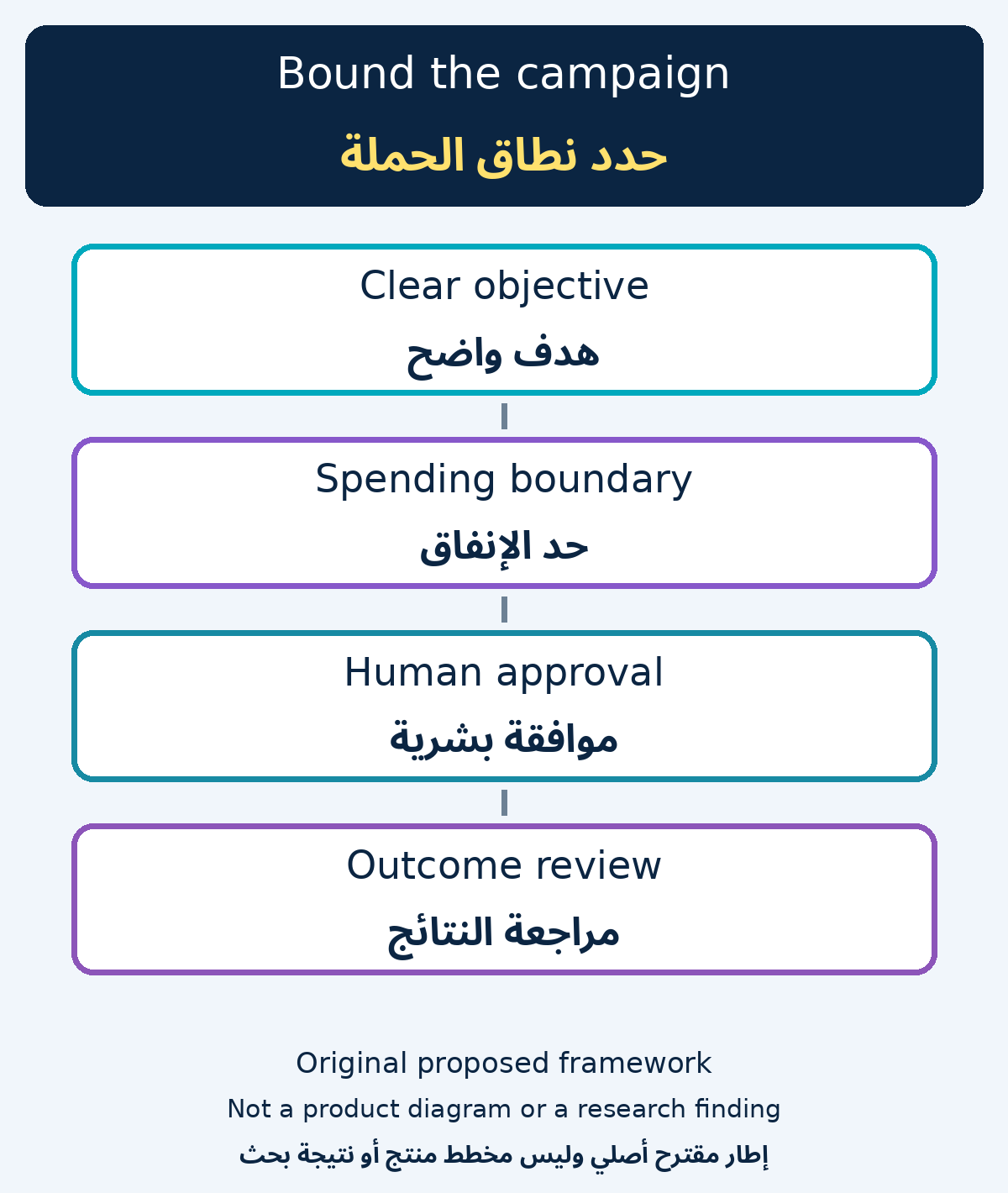
The remaining recommendations are an original proposed process, not a description of the software or a claim that it supports these controls. Before the pilot, check which settings can actually be enforced in your own account. If a necessary restriction is missing, keep the activity in draft mode or apply the restriction externally before giving the tool authority to act.
Separate permission to draft from permission to spend
Write down who can suggest creative, who approves it and who authorizes the first paid impression. Store the approved landing URL, target geography, destination account, dates, budget and pricing claim together. Review the final destination rather than just the display URL. A valid offer can still be unusable if the ad points to a page that is out of stock, lacks the promised variant or displays different terms on mobile.
For the first launch, record what the reviewer saw and the configuration that was eventually made live. If a draft changes after approval, compare the expanded targeting, budget, schedule and creative against that record. Require a fresh decision for material changes. The point is not to build a longer approval form; it is to make it possible to tell what someone actually agreed to.
Check the campaign after it crosses a platform boundary
Treat the approved brief and the running platform configuration as different records. For example, the brief may ask for one metropolitan market, but a platform setting might allow delivery to people who have only expressed interest in that market. Those groups are operationally different for a retailer whose drivers cannot serve addresses outside the area. Record the location rule you expect, then ask a reviewer to read the rule in the publisher's account rather than relying on a green badge in an integration. The same check should cover the local date at which an offer expires, particularly when an account and a store use different time zones.
Make the creative itself part of the audit. Save the approved source asset and an example of how it renders in each included placement. Then inspect the destination with a fresh session if possible, on the type of device the audience uses. If a short format drops the delivery restriction or the creative calls a discount universal when it excludes certain items, reject only the faulty variant first. Do not infer that the other versions are faulty from their common parent. Conversely, do not let a good-looking desktop preview clear a mobile asset that was never seen by a human.
Limit the number of moving parts while the team learns how the configuration travels. If the test includes a new account, a new conversion event and a new creative format at once, a discrepancy has too many plausible explanations. Hold the other parts constant and change the component that answers the immediate question. Where accounts belong to different clients, test with explicitly scoped access and separate destination records. A template should standardize the checklist, not shuttle data or permissions between otherwise unrelated businesses just because they share an agency.
Finally, decide how to handle temporary inconsistency. A launch might be approved in the planning tool while ads are still pending review at the destination; a report can list a delivery event before the downstream order appears. Write the expected order of states and set a reasonable review window in your own process. That helps the person on call distinguish a normal wait from a real exception. The pilot should produce examples of both outcomes so the next reviewer knows what evidence to look for, rather than matching ambiguous labels by habit.
Design a pause drill before inviting more accounts
Imagine a retailer running a small delivery pilot. Its stock feed becomes stale and the advertised item runs out in one region. A good drill asks who notices, who can pause the unit that is affected and how the team confirms that the pause took effect. Log the time of detection, the time an authorized person acted and the time the native account showed the new state. This hypothetical drill is not a product demonstration.
Use a channel-native spend check and an alert addressed to a named owner. Decide which action is appropriate for each problem: pause one campaign for a broken checkout, stop the whole test for a missing spending ceiling, and investigate without changing delivery when a reconciliation report is merely late. Let the person on call practice finding the account and the exact campaign identifier while the test is still small.
Reconcile business outcomes outside the dashboard
A campaign can appear efficient because the displayed number combines different conversion windows or counts a sale more than once. Start with billed media costs and a list of qualified orders from the merchant's records. Specify the currency, reporting time zone and treatment of cancellations and refunds. Keep rows with an unknown source rather than assigning them to whichever channel reported a conversion first. A small unknown bucket is useful if it prevents false precision.
This reconciliation shows whether the numbers can be explained, not whether advertising caused the orders. If that decision matters, design a suitable comparison before launch, such as a randomized holdout with enough traffic and clearly documented eligibility. If the pilot lacks volume for that comparison, say so and use it to judge readiness rather than infer uplift.
Put the unit economics back into the decision
Imagine that the retailer sells the promoted product at a modest margin and additionally pays for delivery. A traffic report may judge performance using checkout revenue, while the business needs to know what remains after the cost of goods, payment fees and fulfillment. Keep gross order value, settled revenue and estimated contribution in separate columns. Make it clear whether shipping fees and fulfillment costs are included in the same calculation. A test that attracts orders but makes the merchant lose money after fulfillment cannot be defended solely with a more attractive dashboard ratio.
Ask the finance or merchant operations owner how and when an order becomes final. It may be created during the reporting period and cancelled afterward; a refund might apply only to one line. Build a provisional view with a date and a later settled view rather than rewriting the initial one without explanation. When the views differ, retain the cause and the adjustment window. A person reading next month's report should be able to distinguish a genuine change in demand from the late arrival of fulfilment or payment information. This also prevents one channel from looking unusually strong simply because its corrections appear later.
Add an incident note to the financial record when something outside media changes the result. In the stock example, use the actual unavailability period and region to qualify interpretation. Do not just remove affected rows after seeing the outcome. Define in advance which cases are excluded from an estimate, which are reported separately, and which make the pilot unusable. An exclusion rule that depends on success will make a clean chart easier to produce and a sound decision harder to reach. Capture the exception even when marketing was not responsible, because the merchant still bore the cost.
Before making a recommendation, consider the cheapest next piece of evidence. If all material differences can be traced to one misleading delivery condition, the logical next test may be to correct that condition and rerun the same campaign, not add a channel. If the economics are promising but the uncertainty is wide, price a larger comparison against what a wrong decision would cost. If review and exceptions erase most of the time saving, retain the human process and retest only the bottleneck. A useful final note ties the recommendation to the observed evidence, identifies its owner and specifies what would reverse it.
Decide what earns a second pilot
Set an acceptance rule in advance: a draft is reviewable, actual spend stays inside the agreed limit, any pause is confirmed, and mismatches are explained before adding accounts. Also keep a short record of review minutes and exceptions that required manual intervention. A careful team may find that it saved setup time but took on more investigation later. That is still useful evidence. Expand only when the next pilot is testing a known opportunity, not repeating uncertainty at a larger scale.
For review purposes, create a campaign record that can be understood without access to the tool. Pair the published campaign identifier with the approved brief, name the accountable owner, and list any manual overrides. Preserve enough context to reproduce the decision, but do not place customer contact information in a shared media log. If a team needs to inspect individual orders to trace a mismatch, have the appropriately authorized person do that in the source system and record only the aggregate outcome in the common record. Keep the operational boundary visible: a person who reports that a channel is underperforming does not automatically have the right to edit its budget.
Rehearse a second handoff when someone is unavailable. In a small organization, the same person may buy ads and review reports; that does not mean a contractor or colleague should inherit their permissions by default. Document a backup approver and the conditions under which that person can act. For example, the backup can pause a campaign with a broken destination, but might need business approval before changing the offer. At the end of the rehearsal, ask the backup to explain why they acted, what they verified and who needs to know. If they cannot show a clear record because access or ownership was ambiguous, fix that before inviting any additional users.
Close the test with a note that distinguishes capability from suitability. A tool can successfully launch and report a campaign yet still be a poor pilot choice if the account relies on exceptions its reviewers cannot verify. Conversely, time saved on routine drafts can justify continued use in a limited role even when automated changes are not approved. Document which parts should remain manual and which can be delegated, including the evidence that supported that decision. Set a date to recheck the choice if the account, offer or approval chain changes. This makes the conclusion portable to the next owner without pretending it applies to every campaign.
Comments
No published comments yet.