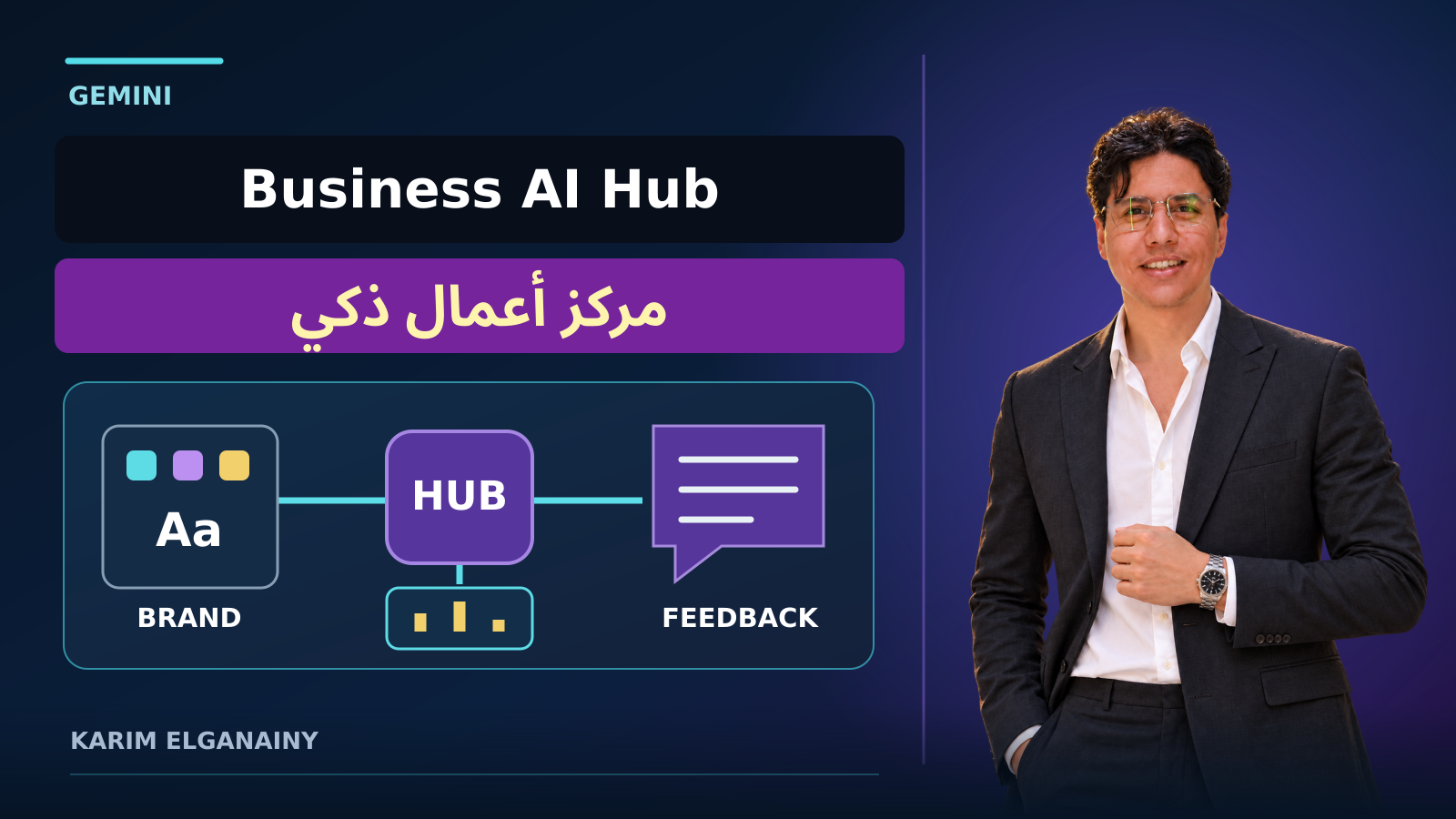
A business hub is an operating decision, not just a new interface
On October 20, 2026, Google announced a Gemini hub for small-business owners, bringing together support for brand materials, financial analysis and customer insights, with connections to business applications. The announcement is a product release, not independent evidence that a particular business will save money or acquire more customers. Google’s announcement.
For a marketing team, the useful question is whether this can shorten the distance between a business brief and an approved, accurate piece of work. Generating another draft is easy to count. Producing something that a colleague can confidently approve, reuse and maintain is a more demanding outcome. That distinction should guide any evaluation of a new AI workspace.
The framework below is original operational analysis, not an additional description of features promised by Google. It deliberately separates what a tool might help prepare from what a person should authorize. Availability, connection options and the applicable account terms should be checked in the actual workspace before a business builds a process around them.
Start with one recurring task and a real owner
Choose a task that already happens often enough to observe, such as preparing a campaign brief from approved business information. Avoid making the initial goal “use AI across marketing.” That phrase has no clear completion condition and encourages teams to connect systems before agreeing what problem they are solving. A narrow task makes errors easier to detect and value easier to discuss.
Describe the input, the expected output, the reviewer and the handoff. For example, the input might be an approved service description, a public price list and a previous campaign’s aggregated results. The output could be a draft brief for review, not a live advertisement. The owner should be accountable for resolving ambiguity rather than treating the generated answer as the final authority.
Keep a sample of the current process before changing it. Record the work involved, the corrections typically requested and the reasons a draft is rejected. Otherwise, any impressive-looking output can feel like progress even when it merely transfers effort from writing to checking. The baseline need not be elaborate; it must simply describe the same task that the pilot will attempt.
Build a usable brand pack rather than a decorative archive
A brand pack should explain decisions, not just store logos. Include the approved business name, service descriptions, tone examples, prohibited claims and rules for using offers. Distinguish permanent identity from temporary campaign information. A seasonal promotion should not become a default brand fact after its end date because it appeared in a reference document.
Add examples of acceptable and unacceptable wording with short reasons. “Professional” is too vague to guide a draft on its own. A concrete example might show how to explain a service without exaggerating an outcome, or how to invite a customer to ask a question without manufacturing urgency. Those examples also help human reviewers make more consistent judgments.
Appoint someone to maintain the source pack. An AI workflow that repeatedly consults outdated information can spread the same mistake across many polished assets. Keep a visible revision date and a simple process for retiring obsolete material. The objective is not to produce a perfect encyclopedia before starting, but to prevent uncertain information from silently becoming a reusable instruction.
Treat every connection as a separate access decision
A connection to another business application can make a workflow more convenient, but convenience does not establish that every available permission is necessary. Before connecting anything, identify which information the task requires, which account owns it and whether the proposed access includes capabilities beyond reading. Review the actual consent screen and the organization’s applicable requirements.
Use the minimum scope that supports the agreed task where the product allows it. A draft campaign brief does not inherently require authority to change live campaigns or access unrelated financial records. Keep personal experimentation separate from production accounts. If the necessary boundary cannot be established, use a suitable approved input or postpone that connection rather than accepting an unclear exposure.
Document who can revoke access and what happens when a colleague changes roles. This is not merely an IT detail: a marketing process can become fragile when its essential connections depend on one person’s private account. A useful pilot should reveal these dependencies early, before the team starts treating a convenient shortcut as a permanent operating system.
Write prompts that make uncertainty visible
Ask the tool to identify missing information before filling a gap with plausible language. A useful brief might specify the audience, purpose, approved facts, exclusions, output format and review requirements. It should also tell the tool to separate source-backed statements from suggestions. That separation makes a draft easier to check without assuming that every confident sentence has the same evidential status.
For example, a team can request three proposed angles based only on supplied public service information, with the factual claim behind each angle and any unresolved question. This is a suggested working method, not a guarantee of model behavior. The reviewer must still verify the output, especially when a suggestion sounds unusually specific or introduces a benefit absent from the approved input.
Preserve the brief alongside the draft. If a result is wrong, the team needs to know whether the cause was an inaccurate source, an ambiguous instruction or an unsupported inference. Rewriting prompts without recording the problem can produce a cycle of attractive but inconsistent answers. A small error log is often more valuable than a large collection of supposedly universal prompts.
Evaluate creative work beyond whether it looks polished
A generated concept can be visually coherent and commercially misleading. Review the promise, the audience, the required qualifications and the next step before discussing aesthetic preferences. Ensure that the image and copy tell the same story. A headline that quietly broadens an approved claim can create more risk than an obvious spelling error because reviewers may overlook it.
Use a consistent review checklist for human-created and AI-assisted drafts. This avoids rewarding novelty simply because a new tool produced it. Ask whether the draft communicates a real distinction, whether a customer can understand the offer and whether operations can deliver what is implied. Where possible, compare alternatives without emphasizing which method created them.
Keep approvals attached to the final version, not to an earlier concept. Small edits during adaptation can change meaning, particularly when translating or shortening text for an advertisement. The useful output of the workflow is an approved asset with a clear source and owner. It is not a folder full of variations that nobody has time to review or maintain.
Financial analysis needs definitions before visualization
If a team uses AI to help interpret business figures, first establish the reporting period, currency, units and accounting definitions. Revenue, cash received, advertising spend and profit are not interchangeable. A neat chart cannot repair a spreadsheet that combines invoiced revenue with cash collection or mixes monthly figures with year-to-date totals without explaining the difference.
Work from an appropriate, approved dataset and check calculations independently. Inspect totals, missing rows, duplicate entries and the handling of refunds or cancellations. Ask for the calculation behind a conclusion rather than accepting a persuasive narrative. For sensitive financial work, the responsible finance owner should determine what may be shared and which outputs require a more formal review.
Use scenarios as scenarios. A hypothetical reduction in production time or acquisition cost is not a measured saving, and a forecast is not recognized revenue. Label assumptions directly beside the result. The purpose of a small-business AI pilot is to improve the quality of the next decision, not to give speculative numbers the visual authority of an audited management report.
Customer insight is not the same as customer representation
Reviews, enquiries and support messages can help identify recurring questions, but their contributors are not necessarily representative of all customers. A pattern in a small or self-selected sample should be treated as a hypothesis. Describe where the material came from and what it cannot tell the team, especially before using it to redesign an offer or allocate a budget.
Begin with a useful coding scheme: confusion about the service, uncertainty about price, difficulty completing the next step, or a mismatch between expectation and delivery. Ask for examples supporting each theme, then inspect them. Do not turn tone alone into a judgment about a person’s intent, financial capacity or suitability for a service.
Use aggregated findings to improve communications and operations. If people repeatedly ask the same eligibility question, clarify the page. If they cannot find an available appointment, investigate capacity and routing. A summary becomes valuable when it leads to a testable improvement. A confident-sounding portrait of an imaginary average customer is less useful than a small, well-supported question that the team can resolve.
Healthcare teams need a stricter boundary around inputs
A healthcare marketing pilot should not begin by uploading patient records or identifiable clinical conversations into a general-purpose tool. Use approved public information, synthetic examples or appropriately governed aggregate data, depending on the task. Consult the organization’s privacy and security owners before introducing a new data flow; a convenient interface does not establish permission to share information.
Clinical claims need competent review even when they are generated from a professional-looking brief. Avoid implied diagnoses, guaranteed outcomes and messaging that suggests knowledge of a person’s private condition. An AI-assisted process should help explain services accurately, not produce increasingly personalized speculation about patients. Marketing usefulness does not remove obligations to protect confidentiality or represent care responsibly.
Translation also requires review. A fluent Arabic version may shift the strength of a claim or omit a qualification that was clear in English. Compare meaning, not just grammar. Preserve the distinction between an educational explanation and an individual recommendation, and make sure the operational next step is appropriate for the service being described.
Measure the pilot on approved throughput and avoidable rework
Track the time from an agreed brief to an approved output, the number of substantive corrections and the kinds of errors discovered. Keep the scope comparable with the baseline. If AI produces twice as many first drafts but doubles review effort, output volume alone gives a misleading picture. Conversely, a modest reduction in revision cycles may matter more than a dramatic increase in draft count.
Decide in advance what would justify continuation, revision or stopping. The thresholds should reflect the business’s own capacity and risk tolerance, not an invented industry benchmark. Include a way to export useful work and continue without the tool. This makes the decision reversible and reduces the pressure to defend an experiment simply because the team has invested time in setting it up.
The strategic opportunity is a more reliable production process: clearer inputs, explicit permissions, visible uncertainty and accountable approval. If the new hub helps deliver those outcomes, it may earn a place in the workflow. If it merely generates more material than the business can check, the correct response may be a narrower use case rather than a wider rollout.
Source and interpretation
The operational framework and examples are original analysis. They are not measured product-performance claims, legal advice, or a promise of sales improvement.
Comments
No published comments yet.