What was announced On November 5, 2026, Awesome Motive announced that the WPBeginner Growth Fund had acquired Drip and Sleeknote. The announcement says the businesses will remain an independent unit under Mogens Møller and that customers will see no service change. These are the company's statements about the transaction and continuity. [Read the announcement](https://awesomemotive.com/drip-sleeknote-an-email-sms-and-onsite-marketing-platform-are-joining-awesome-motive-family/).
The useful question for a marketing director The following is an independent planning framework, not a review of either product or a claim that customers should migrate. An acquisition is a useful moment to examine dependence on a marketing platform. It gives the team a reason to ask whether customer relationships, consent evidence, campaign logic and operating knowledge can survive a change in supplier priorities. That question matters even when the immediate answer is to keep everything running as it is.
Start by identifying the commercial job each channel performs. An email welcoming a subscriber, a message reminding someone about an abandoned checkout and a campaign bringing a previous customer back have different purposes. Combining their revenue in one dashboard can hide weak acquisition economics or excessive discounting. A useful account review separates the jobs before comparing software capabilities. The objective is a more reliable customer journey, not a longer feature checklist or a reaction to a corporate headline.
Define what the business actually controls Teams often describe email and SMS as owned channels. That shorthand can encourage sensible investment in direct relationships, but it can also obscure dependencies. The business may control its message and customer records while still depending on delivery providers, sending infrastructure, consent rules and the willingness of people to keep listening. A spreadsheet of addresses alone does not preserve a functioning relationship. The circumstances in which each address was collected matter.
Build a practical inventory with five fields: what information exists, where it came from, what use was explained, which system holds the record and who can correct it. Include suppression lists and unsubscribe history in this inventory. A migration that transfers active contacts but loses exclusions can create operational and compliance problems. Have the appropriate privacy and legal owners review applicable requirements. This article offers a management checklist, not jurisdiction-specific legal advice or a claim that any particular platform has a consent defect.
Connect the economics from signup to repeat purchase A bigger subscriber list becomes commercially useful when the people joining it can receive something relevant and valuable. Examine the promise that persuaded them to register. A discount signup may attract customers with different expectations from a product-education signup. If every new contact receives the same sequence, the business can pay to acquire attention and then lose it through messages that ignore the original reason for subscribing. Segment first by a meaningful need or relationship stage.
Use a contribution view rather than simply adding attributed orders. For an illustrative retail analysis, begin with net sales after discounts and returns, then deduct product costs, fulfilment, payment charges and variable messaging costs. Keep acquisition spending visible separately so the team can see how long recovery takes. These are suggested analytical components, not reported results from Drip or Sleeknote. The exact calculation should match the company's accounting definitions and available evidence. Finance and marketing should agree those definitions before either team claims that a lifecycle program is profitable.
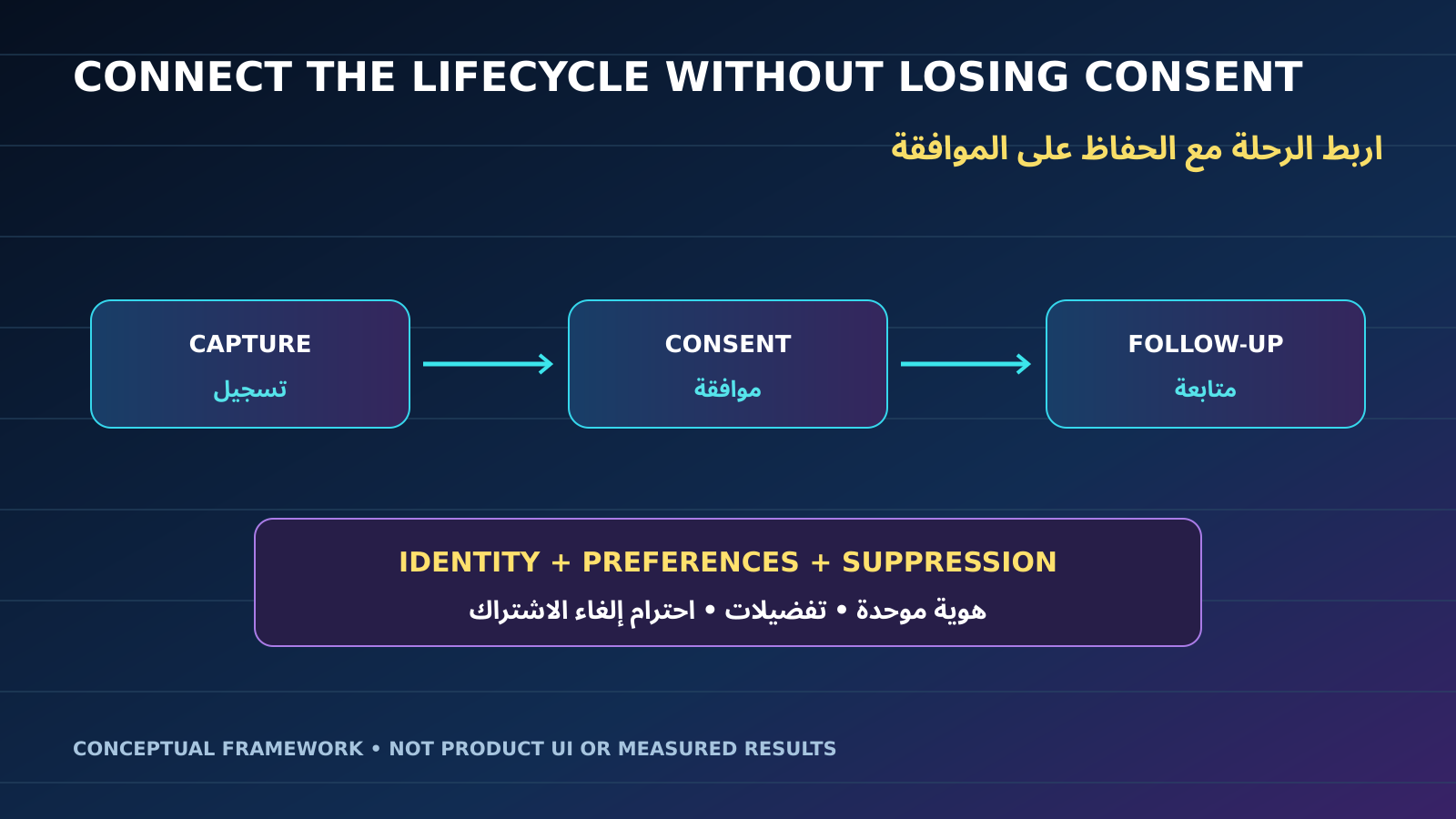
Original explanatory illustration by Karim Elganainy, not a product screenshot. Editorial framework prompted by the acquisition announcement.
Audit continuity before considering migration A supplier change should trigger a targeted continuity review, not an immediate rebuild. List the workflows whose interruption would affect customers: confirmations, onboarding, service updates, preference changes and recurring campaigns. Assign an internal owner to each workflow and record its input, trigger, exclusion rules and expected output. The owner should understand the business purpose well enough to recognize a failure without waiting for a platform alert.
Then test recoverability in a controlled way. Can the team export the information it is entitled to retain? Can it explain the current sequence without relying on one specialist's memory? Are sender settings, approved templates and reporting definitions documented? Use synthetic records or a small approved internal test group, not a bulk message to customers. Check both successful delivery and stop conditions. A person who withdraws permission, completes a purchase or becomes ineligible should leave the relevant sequence as intended. Keep the production workflow unchanged while testing alternatives.
Treat an integration roadmap as a question to verify A roadmap can help teams plan, but a future capability should not become a present dependency. Before planning around an integration, ask what is available in the actual account, which fields it transfers, how often it updates and what happens when one side fails. A demonstration that creates a contact does not establish whether duplicate handling, corrections, deletion requests and suppression rules behave correctly across the whole journey.
Write a simple acceptance test for each connection. For example, an approved signup creates one record with its source and preference; a changed preference updates the appropriate fields; an unsubscribe stops the intended category of messages; a failed transfer becomes visible to the responsible person. These are proposed tests, not descriptions of either vendor's implementation. Require evidence from the team's own environment before expanding the connection. If the test cannot be explained clearly, the team has not yet defined what successful integration means.
Design a lifecycle experiment that can teach something Pick a narrow problem before testing a new sequence. Suppose an online retailer wants to help first-time purchasers choose a compatible accessory. The hypothesis might be that a useful post-purchase explanation improves relevant follow-on purchasing without increasing complaints or returns. This hypothetical example avoids assuming that more messages are automatically beneficial. The proposed intervention should solve a recognizable customer problem and have a clear reason for its timing.
Where feasible, compare similar eligible customers assigned to a new sequence and a suitable control. Decide the evaluation window, primary outcome and guardrails before launch. Track delivered messages, eligible customers, purchases, contribution and negative signals using consistent definitions. Consider whether recipients could encounter other offers that contaminate the comparison. A platform attribution report can help locate activity, but the experiment needs its own decision rule. If the available sample is small, report uncertainty and operational learning rather than declaring a precise lift that the evidence cannot support.
Make GCC localization part of the operating design For a business serving Saudi Arabia, the UAE or several Gulf markets, language should be considered at the moment of signup and throughout the sequence. A customer who chooses Arabic should not receive an English-only preference page or a confusing mixed-language checkout. Translate the commercial meaning, conditions and support path consistently. Review names, dates, currencies, reading direction and mobile layout with the intended audience in mind. Cultural relevance should improve usefulness rather than serve as decoration.
Timing also needs local judgment. A sequence can be technically correct and still reach people at an unhelpful time or promote an offer that operations cannot fulfil. Coordinate message plans with delivery capacity, branch availability and customer support. Treat country, language and channel preference as separate attributes rather than assuming one from another. Test the complete route from message to action. A polished subject line cannot compensate for a broken booking form, unclear stock availability or a response team that cannot handle the resulting demand.
Apply stricter boundaries in a healthcare scenario Consider a hypothetical medical center offering public educational updates to adults who explicitly choose to receive them. The marketing purpose could be to explain how a general service works and how to find an appropriate appointment. Design the signup to make that purpose clear. Keep clinical records, symptoms, diagnoses and treatment details out of ordinary marketing workflows unless an approved process and relevant requirements specifically permit their use. Minimize the data collected for the stated communication purpose.
Separate operational care messages from promotional campaigns in ownership, rules and reporting. A reminder required for an existing appointment has a different context from a campaign inviting someone to consider a service. Do not assume permission for one covers the other. Clinical review should govern medical claims, while privacy and compliance teams should assess data handling. Commercial success can include appropriate inquiries and a usable booking experience, but it must not be framed as proof of clinical benefit or used to justify misleading urgency.
Build a decision record before negotiating or switching A useful supplier review ends with a documented choice. The options might be to continue unchanged, improve the existing setup, run a limited evaluation of an alternative or plan a migration. Record why the chosen option best serves the identified business problem. Include total operating cost, staff effort, dependencies, customer risk and the conditions that would cause the team to reconsider. Avoid letting sunk setup effort or enthusiasm for a new feature decide the outcome alone.
If migration is justified, define a reversible sequence with checkpoints. Preserve approved records, validate counts and exclusions, test key workflows and compare reports before expanding live traffic. Set a rollback owner and a clear stopping condition. Do not delete the old environment merely because the new dashboard looks complete. Verify retention obligations, contractual arrangements and the reliability of the transferred information with the relevant specialists. A staged change may take longer initially, but it can make errors easier to isolate and repair.
Strategic takeaway: protect the relationship, then improve the machinery The most useful response to this acquisition is a focused review of the customer relationship behind the technology. Does the business understand why people subscribed, which messages help them, what permission applies and how commercial value is measured? Those answers make a platform more useful regardless of who owns it. They also reduce the chance that a future supplier change becomes an urgent operational problem.
A practical first step is to choose one important journey and map it from consent through message, action, outcome and correction. Confirm the owners, test the exclusions and agree the evidence required for improvement. Keep the scope small enough to finish and meaningful enough to expose weaknesses. The transaction is the news event. The independent recommendation is to use that moment to strengthen continuity, measurement and customer trust before adding automation or committing to a migration.
Comments
No published comments yet.