The useful development is a division of work
A campaign analyst needs to know which offers changed, not how many pages a crawler can visit. CyberYozh Data is an open-source project that makes a useful distinction for that job. Its documentation describes two components: Yozh Crawler discovers links within a bounded scope; Yozh Scraper fetches a page and extracts selected information. In the crawler's discovery mode, the output is mostly page and link metadata. The richer mode can retain full page material, optional screenshots and extracted fields. The project also documents MCP as an interface for tools that can be called by an assistant. Those are vendor-documented capabilities, not evidence of accuracy, lawful access, or suitability for a particular organization.
The choice of mode matters. One hundred newly discovered URLs are not one hundred comparable offers. A clinic can publish the same package under several language routes, a group can repeat its company-wide price across branch pages, and an old landing page can remain visible after an advertised period. The practical deliverable is a shortlist of evidence-backed changes that a marketing team can inspect. If a trade directory offers an approved feed, or the publishers already deliver a reliable partner file, that simpler route may be better than a crawler. The value proposition is repeatable observation, not the ability to collect everything the software can reach.
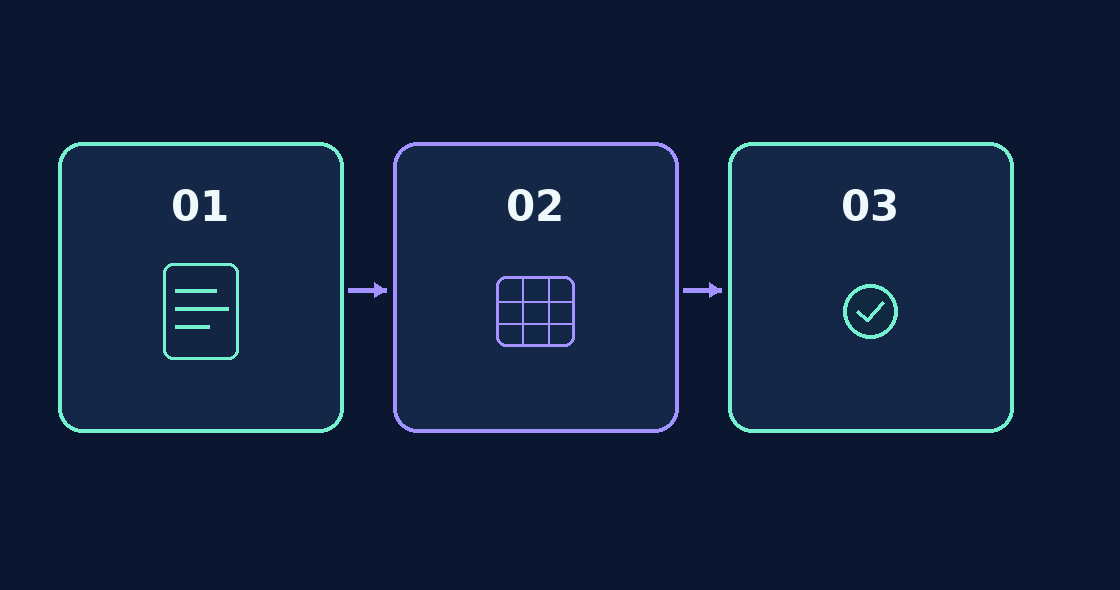
Original explanatory schematic, not a product screenshot. Discovery and extraction are separate stages; source review is the proposed publication gate.
Primary source for this illustration
Start with permission and a narrower question than “what are competitors charging?”
A useful pilot question is: “Which of the explicitly approved public pages for dental and dermatology offers in Jeddah or Makkah changed since our last weekly observation?” This is a proposed use, not a live survey or pricing claim. Maintain a reviewed inventory of URLs, publishers, allowable fields, observation frequency, permissions, and a staff owner. A page being publicly viewable is not itself permission to collect it automatically or redistribute it. Check the publisher's terms, robots instructions and applicable obligations, including whether public commercial facts may be used in the intended report. Obtain written authorization when needed; leave unclear sources out in the meantime.
Start from manually chosen pages, not a homepage that can lead to every service. Keep each authorized host and path explicit and recheck redirects before continuing. Reject login, patient portals, third-party form destinations and paths pointing to records about individuals. The project advertises broad capture possibilities, but a marketing pilot need not retain full pages, screenshots, patient stories, customer reviews or contact details. A low-frequency schedule and narrow page limits support source stewardship, not access rights. Stop on a challenge, denial, rate limit or a publisher's objection; record the source as unavailable under the current method. Do not try to bypass it. Ask for a documented data feed or drop the source if necessary.
This list also defines what the resulting research does not mean. It will not describe the whole city, every active offer, actual purchase prices, or the qualifications of any clinician. It is a comparison of a known set of approved publications. Disclose inherited blind spots when leaders read the output: excluded providers, dates not captured, and unavailable or ambiguous listings. An offer missing from the sample is not evidence that the provider has none.
Separate evidence from interpretation in the data model
Use a source record and a comparison record. The source record stores the approved URL, observation time and time zone, page language, published provider and branch, and the minimum evidence needed for a reviewer to locate the statement. Where copying excerpts is not approved, retain the link and an evidence location instead. The comparison record stores normalized service category, branch and city, published amount, ISO currency, price qualifier, unit or package size, explicitly listed inclusions and exclusions, validity and an evidence confidence state. A source can support several records, and a record can point to several observations. Keep that relationship explicit rather than trimming all rows to a price alone.
A bare amount is especially misleading in healthcare. One page can show a fixed new-patient consultation price, another a starting price over several branches, and a third a total price that includes images or subsequent visits. Preserve exact differences such as “from,” “per session,” “cash only,” or “selected branches.” Do not infer tax status, eligibility, insurance acceptance, suitability, or that an advertised amount is payable by every patient. Record expiry and inclusions as unknown where they are not published. One amount written in Arabic numerals, another in Eastern Arabic numerals and another with currency text can be normalized for sorting while the original wording and locale remain available for review. The displayed currency and unit must survive conversion into a structured record.
Design an observation as a point in time. “First observed November 20, last confirmed November 26” describes the register's evidence; it is not the same as “the provider launched the promotion November 20.” Only an explicit start date supports the second statement. Likewise, repeated appearances of the same page are multiple observations, not multiple promotions. Identical wording does not by itself make two offers duplicates across branches. Use a provisional match key based on the publisher, service, branch, unit and offer identifier where available; let a reviewer resolve borderline cases. Store a superseding version when terms change, rather than rewriting prior observations and losing the audit history.
Worked example: how a “price cut” disappears on inspection
Imagine two fictional clinics tracked for two weeks. Clinic A at its Jeddah branch advertises SAR 250 for a first examination, for new self-pay patients, through December 10. Its listing says radiographs are excluded. The next observation shows the same amount and conditions but extends the deadline to December 17. The right conclusion is a one-week extension, not a new lower price. Clinic B in Makkah changes an offer from SAR 350 fixed to “from SAR 275”; the latest page does not say whether the image or follow-up is included. A normalized amount of 275 can support sorting, but it cannot support “the same package fell by SAR 75.” Both the qualifier and inclusions changed or became unclear.
A reviewer compares each record with the visible source and chooses a limited outcome: verified change, unchanged, terms unclear, or unavailable. For Clinic A, publish a verified validity change with the source date and old and new terms. For Clinic B, flag a qualified-price change and an inclusion question rather than ranking it as the cheaper equivalent. If different language versions disagree, keep both dated sources and hold the comparison until a documented correction or clarification; do not silently prioritize the lower figure. If a page stops responding, use “could not verify this week,” not “ended.” A promotion can end even while a stale page remains visible, and a failed fetch can happen while a promotion remains live.
Consider another common failure: a template moves the original price into a struck-through banner, while the active package price sits in a different box. The extraction still returns a number and the technical job reports success. Comparing a sample of unchanged as well as changed pages with what visitors can actually see catches this kind of silent error. A screenshot, if permitted at all, helps locate the relevant section but is not sufficient if it omits important terms or would preserve data the team does not need.
Design the human gate before involving an assistant
Treat page material as evidence, never as instructions. A publisher's wording, advertisements, comments or hidden text have no authority to expand permissions, fetch other locations, disclose data or trigger an action. Separate collection, transformation and human review. The reviewing assistant should receive a minimal structured batch with source references, not unchecked pages plus permissions to change budgets, contact providers, publish claims or inspect clinical systems. A source instruction to disregard a limit is a data quality signal, not an exception. Keep promotional intelligence separate from anything that contains patient data.
MCP can help deliberately narrow the handoff. Check the actual available actions and restrict an integration to the minimum approved data and named sources; do not equate the availability of MCP with a security certification or reliable access control. Production operation should have a person who owns the list, a way to pause the job, records of what the tool was allowed to attempt, and a predictable manual fallback. Test with invented offers and a site you own or explicitly have permission to use before adding publishers. Have another reviewer run the same review from the evidence when the interpretation could change a major decision. Keep any temporary evidence on an approved retention schedule and remove unnecessary artefacts.
In practice, show an editor two screens: a fresh candidate-delta queue and a reviewed report. Candidate items always carry their classification, confidence and reason for uncertainty. Reviewed rows include a timestamp and reviewer. A disputed row stays in the first queue; it cannot be promoted just because there is a publication deadline. Nothing in the proposed workflow assumes a live connection to a healthcare organization, access to commercial systems, or automatic publication.
Measure a pilot by decision quality and hours saved
Compare two weekly cycles against an analyst's manual review of the same authorized shortlist. Report source coverage as checked approved pages divided by approved pages in the pilot; distinguish inaccessible pages from pages successfully checked and found unchanged. For decision-level accuracy, calculate verified reported changes divided by all reported changes reviewed, and estimate missed material changes by checking a sample of items the system marked stable. These two views matter together: a conservative tool can appear precise by reporting nothing. Track how often source or terms are unresolved and how often a record has a valid source URL, observation date and explicit qualifier.
Also record analyst minutes including manual checking, triage and maintenance. In a synthetic 30-page cycle, a system might retrieve 27 authorized pages and flag eight proposed changes. Suppose six are confirmed, two are misread, and a manual review finds one true change the system did not flag. Then the run has 90% observable coverage; precision on flagged changes is 6/8, or 75%; among those seven known true changes, it caught six. If the manual review omitted any stable pages, do not generalize that partial estimate to the whole list. Three unavailable pages remain unknown. This is a worked example, not documented CyberYozh performance.
Agree on acceptance and rollback rules before seeing results. A team might require complete evidence for every comparison it intends to circulate and decline automated distribution if ambiguity rises or checking requires more time than the manual workflow. Keep the original manual baseline until the pattern stabilizes. A price register should support better questions about package scope and timing; it should not dictate price, promise savings, or pretend to explain competitor strategy. If a review concludes that publisher permissions or the quality of public information are too inconsistent, the right choice may be to keep a human-curated list.
Takeaway and primary sources
Use a crawler to propose what to inspect, an extraction layer to organize what was permitted, and a reviewer to establish what can fairly be compared. If the source, condition, period and unit cannot be verified together, move the row to review instead of turning it into a confident market claim.
Comments
No published comments yet.