What the new book brings into focus
Robin J. Birn’s Market Research and Consumer Insight is a useful prompt for a question campaign teams rarely ask clearly enough: what would make us change our minds about why a customer stopped? Routledge’s first-edition listing lists the book in November 2026, with a 2027 copyright year. Those refer to different things. The St Mary’s University announcement of November 9 describes the author’s use of cases and brand challenges to connect market research, analytics and campaign planning. This article is based on those public materials, not on a reading of the full text. It does not report a result from an experiment in the book. The research plan below is an original application of that broad theme.
The point is not to insert an interview between two analytics meetings. It is to set up evidence so that one source can expose the weaknesses of another. A survey answer can tell you the language a person uses to describe uncertainty. A clickstream can show that a step was reached but not whether the person liked it. A well designed comparison can estimate the effect of a change but cannot tell you whether the same effect will persist in another market. Each helps clarify the others when its job is narrowly defined.
Start with a decision, not a survey question
Imagine a clinic that has traffic on an appointment page but few completed online requests. This is a fictional example about booking logistics, not about diagnosing or treating patients. One team thinks the campaign is attracting the wrong audience. Another thinks mobile visitors cannot tell which branch they are choosing. A third believes the appointment times are scarce and better copy cannot create them. Each explanation implies a different decision. Changing all three at once might raise bookings, but it leaves the team unable to explain the improvement or prevent a later relapse.
Write the decision as an action with a cost. For example, decide whether to devote engineering time to a branch selector or keep the page as is and change nothing in the campaign this week. State the audience, device context and primary endpoint. If the target is completed appointment requests from eligible visits on the mobile site, document eligibility and what completion means before looking at the results. An automated acknowledgement is not the same as an appointment confirmed by a scheduler. A visit should not become ineligible just because a person encountered a defect introduced by the new design.
Include the plausible disconfirming evidence in the brief. If people identify locations correctly in observed tasks but repeatedly fail to find any usable slot, the branch hypothesis weakens. If both completed and abandoned visits display the same pattern of selection changes, an apparent funnel correlation may not explain the difference. Decide which result would send the team to scheduling operations rather than web development. Doing so before analysis makes it harder to cherry-pick the metric that favors an existing plan.
Listen for meaning and observe the actual sequence
Start with small, deliberately varied interviews rather than an open call that captures only users eager to talk. Seek some people who finished and some who stopped, within the organization’s approved recruitment and consent process. Include a range of device comfort and language preferences if the service actually offers those options. In a hypothetical pilot, the useful distinction is not whether a respondent says the page is simple. Ask them to point to the next control they would use and repeat back what they think the request will do. Let them hesitate without helping too soon. A neutral follow-up such as asking what they expected to see reveals more than asking if the branch label was confusing.
Account for who is missing. A clinic visitor who never returns may be less likely to agree to an interview than one who complained or completed the form. Keep track of this recruitment limitation. Do not turn four complaints from ten interviews into a claim that forty percent of visitors had the same complaint. The people were selected to uncover candidate explanations. The four can be good reasons to inspect a design against a broader dataset, but not an estimate of incidence. In a real project, use only authorized recordings, collect no clinical details for this task, and store research notes separately from advertising identifiers.
Now trace observable behavior. Define events for landing, seeing the branch choice, looking for a slot, starting a request and getting a server-confirmed receipt. Log errors distinctly from deliberate exits where possible. Check whether two device events report the same receipt. Pay attention to differences between site analytics, an application log and the appointment system, and record which one supplies the endpoint. Treat missing events as unknown until instrumentation is checked. If the clickstream loses users when they choose to call, it does not prove they failed to book; it means the online measure cannot see that path.
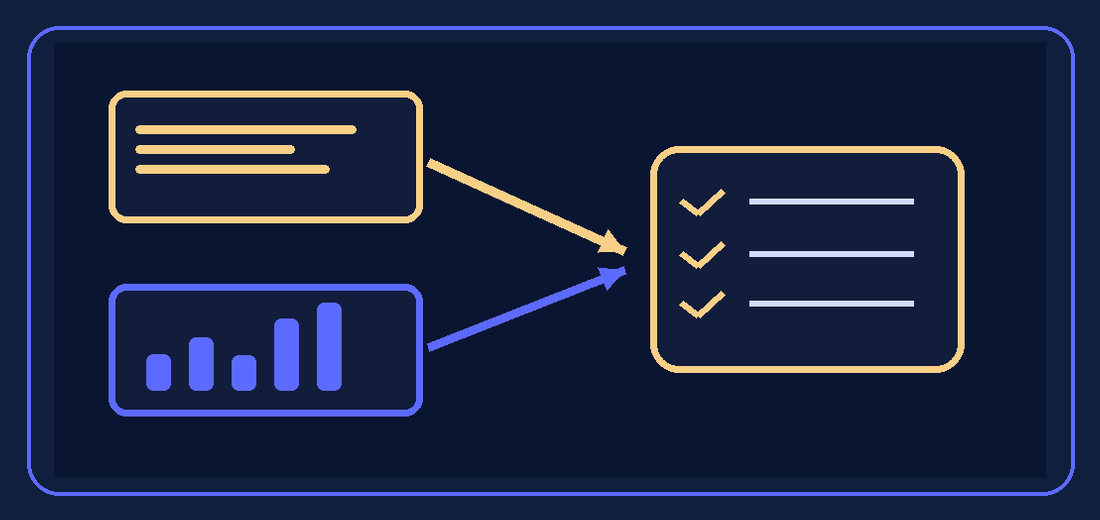
Interview cards and an activity log leading to a test decision
Use disagreements to pick the next check
Rather than taking a vote among qualitative and quantitative sources, place them beside each other. Say the interviews suggest branch choice is the biggest issue, yet telemetry appears to show few changes of branch. One explanation is that the branch names are poorly differentiated and people select the first thing they see, never switching. Another is that the default branch was correct. A third is that the switch event was not logged on one device. Ask which small check distinguishes these explanations. An observed task with two clearly distinct destinations and an independent review of that device’s events might answer more than another ten interviews.
Suppose the telemetry instead finds many slot-search failures at one branch, while interviews describe uncertainty about which branch to choose. Both can be true. Interview participants might be especially likely to notice labels, while wider traffic runs into scarce time slots. Break down dates and branches only when sample sizes allow and operationally relevant distinctions were chosen in advance. The more subgroup comparisons are explored, the greater the chance of seeing a pattern that will not repeat. Label exploratory observations and choose one to validate on new data. Do not report a source of friction as the sole cause of every abandoned session.
Think of a useful evidence note as four fields: observation, competing explanation, next check, decision if confirmed. For example, repeated backtracking after viewing branch information is an observation. Missing location information, browsing multiple options and a reload defect are competing explanations. Matching a specific mobile task recording with clean non-identifying event logs is a possible check. Adding clearer city labels is a decision only if the check supports that mechanism. Keeping these fields separate prevents an attractive explanation from becoming a reported fact as it moves into a deck or ticket.
Validate one change and choose its success threshold
The clinic could test a branch chooser that leads with city and neighborhood, holding appointment supply, copy and media targeting constant where feasible. Randomly assign eligible users to the current or revised page if the team can do that reliably and keep the experience consistent when people return. Define how repeat visits are handled, what sampling window is used and when results will be reviewed. If random assignment is unavailable, a before-and-after comparison can guide monitoring, but differences in demand, appointment supply, campaigns or holiday timing may also explain a change. Say so rather than writing that the redesign caused the increase.
Use two simple disciplines for reporting. Count comparable eligible visits in the denominator and use unique successful receipts against it. In a purely hypothetical calculation, if each version gets 400 eligible visits, 40 completed requests on the original is 10%, and 52 on the revision is 13%. That is a difference of 3 percentage points, or 30% relative to the original rate. Neither phrasing establishes statistically reliable improvement. Assess uncertainty at the unit of assignment and account for repeated visits. If the project cannot support an informative comparison, describe the result as exploratory. Use operational constraints, test reliability and the uncertainty around the estimate to decide whether to continue.
Set guardrails even if the first chart looks encouraging. Route errors, duplicate receipts and wrong-branch requests can easily make submission counts look better while worsening service. Track verified appointments downstream as a different measure with time to mature. It is reasonable to stop early for a clear service defect. It is not reasonable to stop each Monday that the preferred design happens to lead. Agree on the decision date and any safety exceptions in advance. Monitor the experience after any roll-out, because traffic composition and staffing can change. These safeguards matter whether the conversion concerns healthcare appointments, an account signup or a retail return request.
Write a memo that another team can challenge
A decision memo should let a colleague reproduce the logic a month later. Include the decision, research scope, known exclusions, instrumentation caveats, result, uncertainty and owner. Identify which findings come from interviews, which come from behavior and which depend on the controlled comparison. For instance, the sentence that the city label was not understood belongs with the task observations. The finding that some users stopped after a slot query belongs with telemetry. Only the randomized comparison, if it was valid, supports a causal claim about the revised selector’s effect on measured requests in the tested group.
End with what should happen next, and what would reverse that action. If comprehension improves while verified requests are flat, the team might keep the clearer wording for accessibility but decline a more expensive rebuild. If requests improve while wrong-branch routing also rises, the team should repair that back-end connection before widening the test. If the main effect appears only in a subgroup discovered late, the group is a hypothesis for a new check rather than a reason to reallocate spend. Good customer research does not need every finding to point in the same direction. It needs a decision that remains defensible when the sources disagree.
A useful way to keep the work alive is to schedule a short readout with the people who must act on it. Share a de-identified example, show the path from the initial question to the decision, and invite the scheduling team to flag assumptions that were wrong. Keep notes on which counterexamples require follow-up and which are outside the research scope. If no one can name the action they own, the memo has documented a discussion, not a decision. Record the owner’s choice and what it would take to revisit it.
Comments
No published comments yet.