
What changed
AI Inspo announced its social media agent on November 18, 2026. The company says the tool connects planning, creation, publishing and review. Its announcement does not establish better audience outcomes.
Give the workflow something to learn
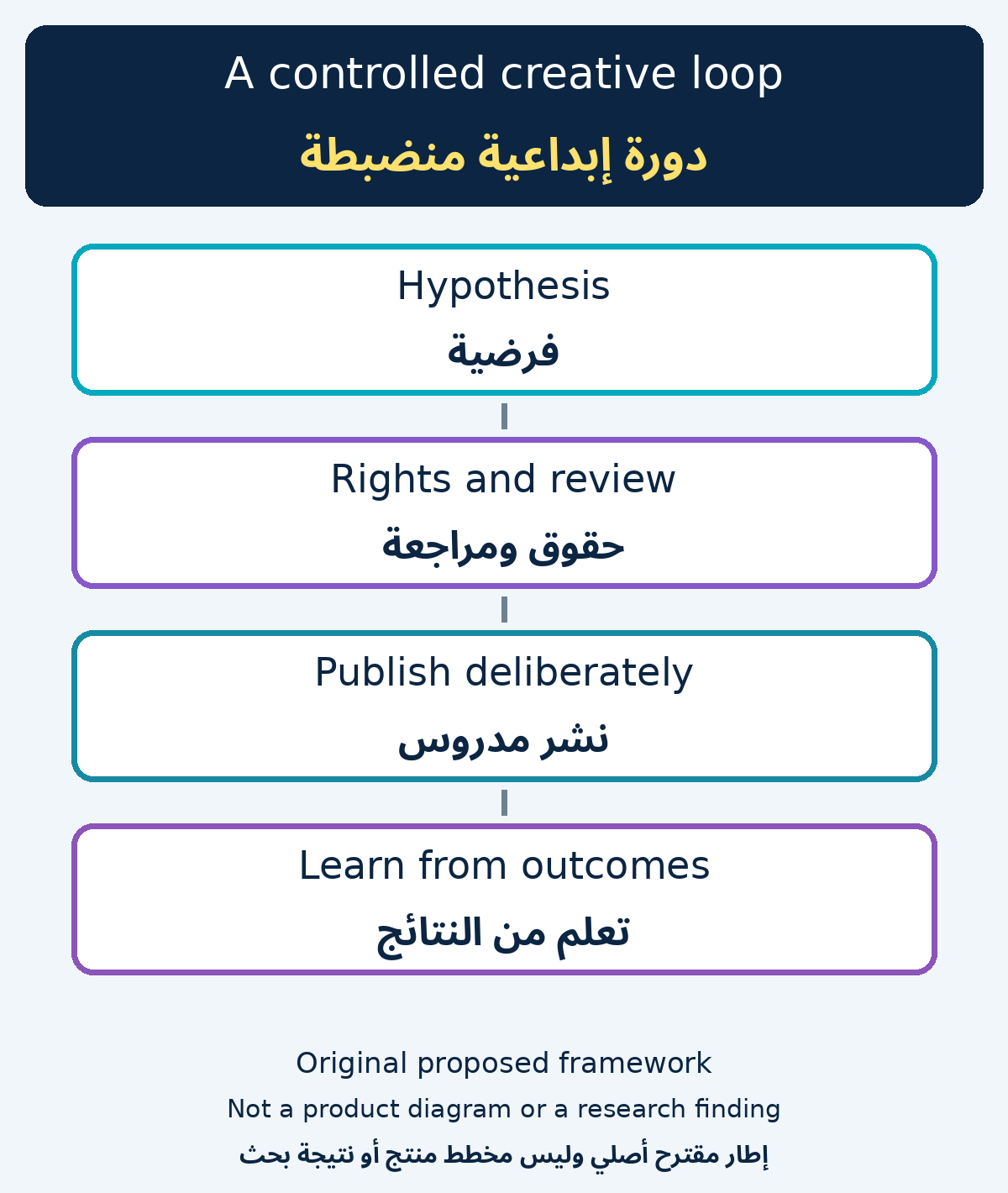
The following pilot is an original proposal, not a description of AI Inspo features or an estimate of what it can deliver. Start with an account that publishes consistently and a question its audience actually asks. For instance, a hypothetical luggage seller might want to know whether a carry-on sizing demonstration helps more people select the right bag than a list of measurements does.
Hold the offer steady and test one meaningful creative difference. Define the intended next action before drafting, such as opening the size guide or choosing an appropriate product, instead of assuming that a larger view count means better decisions. Two clips can earn attention for very different reasons: one makes the answer clearer while the other withholds it until the end. Those are not equivalent results for a shopper.
Use a reference to study structure, not to borrow expression
Annotate what made a reference interesting: an opening question, a comparison with a familiar object or a demonstration shown from two angles. Rewrite the premise for your own product and shoot or license the elements you need. Do not carry over another creator's footage, music, script or identifiable likeness without the appropriate rights. A short clip can involve multiple permissions, and an approval for one account or format may not cover another.
Keep a small evidence card for each draft. Attach the current product measurements, price or limitations behind its claims, the rights notes for its visuals and audio, and the approved on-screen text. Review the actual export with sound off and on. A caption can look correct in the editor and still cover a measurement or lose a qualifier when the clip appears on a phone.
Create a review pack before anyone approves the post
Start with a rough storyboard that shows what each shot is supposed to prove. In the luggage example, a measuring tape crossing the handle is more useful than a polished shot of a closed suitcase. If a different rim, wheel or protrusion changes the measurement, show it from a position that makes the distinction visible. The person responsible for product information should be able to match what appears in the video with the actual item identifier. Do not allow an illustration of another model to stand in for the advertised one merely because the colors and styling are similar.
Think about the chance that an otherwise accurate post gives a wrong impression to its intended audience. For a hypothetical sizing guide, dimensions measured without wheels could be technically correct as an interior-box specification but misleading if the audience is deciding what goes in the overhead bin. Record the unit, orientation and scope near the claim. If the correct answer depends on an airline or a fare, point the audience toward the appropriate reference rather than treating the seller's own guide as a universal assurance. The role of the creative is to make a decision easier, not to imply certainty that the product owner cannot supply.
Put the evidence card beside the exact draft reviewers see. An editor can then identify whether a revision changed a harmless visual transition or introduced a different promise. Preserve the caption, destination and intended publishing account with the export. If a product page is localized, test the version that a viewer in that account's audience would reach. A correct product card in one market is not confirmation that stock, prices or sizing guidance match in another. A draft that depends on a limited offer should come with a condition for withdrawing or replacing it when the offer ends.
Set a simple triage for the reviewer. Product facts, permissions and destinations are blocking issues. Style corrections can be prioritized according to their effect on comprehension, accessibility and the account's editorial standards. A caption clipped over the measurement is not an aesthetic preference: it obstructs the instruction the viewer needs. By contrast, redesigning a background just because the reviewer dislikes the color can waste time without making the claim clearer. Classify feedback by what risk it addresses, and record any meaningful exception. The next reviewer should be able to recognize which requirements are still open without digging through messages.
Compare matched posts without confusing delivery and persuasion
Set the measurement window before publishing. Record the account, audience, timing, format and material differences between the posts. Look at saves and relevant questions alongside reach; do not combine every reaction into an unexplained engagement score. Track a qualified next action with a predefined denominator, such as completed visits to the size guide per thousand reached accounts where comparable reach counts are available. A post that receives a smaller share of distribution is not necessarily worse creative.
Separate the observed results from the causal claim. Organic delivery is not normally assigned at random by the creator, and timing and recommendations can change who sees each clip. Use this comparison as directional evidence unless the design supports stronger claims. If possible, run a proper controlled comparison later rather than declaring a winner from two unmatched posts.
Add human review where an error would change the answer
A reviewer should distinguish an awkward line from a wrong product claim, unlicensed sound or a link that sends viewers to an unavailable item. Define which defects block publishing and who can decide under time pressure. For the luggage example, a mistaken bag dimension prevents release; a mildly awkward transition can be accepted if the message remains clear. Review versions for each account and format, because changing the aspect ratio or cropping the video can remove the very detail that supported the claim.
Learn from the response without turning it into a new promise
Someone who watches a video about bag sizing might follow the account, open the guide, ask a clarifying question, or do nothing. Those responses are useful for different reasons. A relevant comment may reveal confusion the video did not resolve; a completed guide visit might indicate that viewers found the next step. Do not classify every comment as supportive or every bookmark as an intent to purchase. Take a small, documented sample of comments, remove personal identifiers where appropriate and group them by the question they raise. Keep unresolved questions separate from statements about what buyers actually did.
In the hypothetical example, the measurement clip receives fewer views but prompts more relevant questions about how wheels are counted. That does not establish that a new approach increases sales. It gives the editorial team a tractable improvement to make: revise the demonstration so the viewer can see how the tape begins and ends. The team can then verify that the revised visual answers the question even before a distribution result is available. If the comments instead relate mostly to another model, look first at whether the cover or product name was ambiguous. This diagnosis is more useful than asking software to recreate the most viewed post.
Compare the complete efforts rather than assuming a shorter edit cycle reduced the commitment. Ask the editor, product reviewer and publishing owner to log time against the same stages. Measure repeat work after publication too, for example correcting a destination or replying to questions that could have been anticipated. Compare the original artifacts, not estimates reconstructed from memory at the end of the week. Also note which activities happened once, such as creating an evidence template, versus which are repeated on every post. A fixed setup cost can be justified over time, but it should not be mistaken for a recurring cost of each additional idea.
Decide which lesson actually travels. The team may learn that its viewers prefer seeing both hands and the measuring tape in the same shot. That is a lesson about a particular question, format and audience, not proof that every future post should look the same. Record it in the brief as a hypothesis to recheck when the product or account changes. If the only result is that the team now spends less time finding approved audio, document the benefit in production terms and keep it separate from audience outcomes. It is possible for a workflow to improve one while leaving the other unchanged.
Before taking the pilot to another client, check whether the approvals, licensed assets and product evidence can be used there at all. A common method can be shared without copying the client’s source data or reusing reference files beyond their permission. Bring the structure of the evidence card and the definitions of the measurements, then build a clean dossier for the new account. A later reviewer should see where the advice came from and what still needs testing. Transfer the lesson, not the assumptions that made the original test convenient.
Translate the result into another brief
At the end of the pilot, record time spent on planning, creation, approval and corrections, not just time to first draft. Also tally which hypotheses were answered well enough to change the next brief. Faster delivery is useful, but it is not the same as learning faster. A useful result is a clear decision: repeat the demonstration on another question, modify the format because the captions obscured it, or drop the idea because the signal was too weak. In all three cases, keep the result attached to the account and the original brief so that the next cycle acts on evidence rather than starting over.
If the first brief produced little evidence, do not rewrite it in retrospect to make the result look successful. Preserve the original question and add an explicit decision about how a second attempt will differ. For instance, decide that the next post will show the handle without changing the cover headline or destination. That gives a later reviewer a clear reason why the change might address the confusion and what else remained the same. If the original measurement failed because the guide link did not work or its visit event changed, label it as a measurement failure. Repair the instrumentation before asking for a new creative version.
A lightweight publishing record also tells a future editor what not to repeat. Note which unsupported claim was removed, which audio or reference was rejected and when the final destination was last checked. Retain confirmation of permission through an appropriate internal record rather than pasting agreements or personal details into a shared report. If the original commercial offer expires, establish which person updates the destination, checks the replacement and records the date. There is no reason to preserve outdated instructions in a popular video merely because someone prefers not to disturb an attractive analytics chart. The learning loop is complete only when the result helps make a better decision about the next item.
Comments
No published comments yet.