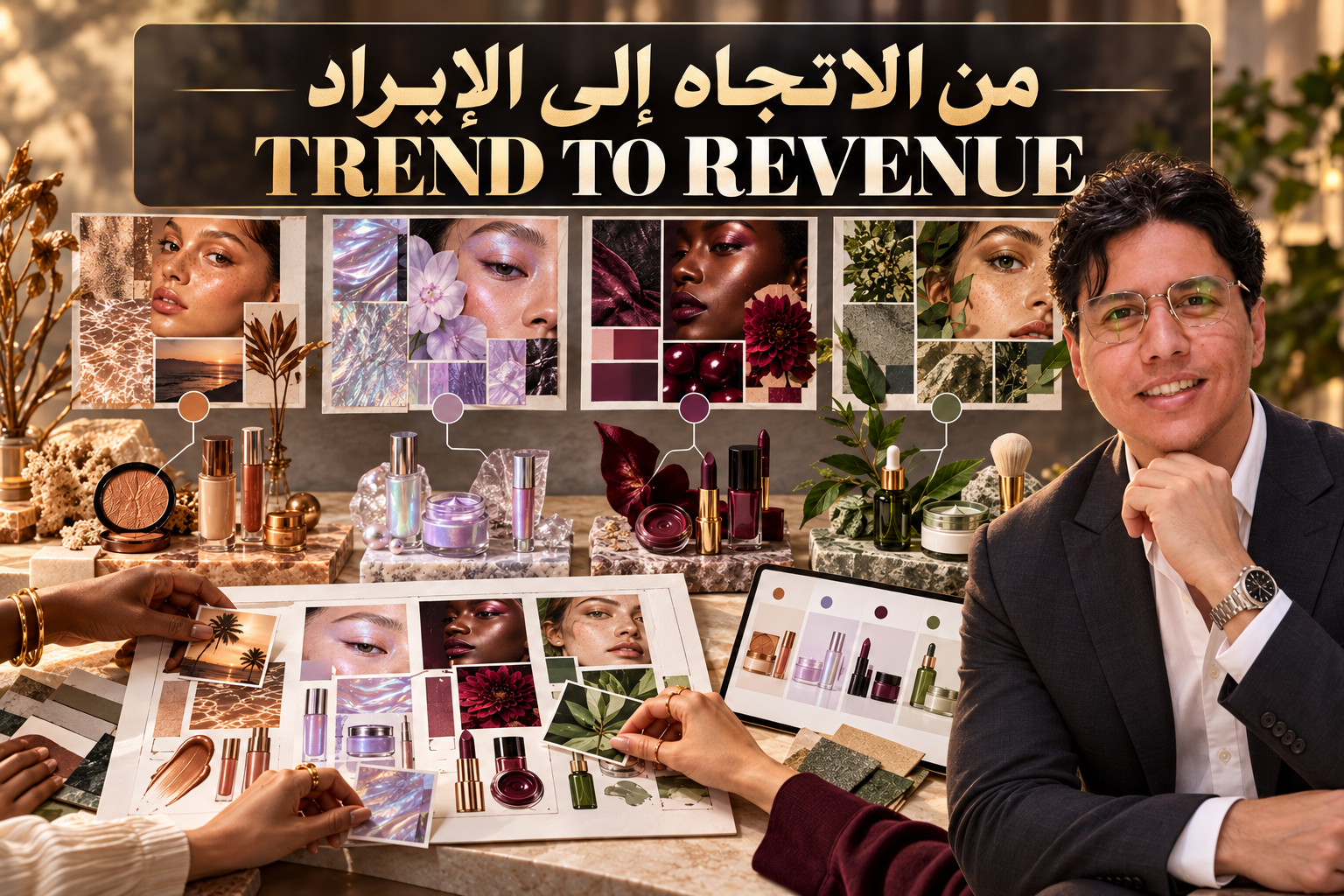
What Pinterest's first beauty report actually says
Pinterest published its first Beauty Trend Report on 6 October 2026, arguing that beauty discovery is becoming more specific and personal. The headline consumer claims come from weekly Pinterest users: 85% said they discovered new beauty trends or ideas on Pinterest before seeing them elsewhere, and 64% said Pinterest is better for finding beauty trends that feel current. These are platform-commissioned findings about Pinterest users, not percentages of all beauty consumers. The public page marks them with a study footnote, so marketers should request the underlying geography, sample size, field dates and question wording before converting the figures into a media forecast. Source: Pinterest Newsroom, 6 October 2026.
The report also publishes year-over-year search changes for precise looks. Examples include “cluster lashes ideas” up 646%, “pink hair stripe” up 463%, “frosted makeup” up 286%, “caramel nude nails” up 943%, “mocha balayage hair” up 949%, and “polka dot cat eye nails” up 1,585%. A large percentage can start from a small base, and Pinterest does not place every base search volume on the public page. These figures are directional signals inside Pinterest's search environment, not category sales growth or proof that a trend will transfer to Riyadh, Dubai or every age group.
The useful development is the combination of trend evidence and a product bridge. Beauty Guides, described on the same page, allow an iOS user in the United States to open a hair or nail Pin, tap “Get the Guide,” and see a breakdown of the look, what to ask for at a salon, related inspiration and shoppable products. Pinterest said broader availability would roll out over the following weeks. A Sephora partnership connects one reported trend family, Makeup Maximalism, with inspirational content and products. The mechanism moves from save to explanation to service language and commerce.
Why specificity changes the beauty funnel
Traditional beauty planning often begins with a broad category such as hair color, nails, fragrance or skincare. The Pinterest report shows search demand forming around combinations: color plus finish, style plus hair type, aesthetic plus occasion. Specificity reduces the distance between inspiration and action because a user can communicate the desired outcome more precisely to a stylist, retailer or creator.
For marketers, the unit of planning changes from one seasonal campaign to a modular system. A generic “autumn hair” asset may be too broad when consumers are distinguishing mocha balayage, soft copper blonde, cherry-cola brunette and oxidized copper. Each term carries a different color reference, starting condition, maintenance burden and product basket. A brand that collapses them into one red-hair message loses the intent that made the query valuable.
The same pattern appears in nails. The report's Chrome Sweet Chrome group combines chrome, cat-eye, jelly and aurora finishes with dots, stripes, hot pink and darker gothic details. This is not one trend that requires one hero visual. It is a grammar that can generate many combinations. Creative operations should store controllable modules—finish, color, shape, technique, occasion and skill level—so the team can test a specific look without rebuilding the campaign.
Specificity also creates a service challenge. A salon can attract demand for a difficult look it cannot reproduce consistently. A retailer can promote a shade that appears different under Gulf daylight or across skin tones. The marketing promise therefore needs technique, availability and expectation management. Inspiration without fulfillment raises cancellation, return and trust risk.
Turning search growth into a decision, not a headline
Start by separating signal strength from business fit. Signal strength includes relative search change, persistence across several weeks, number of related queries and creator activity. Business fit includes margin, inventory, staff skill, appointment time, safety, shade range, climate relevance and the brand's authority. A 1,585% query increase may be less useful than a 50% increase if the former is tiny, short-lived and impossible to deliver.
Build a trend score with transparent components rather than an invented universal index. For example, rate each trend from one to five on observed demand, evidence breadth, local relevance, ability to fulfill, margin potential and risk. Keep the source value beside the score. A team member should be able to see that Pinterest supplied a global or unspecified platform signal while local search, bookings and stock supplied the commercial evidence.
Then classify the time horizon. A spike around an event may support a two-week creator activation. A technique with repeat searches and repeat bookings may justify training and inventory. A visual aesthetic can refresh creative without changing the product. Do not commit permanent range or equipment investment based on a single social report.
Finally, define the disconfirming evidence. If saves rise but product-page engagement, shade selection or bookings do not, the idea may be entertainment rather than purchase intent. If inquiries rise but consultations reject the look as unsuitable, the content needs eligibility and maintenance education. If returns or complaints rise, stop scaling even when click-through looks strong.
A six-week market test for a GCC beauty brand
Week one creates a local evidence panel. Choose three trend clusters from the report and one existing evergreen look as control. Pull Pinterest search and content observations where tools permit, local Google Trends direction, site search, social comments, consultation requests, sales and inventory. Record the geography and time window for every number. Avoid combining a U.S. product feature with GCC consumer behavior as if they were the same dataset.
Week two validates production. A stylist, product specialist and compliance reviewer translate each trend into a deliverable recipe: suitable starting conditions, expected result, appointment or application time, maintenance, contraindications, price range and products. Photograph or illustrate the real range of outcomes across relevant hair textures and skin tones. Do not use a generated image as evidence of a guaranteed salon result.
Week three creates modular assets. Produce one educational carousel, one short demonstration, one consultation guide and one landing module per cluster. Arabic creative should use language a customer can repeat at the counter or salon, not a literal English trend label when it sounds unnatural. Make the product or service limitation visible before the booking step. Use creators only with clear rights and disclosure.
Weeks four and five run matched media cells. Keep budget, audience maturity, placement and offer comparable. Cell A uses the broad seasonal message. Cells B through D use specific trend language and a matching guide. The primary measure for retail might be contribution margin per landing session or completed basket. For a salon it might be cost per attended, suitable consultation and service completion. Saves, outbound clicks and guide opens are diagnostic measures, not the final outcome.
Week six evaluates the full funnel. Compare creative hold, landing engagement, product or appointment selection, stockouts, consultation suitability, cancellations, returns, repeat purchase and customer-service questions. Break down results by market and language only when the sample is sufficient. Scale a trend only if the operational outcome and guardrails remain healthy.
Using Beauty Guides as a product lesson
Beauty Guides illustrates a broader commerce principle: inspiration needs translation. A saved image may communicate a mood but not the technical request, compatible product, cost or maintenance. The guide turns an aesthetic object into structured steps. Brands can copy the logic on owned channels even where the Pinterest feature is unavailable.
For a salon group, build a “show your stylist” page with reference variations, service name, expected time, price range, suitability questions and aftercare. For a retailer, map a look to a base product, finish, tools, compatible shades and a short technique. For a creator, label which part is personal expression and which claims have evidence. Each guide should be useful without forcing a purchase.
Instrument the guide. Track guide view, depth, variant selection, store or branch choice, booking start, booking completion, attended appointment, return and support contact. Use campaign and market identifiers that do not expose sensitive personal traits. A guide can improve qualification even if it lowers raw conversion, because customers understand the time, cost and suitability before committing.
Consumer behavior, creators and inventory
Trend demand is a coordination problem. Media can accelerate attention faster than procurement or training can respond. Create a weekly meeting linking trend observation, creator planning, e-commerce, stock, salon capacity and customer service. Label each trend explore, test, scale or retire. A creator brief should never go live until the product, shade or appointment is actually available in the promoted market.
Creators add interpretation that a product grid cannot. Ask them to show how they adapted a look, who may prefer an alternative, and what maintenance surprised them. Avoid scripts that imply universal suitability. Capture comments as research, then answer recurring questions in the guide. Contract for edit rights, disclosure, territory and duration before turning a post into paid creative.
Inventory decisions need a downside plan. Test limited stock, waitlists or preorders before a broad purchase when demand is uncertain. Track sell-through at full price rather than gross units, because trend stock cleared through discounts can appear successful. For salons, reserve a small number of training slots and measure rework or correction requests before scaling appointments.
GCC localization and healthcare-adjacent boundaries
GCC beauty audiences are not one segment. Climate, modesty preferences, hair exposure, water, seasonality, shopping festivals, language and service norms differ within and between countries. A U.S. iOS feature rollout does not establish local product availability. Use the report as an idea source, then verify demand with local evidence in Saudi Arabia, the UAE, Kuwait, Qatar, Bahrain or Oman separately.
Arabic naming should help a customer act. Keep the recognizable global term where people use it, then add a clear Arabic description. Test whether “cherry cola” evokes the intended shade locally and whether a literal food metaphor creates confusion. Search behavior may mix Arabic, English and transliteration, so the listening dictionary should include all three without assuming identical intent.
Cosmetic claims can cross into health. Products that promise to treat disease, alter biological function or produce medical outcomes may face different regulation from ordinary cosmetics. Content about retinol, acids, scalp conditions, pigmentation or procedures needs qualified review, accurate instructions and referral when appropriate. A trend search increase is not evidence of safety or efficacy.
What the data cannot tell us
The report is produced by the platform that benefits from beauty marketing. Public search growth lacks absolute volume on the page, and the consumer percentages concern weekly Pinterest users. The report does not publish sales causality, a GCC breakout, every demographic, or independent replication. It is valuable first-party platform intelligence, but it needs triangulation.
Trend names can also be created or curated by platforms. Categorization makes planning easier but may hide overlap. One query can fit several clusters, and a user can save for fantasy rather than purchase. Treat clusters as hypotheses for creative and service design, not natural laws of consumer behavior.
Karim's strategic decision
Karim should turn the report into a repeatable “trend-to-revenue lab” for beauty brands and clinic-adjacent aesthetic businesses. The offer combines a local signal panel, a fulfillment score, bilingual trend guides, modular creator assets and a six-week matched test. The differentiator is measuring attended suitable appointments, contribution and repeat behavior instead of reporting search percentages as demand.
The decision rule is to scale only when three conditions align: the signal persists, the organization can fulfill the exact promise, and the test improves a qualified commercial outcome without damaging safety, returns or complaints. Pinterest can reveal the language of emerging taste. Competitive advantage comes from translating that language into an experience the GCC customer can understand, buy and receive reliably.
Comments
No published comments yet.