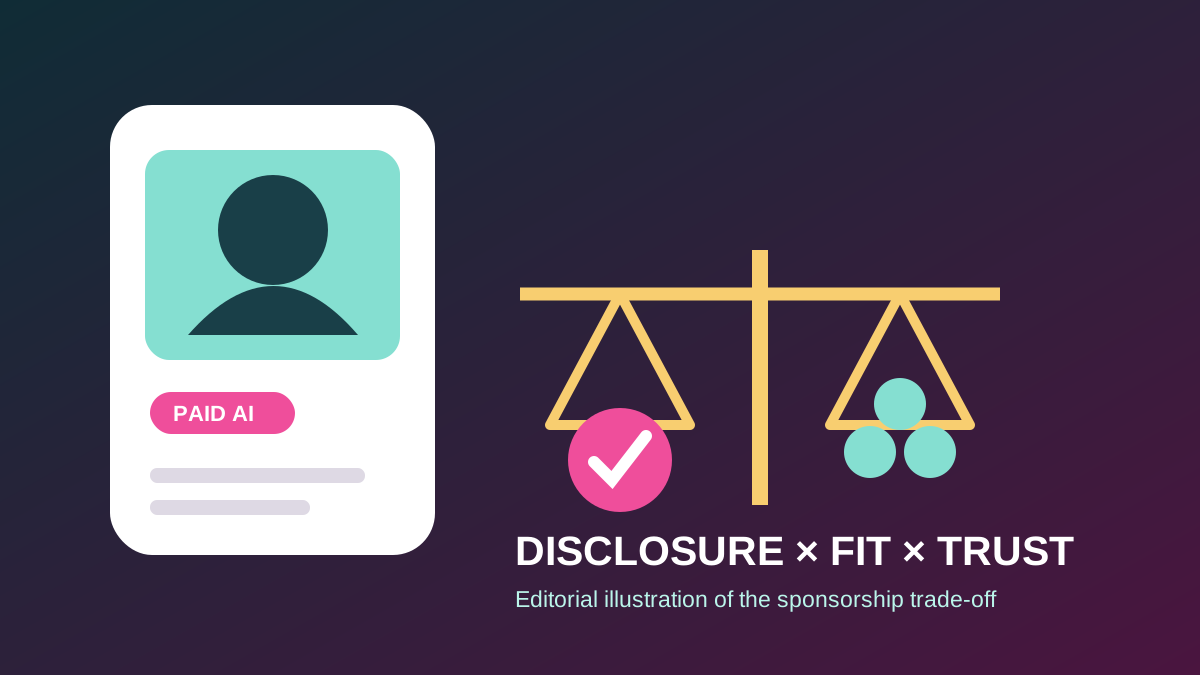
AI companies are making creator partnerships a major part of product education. A 2 October 2026 report based on interviews with creators and talent managers says companies including OpenAI, Meta, Anthropic and Google are competing for trusted voices, with some deals reaching five to seven figures. The same reporting describes audience backlash when a sponsorship feels inconsistent with a creator's values or hides how AI was used. Business Insider's creator-economy analysis is useful as market reporting, but the deal figures are interview-based rather than a complete industry dataset.
Why AI endorsements carry unusual trust risk
Creators do more than provide reach. They translate a difficult product into a familiar workflow and transfer some of their credibility to the vendor. AI adds controversy around jobs, training data, energy use, privacy and synthetic media. An enthusiastic script that ignores those questions may be interpreted as reputation laundering, especially when the creator previously criticized the same practices.
The audience also needs to distinguish three things: the creator was paid; AI helped make the content; and the creator genuinely used the product. Those facts are different. A platform label may identify generated media but not explain the commercial relationship or the depth of the experience.
Disclosure is a design requirement
The US Federal Trade Commission's endorsement guidance requires material connections to be clear and conspicuous and warns brands to monitor endorsers. A practical disclosure should appear in the spoken video and on screen before the recommendation, not only inside a collapsed caption. The creator should also explain what was provided, what was tested and which claims come from the vendor.
Honesty improves the content. Showing a useful feature, a failed attempt and the conditions under which the tool works gives the audience a decision framework. A perfect demonstration with no limitation may generate views while weakening long-term trust.
A trust-first campaign experiment
Select creators for audience fit and demonstrated expertise, not follower count alone. Ask each creator to complete the same real task with the product before writing the brief. Use a shared claim sheet and disclosure standard, but let the creator express an independent conclusion. Do not require the removal of reasonable criticism.
Measure qualified trials, product activation and retained use alongside comments, saves and audience sentiment. Add trust guardrails: unfollow rate, negative-comment themes, disclosure recall and post-campaign credibility survey. Compare a transparent tutorial against a polished endorsement to learn which produces durable adoption.
Healthcare and GCC relevance
Medical creators need stricter separation between education, paid endorsement and personal clinical advice. Compensation, free access or travel should be disclosed in language the audience understands. Saudi and UAE campaigns should check local advertising, professional and health-authority rules rather than assuming an American disclosure is sufficient.
Karim's strategic takeaway
Do not buy an influencer's trust as if it were inventory. Build a partnership that protects it: genuine use, visible disclosure, permission to discuss limits and measurement beyond views. The campaign is successful when the audience understands the relationship and still chooses to act.
Comments
No published comments yet.