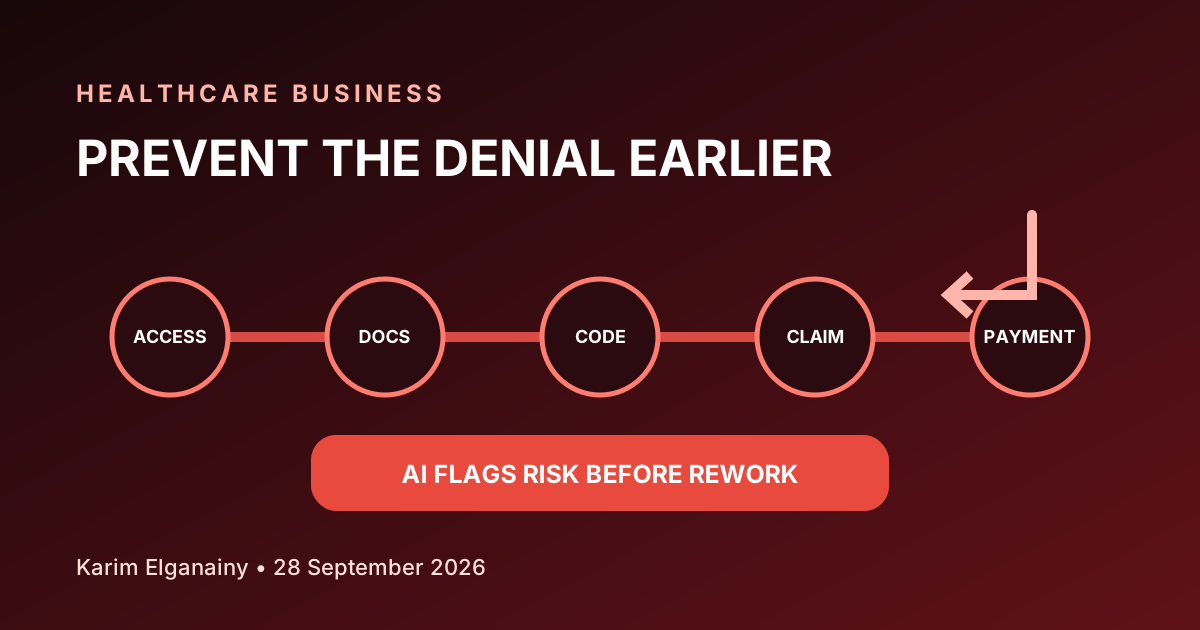
Oracle Health is moving artificial intelligence into the financial workflows that connect patient access, clinical documentation and payment. The aim is to identify missing information, authorization requirements and coding risks before they become rejected claims, delayed payments or repeated administrative work.
The announced capabilities cover prior authorization, documentation-quality review, charge capture, professional-fee coding and appeal preparation. Oracle says the tools will use clinical, payer, operational and financial context within existing workflows rather than operate as a separate assistant.
The timing needs an important qualification. Oracle's announcement of 23 September 2026 describes planned capabilities expected over the coming months. Oracle explicitly states that availability, timing, functionality and pricing may change and can vary by country and regulatory approval.
Why this matters to healthcare businesses
Revenue-cycle problems often become visible only after service delivery. By that point, staff are correcting documentation, finding missing approvals or assembling an appeal. Moving detection earlier could improve cash flow and reduce avoidable administration, but only if recommendations are accurate, auditable and integrated with accountable human review.
GCC relevance
Hospitals and clinics across the Gulf operate across self-pay, insurer and employer-sponsored journeys, with different authorization and coding rules. A model trained around US reimbursement cannot be assumed to understand local payer contracts or regulatory requirements. Local validation and language-aware documentation remain essential.
Karim strategic takeaway
Before buying a broad AI suite, identify the two largest sources of revenue leakage: missing authorization, weak documentation, inaccurate coding, no-show or delayed collection. Establish a baseline for denial rate, days to payment and rework hours. Pilot one bounded workflow with human approval and measure the cash impact rather than the number of AI recommendations.
Comments
No published comments yet.