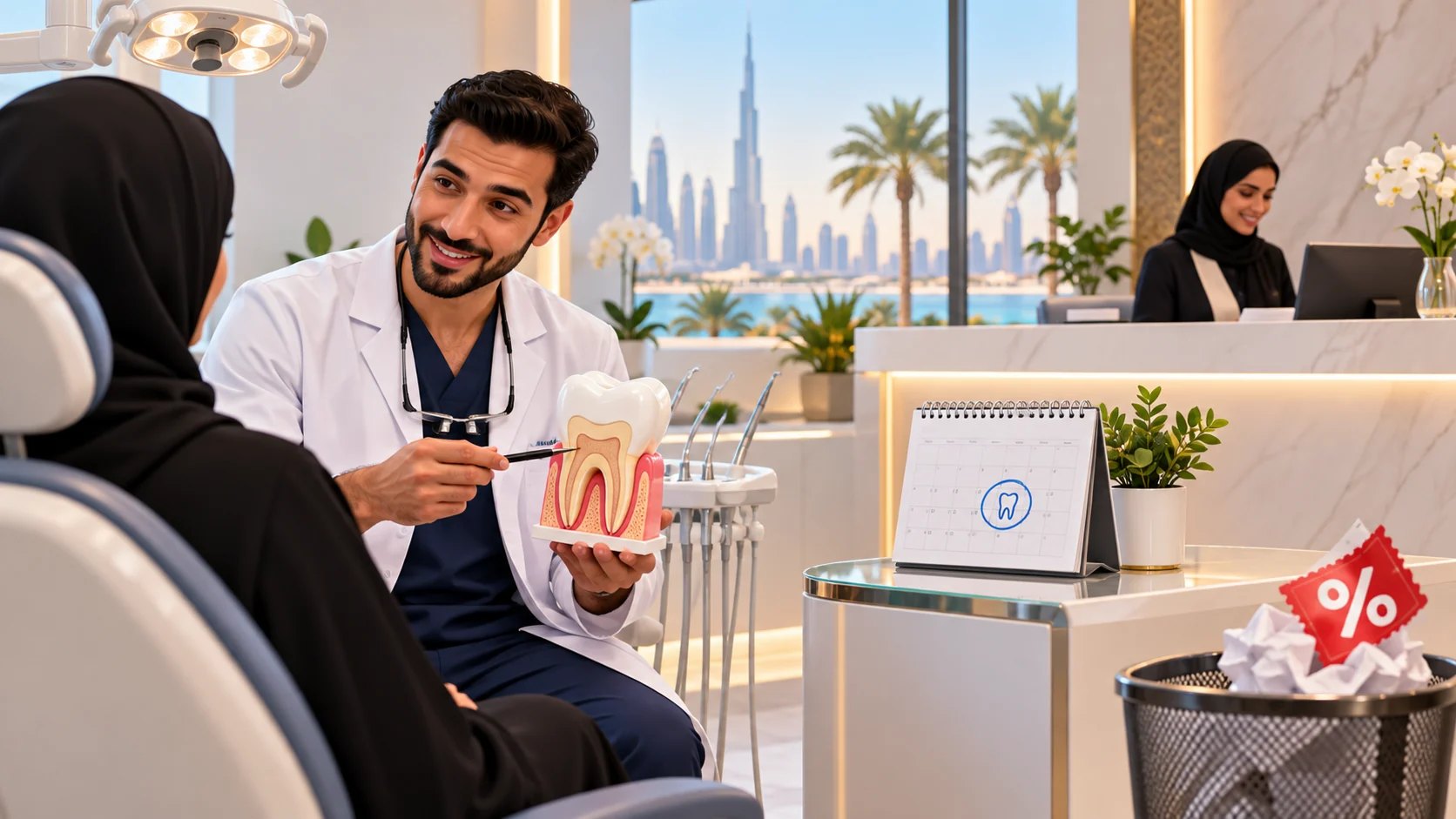
Dental and aesthetic clinics in the Gulf often compete on the same search terms and social placements. The result is a temptation to sell a procedure by price before a prospective patient understands suitability, clinician expertise or follow-up. The more useful question is whether marketing produces appropriate attended consultations and a good care experience.
Mistake one: allowing discounts to define the brand
A promotion can fill unused capacity, but repeated blanket discounts train prospects to compare only the headline price and may conceal the full treatment cost. Explain the consultation, professional qualifications, materials, aftercare and pricing inclusions instead. If you test an offer, compare cohorts on attended consultations, accepted treatment plans, cancellations, complaint rate and contribution margin. Do not frame an elective procedure as medically necessary to improve conversion. Claims for regulated products or devices require their own review under SFDA guidance in Saudi Arabia; other Gulf markets have their own rules.
Mistake two: counting leads while losing the conversation
The draft for this article mentioned that more than 40% of leads disappear at follow-up. No verified source or clinic dataset was supplied for that figure, so it should not be treated as a Gulf benchmark. Measure your own missed calls, unanswered WhatsApp enquiries, first-response time, repeat contact, qualified bookings and no-shows. Use a shared queue and approved responses, but send clinical questions to a qualified clinician. Test a response-time service level during staffed hours and compare attended consultations before and after, accounting for campaign mix.
Mistake three: hiding the physician behind promotional posts
Clinician-led education can clarify how an assessment works, what alternatives exist and when a treatment might be inappropriate. Publish named, credentialed reviews of material and update them when guidance changes. Google's health-content guidance favors helpful, trustworthy information over material created mainly to manipulate rankings. Patient testimonials and before-and-after images need particular attention to consent, accuracy and applicable local advertising rules.
A controlled six-week plan
Choose one service in one city. Establish a two-week baseline for lead source, response time, booked and attended consultations, treatment acceptance, complaints and contribution. For the next four weeks, replace one discount-heavy message with a clinician-reviewed educational page and short video, train reception and add a booking follow-up. Keep other channel settings stable where possible. Report outcomes by cohort, not likes. A small or seasonal change is directional evidence, not causal proof; repeat the test before scaling.
Privacy and Karim's opportunity
Patient messaging and marketing need different purposes and controls. Saudi personal-data guidance restricts direct marketing and sensitive health information; Dubai and other markets require their own review. Karim can offer a narrow audit of offer design, reception and doctor-led content, then present the economics of attended, appropriate care rather than a promise of cheap leads.
Comments
No published comments yet.