
What CallRail announced
On November 18, 2026, CallRail announced an Amazon Ads integration for advertisers using Amazon’s demand-side platform, or Amazon DSP. The integration adds calls, text messages and submitted forms to the conversions that advertisers can see alongside streaming TV, online video, audio and display campaigns. Its practical use is clearest when the ad and the enquiry happen in different places: someone sees an ad on a connected television in the evening and calls a business from their mobile phone the next morning. There is no meaningful click for the business to follow between those two interactions.
This is a new source of attribution data, not an independent finding that streaming caused more sales. The CallRail launch announcement discusses using the new events as signals for Amazon’s automated optimization, including Performance+. That makes the event definition more important, not less. An advertiser that treats every enquiry as a sale can end up teaching the bidding system to find callers who never buy.
What actually gets matched
The CallRail setup guide describes a simple call example. Amazon DSP serves an ad, the person later calls a CallRail tracking number, and CallRail sends the conversion event along with the caller’s phone number. Amazon attempts to match that number to an exposed customer or household. Where a website pool is in place, the guide describes an IP address as an optional second matching signal. Its privacy section says a name or email may also be shared where available. That section is a reason to inventory the actual payload before enabling the integration, not a reason to assume all channels transmit the same fields or that a business can switch every field off.
The integration records credit when a match satisfies the platform’s attribution rules. A household match is not proof of which individual saw an ad, and a missing match is not evidence that the ad played no role. A person could have contacted the business because of a referral after also seeing an ad, or could have seen the ad on a shared television and called from a number that the matching system does not recognize. Keep the language precise in reports: “matched and attributed by Amazon DSP” is defensible; “the TV ad generated this customer” requires a stronger test.
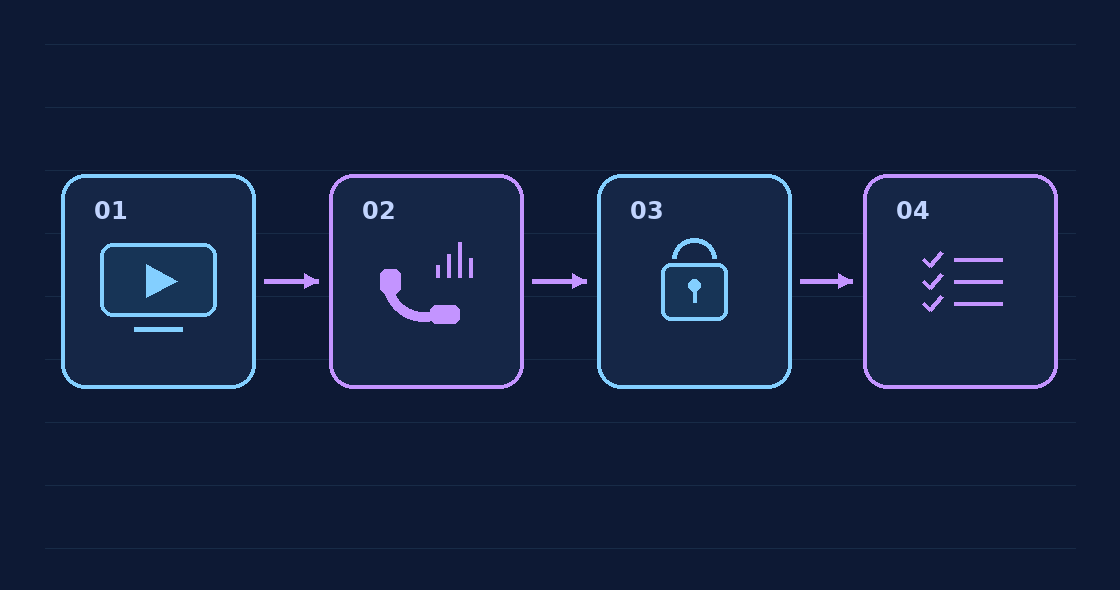
Original explanatory illustration: a streaming exposure may be followed by a call. Review the proposed data flow before activation and independently verify what happened next using a checklist. Not a product screenshot.
Primary source behind this illustration
Configure the reporting path before changing bids
Treat setup as two changes with different owners. In CallRail, an authorized operator enables the integration after the Amazon Ads data terms have been accepted. According to the guide, CallRail creates the conversion dataset and definition when the integration is activated. In Amazon DSP, the campaign owner then attaches that conversion definition to each campaign or line item that should report it. The first step alone will not make results appear against an unattached campaign. The guide says reporting generally starts 24–48 hours after the first matched interaction. This is an expected reporting delay, not a promise that a given test call will match.
Start with a small number of named line items and keep a configuration log. Note who accepted the terms, which dataset and definition are in use, which line items use it, when it went live, and what time zone and attribution window the report uses. Test whether a legitimate enquiry reaches the call-handling system and appears in the internal record. Then compare aggregate counts with the DSP after the usual delay. If the DSP is blank, distinguish among an unattached definition, no eligible match, a delayed report and an upstream delivery problem before altering the campaign.
Turn a call into a business outcome
For a fictional appliance-repair company, suppose a streaming test spends SAR 4,800 and Amazon reports 48 matched enquiries. The call desk qualifies 30 enquiries against the same cohort and 16 customers complete and pay for a repair. If the company can lawfully validate those outcomes against the attributed cohort, the three ratios answer different questions: SAR 100 per matched enquiry, SAR 160 per qualified enquiry and SAR 300 per completed repair. These are illustrative figures in Saudi riyals, not CallRail results, and do not imply that the integration is available in Saudi Arabia. If the company cannot make a reliable cohort join, publish the available platform and operational measures separately rather than dividing spend by unrelated totals.
The customer record needs a clear status progression. An unanswered call, a duplicate submission and a request for a service outside the area are not three commercial leads. Define qualified enquiries before the test, for example a distinct customer requesting a supported repair in a served area and reachable for a quote. Keep confirmed appointments separate from completed repairs. Let cohorts mature for the same number of days, then reconcile repeated contacts and cancellations consistently. Marketing should own spend and the definition of the ad events; service operations should own the outcome and the reconciliation rules should be agreed by both.
Use a comparison that can answer a budget question
Begin in observation mode rather than changing creative, geography, bids and event definitions at the same time. Fix the outcome, comparison period and reporting cutoff before the test. Compare match coverage, proportion qualified, cost per confirmed job and cost per completed job. Read the first fortnight with caution if completion takes longer. Compare equally mature cohorts and hold the call-center opening hours and dispatch capacity reasonably steady; otherwise a change in the back office can look like a change in media effectiveness.
When the decision is whether to spend more, platform attribution is not enough. Where feasible, randomize exposure or use a planned holdout at a suitable geographic or audience unit. Choose one where customers are unlikely to move between groups, and check the practical capacity to identify a useful difference. If a holdout cannot be run, a matched comparison can help prioritize the next test, but report relevant differences such as seasonality or media overlap rather than claiming a causal lift. Track all qualified outcomes in the test and comparison groups, not only those the platform has matched. An increase in reported conversions after connection may reflect better measurement of the same demand.
Decide which signal is good enough to optimize
The first week is a reporting exercise, not a race to switch on automated optimization. Write down which events answer which questions. An event for a submitted form tells you a process finished; it does not tell you whether a person can be reached. A matched inbound call tells you an eligible interaction was associated with an exposure; it does not tell you whether the caller wanted the advertised service. If the platform destination can receive only a broad event or you cannot verify the boundaries of what is sent, keep the operational qualification metric in the business report rather than pretending the bidding engine is optimizing for it.
Make the handoff tangible. For the fictional repair business, use a weekly table with one row per reporting cohort and columns for media spend, platform-matched enquiries, internally qualified enquiries, confirmed repair appointments, completed jobs and refunds. Include the completion cutoff and an explicit note on which measures are joined and which are not. Assign a named owner to resolve differences. For example, a rise in calls during a weekend may look encouraging until an agent discovers that the advertised call window exceeded actual staffed hours. A dashboard that displays call volume without unanswered calls can hide that problem.
Use different thresholds for decisions. A persistent gap between internal event counts and reported matches should trigger an instrumentation review, not an automatic budget change. A higher cost per matched enquiry can be acceptable if verified jobs become cheaper and there is enough completed volume to support the change. Conversely, a drop in the cost of matched calls can be a warning if more callers are out of area or demand cannot be served. Record the chosen metric before the test, keep its denominator steady across reports, and check that the result still holds after the cohort matures. The goal is not to reward whoever produces the most events, but to surface the action that will improve the next week of service and spend.
Decide what action fits each outcome before presenting the table. If enquiry volume rises but qualification does not, review how clearly the ad states the service and area. If qualification improves but completion stalls, inspect scheduling and field capacity first. If only the attribution report improves, measurement may be more complete while operations stayed the same. A dashboard limited to conversion counts can hide these differences.
Protect against double counting during later reviews. If a caller also texts and submits a form, the platform may report more than one interaction, depending on how tracking is configured. Where the business has an approved internal method, count the same customer journey once for its operational outcome. Likewise a refund changes retained revenue, not the fact the enquiry was recorded. Keep these adjustments in the internal metric definitions rather than editing the platform totals until both columns agree. This keeps a gap visible and gives each team one number it can explain.
Before asking whether the tracking improved the business, check who could never have been matched. Some partners use shared business numbers, some customers call from a different device, and certain leads arrive through an offline referral. The platform’s match rate describes the observable subset, not a representative sample of everyone reached. In the fictional test, track the share of all qualified enquiries for which the acquisition source stays unknown. Do not move them into the supposedly weakest or strongest channel to balance the spreadsheet. A change in unknown-source volume is a useful prompt to audit tracking, not evidence that any campaign underperformed.
Put a boundary around the data
Phone numbers, IP addresses, names and email addresses are not harmless just because they support measurement. Before enabling the data flow, get the appropriate owner to confirm its purpose, field eligibility, privacy notice, applicable permissions, retention, geography and access controls. Review how opt-outs and deletion requests will be handled and whether those controls actually reach the destination. If the flow cannot be justified, do not enable it; use an approved aggregate reporting workflow instead.
For healthcare enquiries, a phone number or even a generic-looking event can reveal a sensitive context when combined with campaign information. Do not use this article as permission to send patient identifiers, patient inquiries, appointment details, or health-related data to an ad platform. A clinic can study the operational journey internally using approved aggregate measures and synthetic testing. For other businesses, first verify platform eligibility and the relevant privacy rules in the actual market. The useful strategic question is not whether matching produces a bigger number, but whether a safe, reproducible metric changes a decision about budget or lead handling.
Comments
No published comments yet.