An announcement is not a commercial launch
On November 19, 2026, Toronto-based Adjective Health announced its entry into healthcare technology with a patient-facing AI platform. The proposal is straightforward: if patients and their healthcare providers agree, a patient can capture a visit and later return to a plain-language summary and relevant education. The company calls the patient app Adj/. The announcement's headline uses the word “launches,” but the company's public documents distinguish announcing the platform from releasing the app. Its health-data policy, effective November 18, describes a pre-release version tested in voluntary focus groups. Its website terms say the app will have separate terms when it launches. The product page offers a demo and describes partner invitations. None of those facts independently establishes a commercial rollout, local availability, a price, or integration readiness.
That difference matters to healthcare marketers. A public product description tells you which use case the business is pursuing, not what your clinical team can safely buy or switch on. Nor does the announcement provide independent evidence that the app improves understanding, reduces follow-up calls, or changes adherence. Treat it as a useful prompt for reviewing the gap between the conversation and the patient's next step, rather than as evidence of an outcome. There is no reason to wait for this particular app to test whether clearer instructions help in your setting. Start by identifying the question that regularly goes unanswered, then choose a medium that makes the answer easier to understand without adding risk or complexity.
What the patient would take home
The announced model is not primarily a clinician note-taking tool. The company's stated design puts the patient in control of starting, pausing, stopping and deleting the capture, with consent from both patient and provider before recording. The product could turn the encounter into a portable explanation rather than a file named after an appointment: what was discussed, where to find a clinician-approved resource, and which question to take back to the team. Adjective Health says this is not a tool for diagnosing conditions, recommending treatment or replacing clinical judgment. Those boundaries should be visible on the screen where the patient reads the material, not just in an FAQ.
The distinction between recording and explaining is important. An audio track preserves words, not necessarily their meaning. A generated summary changes the representation of the conversation and can omit a qualifier, merge two speakers or confuse a provisional plan with a confirmed one. It is even less suitable as the sole source of a changed medicine instruction or an urgent next step. An implementation should visibly separate what the care team has confirmed from what the tool has drafted. The official plan and an accessible correction route need to be available even when the summary is unavailable or when the patient chooses not to record. The length of the summary matters less than whether people can see what is confirmed and where to go when something seems inconsistent.
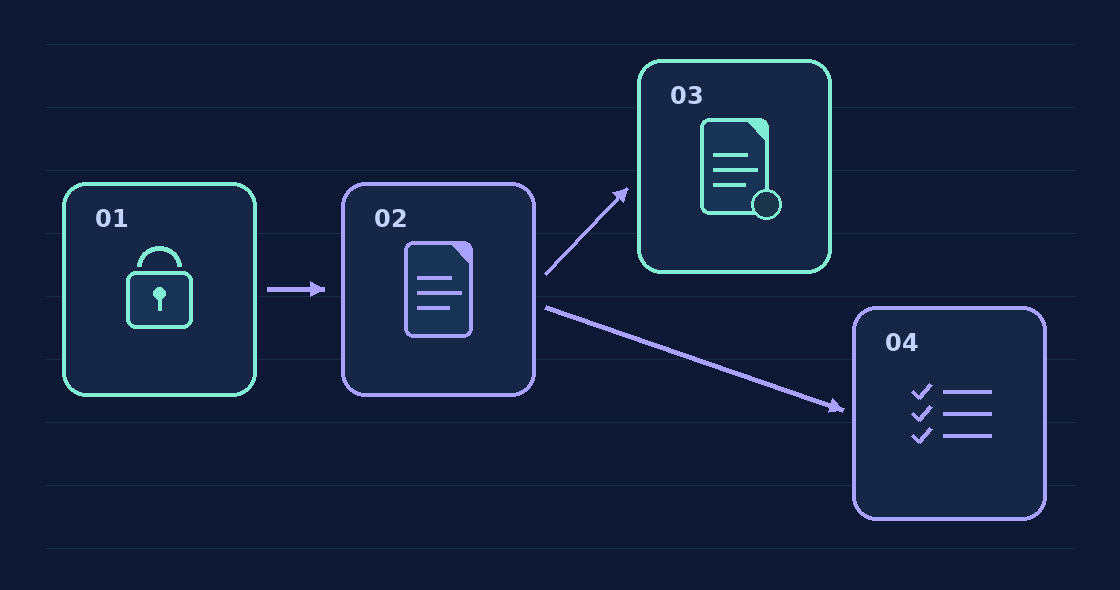
Original explanatory illustration, not a product interface: consent precedes the summary, the education guide stands apart, and review remains a distinct step.
Primary source behind this illustration
Where a useful channel could become advertising
The vendor says healthcare and life-sciences partners can contribute approved educational material and, with consent, receive combined, de-identified patterns of recurring questions. The platform description says resources are labeled by source and partners are not given individual visit recordings or summaries. The pre-release policy makes a further distinction: sample partner material in testing is not real sponsored content, and focus-group data is not used for advertising, partner sharing or training. For the future product, the policy describes paid partner content, clearly labeled, and a planned request for consent before health data is used to train or improve AI models. The policy's current scope is limited, not a document establishing global privacy compliance. These are published statements about its model, not audited guarantees about final implementation.
This model creates two very different decisions. The education decision is whether a resource genuinely answers a patient question at that moment. The commercial decision is whether a partner should pay to support distribution or the development of materials. Do not let the second determine the first. A clinician-confirmed summary should be usable if all partner modules are removed. A patient should not have to watch sponsored material to find contact details or understand what the care team said. Label the sponsor next to the material and give unbranded options an equivalent position. For an independent content review, compare approved sources by clinical relevance, reading level, accessibility and date, not by sponsorship value. Keep diagnosis context out of promotional reporting and never send identifiable visit text to a sponsor.
Put consent and correction ahead of scale
There are at least three separate decisions for a team evaluating the proposed technology: permission to record the encounter, permission to show or personalize optional partner material, and any permission to use health data to improve a model. A single acceptance button makes it hard to tell which decision a patient actually made. Design each choice so the patient can decline the optional use without losing the ordinary after-visit instructions. Ask how the team would handle an interpreter, caregiver or other person joining after recording begins. Provide an equivalent no-recording route that does not depend on the person owning a phone, speaking the dominant language or opening an account.
A vendor discussion should cover what resides on the device and what leaves it; the processors involved; storage locations and lifecycle for audio, transcript, summary, analytics and backups; who can view or export each version; and the mechanism for correcting a published error. Test removal and access revocation separately. “Delete” may mean an item disappears from the patient's view, not that every derived copy, export or backup is immediately erased; ask for a written description and test it with artificial content. For aggregate reporting, suppress small groups and avoid combinations of filters that might make one person easy to recognize. Treat de-identification as a claim to examine, not as permission to pursue more granular reporting. Marketing can help make these explanations understandable, but product, privacy and clinical owners must decide what is acceptable.
A fictional pilot that does not need visit audio
Imagine a clinic wants patients to know where to find their next appointment instructions after a planned outpatient visit. Start with a clinician-reviewed, generic after-visit handout, not captured audio and not patient-level advertising. The control is the existing handout; the test uses the same approved information in a shorter hierarchy, with a visible contact route and parallel Arabic and English versions. Check the wording with fictional scenarios before any separately approved live pilot. The person who prepares the material should not be the only person checking it. For a first pass, ask a tester to open the guide and point to the contact and appointment instructions without a hint. Let an observer note where the tester gets stuck without immediately helping, so the effect of staff assistance is not confused with the effect of the guide.
For an illustrative comparison, assume both variants are offered to 40 people, 30 in each group complete an optional independent comprehension check, and 18 in the control group versus 24 in the test group identify both steps correctly. That is 60% versus 80% among respondents, a 20 percentage-point difference in this example, not an observed Adjective Health result. The response rate is 30 of 40 (75%) in both groups. The same response rate does not prove the respondents were equivalent. Log offer, completion and comprehension as separate denominators. Examine whether digital access, language, or differences between staff affected participation. With a small sample, report counts before drawing inference and set the next test in advance. Track any wrong instruction or missing correction route as a stop signal, independent of the engagement figures.
If the experiment progresses to more than one location, specify where the appointment actually occurs and who owns correction and follow-up. Validate Arabic on a phone and in right-to-left layout, and test translated variants with fluent reviewers. Offer printed alternatives and keep the contact information identical across versions. Measure avoidable administrative repeat contacts only when you can separate them from appropriate follow-up. Reducing all calls is not a good success target: a clear guide should sometimes encourage an important question. Keep the educational metric separate from the clinical and operational outcomes that would require their own approved study. Even an improvement on the reading task is not evidence that a change in attendance came from the guide rather than from other factors.
Treat patient understanding as the decision criterion
The strongest insight in this announcement is not that every healthcare brand needs to record the exam room. It is that waiting until a patient opens a generic newsletter is a weak way of solving a specific information gap after an encounter. Begin with a verified, comprehensible next step. Decide who can approve and correct content before deciding which delivery technology to use. Measure whether patients can locate the next action and know whom to ask when uncertain. Do not use opens, sponsor views or clicks as substitutes for confirmed understanding, and do not promise better adherence on the strength of an announcement or on improvements to an information task. Before approving an interface, ask an independent reviewer to explain the difference between the care plan, generated summary, and partner-funded material. If the reviewer needs the designer to explain the distinction, fix the presentation before changing colors or adding features.
Read the November 19 announcement, proposed platform and safeguards, pre-release consumer health data policy, and website terms of use. These are first-party accounts; the implementation and measures above are independent editorial proposals, not claims that the service has produced these results.
Comments
No published comments yet.