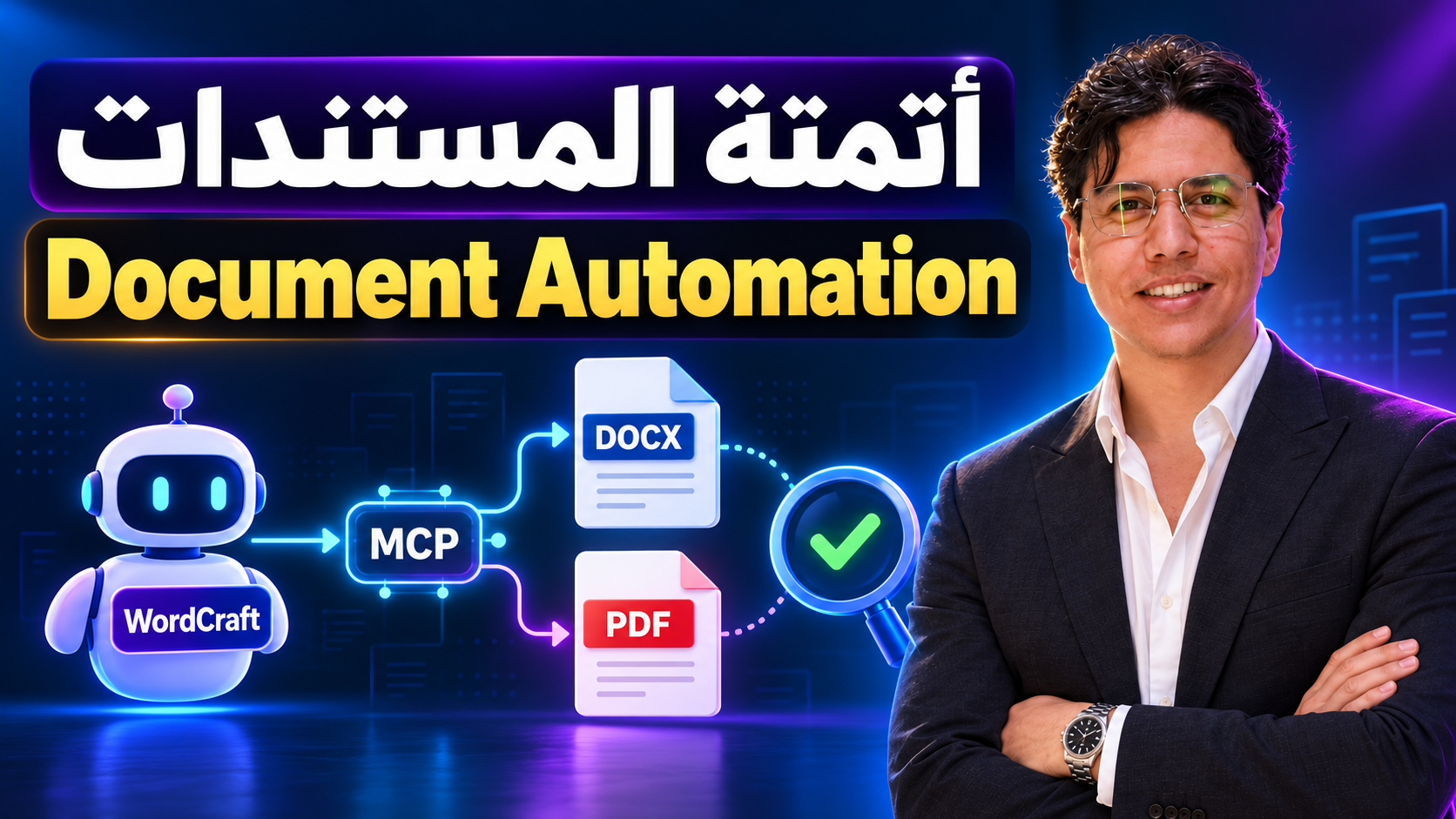
WordCraft brings document automation into focus
WordCraft deserves attention from agencies because its project describes an open-source Rust word processor that exposes document operations to software agents. The README lists DOCX handling, PDF export and command access through several interfaces. These are the project's own descriptions, rather than independently verified compatibility results. WordCraft repository.
The immediate news peg is its v0.6.1 release, dated 12 October 2026. The release notes include changes involving right-to-left tables and sections, charts, SmartArt and content controls. A listed change establishes development activity; it does not demonstrate that a client's document will survive every editing round trip. Release notes.
For a Gulf agency, the commercial question is straightforward: can an automated process produce an accurate, editable Arabic and English report with less total human effort? The analysis below proposes a controlled way to answer that question. It is an operating recommendation, not a hands-on product review, a launch announcement for today or a claim that this tool already meets enterprise requirements.
Establish what is available before promising a workflow
The project provides downloadable builds, while its roadmap still labels the software alpha. Documentation changes are not synchronized: headline counts differ, and older gap summaries coexist with newer progress entries. The roadmap also distinguishes Arabic document handling from an Arabic interface. Treat its readiness estimates as the maintainers' assessment. Project roadmap.
A procurement decision should therefore name a specific release, operating environment and document type. “Works with our reporting template on this approved machine” is a useful testable statement. “Replaces the office suite” contains many additional promises about reviewing, collaboration, accessibility, compatibility and support. Each promise needs separate evidence. A successful export offers only one piece of that evidence.
Freeze the selected version during a pilot. Record where the package came from, who approved its use and which fonts the test environment contains. Keep an untouched copy of every input. Changing the application, template and font collection together makes a failure difficult to diagnose and a success difficult to reproduce.
Design the document before choosing the agent
Begin with a recurring report whose structure is already accepted by the client. A campaign review is a good candidate when it contains a fixed executive summary, a performance table, an explanation of exceptions and a short action list. Avoid the most visually ambitious sales proposal as the first experiment. The objective is to isolate a repeatable production problem.
Define a content contract for each section. The performance table must contain specified metrics, the reporting period, currency and data source. The summary must describe observed changes without inventing causes. The action list must distinguish an approved decision from a suggestion awaiting review. If information is missing, the expected output is a visible question or empty required field, never a plausible substitute.
Maintain one approved fact sheet for both languages. Assign stable identifiers to figures and factual statements so reviewers can compare meaning even when paragraph order differs. This preparation is valuable regardless of which editor ultimately produces the file.
Give automation a narrow and visible boundary
MCP, or Model Context Protocol, gives a compatible agent structured commands to inspect and edit a document. In a repeatable workflow, those operations can turn an approved fact sheet into a file whose content and layout are then checked. The MCP documentation describes separate read and write roots for the headless server. It explicitly says these restrictions do not apply to the connected desktop-app mode, and notes that document content can still be returned through inspection tools. Folder restrictions therefore need careful interpretation. MCP documentation.
For the proposed experiment, use an isolated work area containing only synthetic inputs, approved template copies and a separate output folder. Do not mount a client archive or a manager's entire documents directory. A designated technical owner should verify the actual boundary before the reporting team relies on it. Written instructions alone should not be treated as an access-control mechanism.
Also review the connected agent independently. A locally stored file can become information sent to a remote model if the agent reads and submits its contents. Map that route before introducing real material. Keep the pilot private, prohibit automatic delivery and require a named person to approve each final output.
Arabic quality needs its own acceptance sheet
Arabic review should begin with meaning and then examine layout. Confirm that a qualified lead remains a qualified lead, that revenue is not translated into profit and that a recommendation does not become a commitment. Build a small bilingual glossary around the client's actual reporting vocabulary. Record approved brand spellings, branch names and service terminology rather than asking the model to reinvent them.
The layout sample should deliberately contain mixed scripts: an Arabic sentence with a Latin campaign name, a percentage, a currency abbreviation and a URL. Include a long table label, a numbered list and a footnote. Check character joining, punctuation placement, reading order, line breaks and whether text remains selectable in the final output. These are proposed checks, not claims about observed WordCraft defects.
Use a native Arabic reviewer familiar with the business. An English proofreader cannot validate the Arabic report by comparing its page count. Score each language independently so an excellent English result cannot conceal repeated Arabic corrections.
Test the journey through the recipient's software
The document's useful life continues after export. A client may open it, add a comment, change a table heading, save it and forward it to a colleague. Recreate that journey using the software versions the pilot is intended to serve. Compare the untouched reference, generated file and reopened copy, retaining all three for inspection.
Check content before appearance. Every figure, paragraph, hyperlink target and table row must remain present. Then inspect section breaks, headings stranded at page bottoms, captions, header alignment and image placement. A small pagination difference may be acceptable in an internal update; a missing disclaimer or cropped total is a critical failure. Agree on those distinctions before reviewing results.
Keep a simple defect register with severity, affected language, reproduction steps and owner. Fixing a template problem once may remove many errors. Quietly repairing every report by hand, without recording the work, would hide the true cost of the automated process.
Run twenty synthetic reports with explicit stop rules
A useful bounded pilot produces twenty consecutive synthetic report packages, each containing an Arabic and an English version. Use a small template family and vary input length, table size and missing-data conditions. Before running automation, measure the current manual process on comparable examples. Include preparation, bilingual review, corrections and final export in both timing methods.
Assign one producer and a different reviewer. The reviewer should work from the approved fact sheet and acceptance checklist, not from the agent's confident description of its own output. Save rejected attempts as part of the evidence. If a file loses content, crosses a folder boundary or exposes another client's material, stop the run and investigate before continuing.
An illustrative graduation gate is twenty accepted packages with no unresolved critical defects and at least fifty percent lower median human handling time. This is a proposed target, not a reported product result. Even meeting it would justify only a larger controlled trial, because twenty examples cannot establish reliability across every document.
Make the financial case with review-inclusive numbers
Suppose an agency prepares twenty report packages each month. If the conventional process requires ninety minutes per package and a proposed workflow requires forty-five, the gross reduction is fifteen hours. If template maintenance, technical support and additional checks consume seven hours, the remaining capacity is eight hours before software or infrastructure costs. These are illustrative inputs, not a benchmark.
Ask what happens to those eight hours. They might support better analysis, reduce overtime or allow a more predictable delivery schedule. They do not automatically become cash savings. If the team simply creates more reports that nobody reads, faster production has added little commercial value. Tie the experiment to a specific operational problem that a client or manager recognizes.
Compare the pilot with a simpler alternative, such as improving the existing template or fixing the export that feeds it. The appropriate investment is the smallest reliable change that solves the bottleneck while leaving enough ownership and support capacity for normal work.
Healthcare reports require a deliberately safer starting point
A healthcare marketing agency can test document production without including patient information. Build fictional campaign totals, invented branch names and public-style service descriptions. Keep appointment notes, individual enquiry histories, clinical narratives and identifiable screenshots outside the experiment. The first objective is proving a document workflow, which does not require a real person's health context.
If the organization later considers real operational data, its privacy and security owners should review the purpose, minimum necessary fields, access, retention and processing locations. This article does not certify any deployment against Saudi, Emirati or other healthcare requirements. A qualified local assessment belongs before a production decision, especially where an external model or another service receives document contents.
Public-facing medical statements also need the institution's normal review. Automation should not strengthen an outcome claim, remove an eligibility condition or turn a marketing suggestion into clinical advice. Preserve the approved wording and the person responsible for its accuracy throughout both language versions.
Plan for exceptions, revisions and departure
A dependable workflow needs an exit route. Keep approved source data, templates, terminology decisions and final deliverables in formats the organization can retrieve without a particular agent session. Name the person who can rebuild a report manually if the application fails on a deadline. Test that fallback during the pilot rather than discovering missing assets during delivery.
Treat a template update as a new test event. A wider logo, changed font or extra table column can invalidate an earlier visual result. Maintain a compact regression set containing the shortest report, longest report, most complex bilingual paragraph and widest table. Rerun those examples before allowing the new template into routine work.
When a client requests revisions, preserve the original approved version and record the requested change. The agent should receive the bounded revision task and the relevant source facts. A request to update one number should not become permission to rewrite the executive summary or alter another client's template.
Karim's takeaway: make document reliability the product
The strongest agency offer is a fixed-scope document workflow assessment: map the current process, create a bilingual acceptance sheet, prepare synthetic examples and measure the complete handling cost. The client should receive the test evidence, representative failures and a clear recommendation about where human review remains necessary. That deliverable has value even if the chosen tool changes.
Keep commercial promises tied to observed results. A repeatable reporting package with traceable figures and consistent Arabic typography is easier to defend than a promise of autonomous document production. The technical team owns configuration and recovery; the account team owns the client's approved meaning; a reviewer owns release of the final file. Those responsibilities should be visible in the service agreement.
WordCraft is worth investigating through that disciplined lens. The practical opportunity is to turn repetitive formatting work into a controlled, inspectable process while preserving editorial judgment. Let accepted documents, review time and recoverable failures determine the next investment, rather than a feature count or an impressive demonstration.
Comments
No published comments yet.