The announcement, and the decision it creates
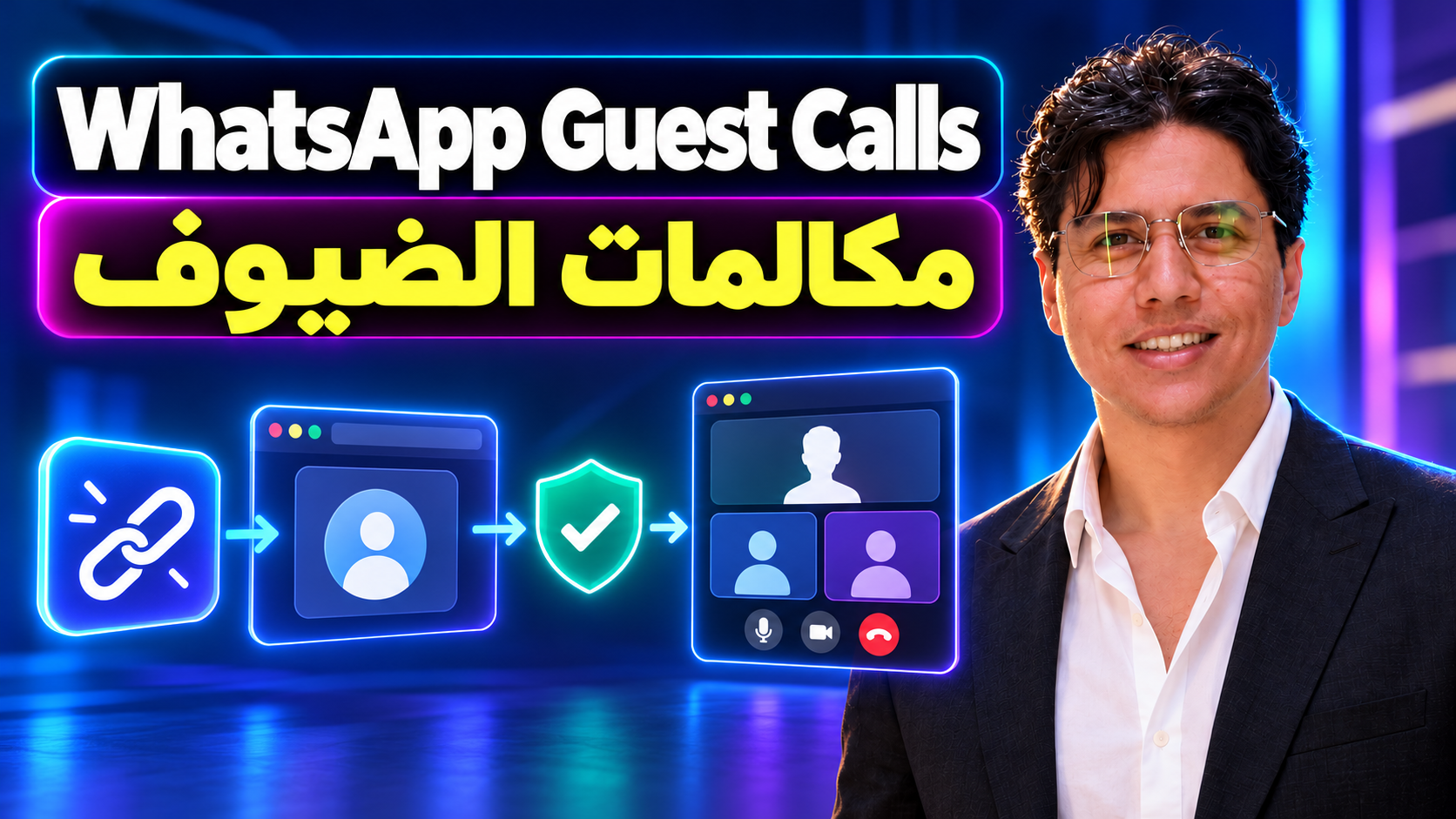
Meta announced guest calling on October 14, 2026. An account holder creates a call link; a non-account holder opens it in a computer browser, enters a name and waits for host admission. Calls support up to 32 people. Guests cannot see participants’ phone numbers, send messages or directly add others. The WhatsApp announcement describes free, end-to-end encrypted calls without time limits, with screen sharing and reactions. Google and Outlook calendar integrations are planned for later in 2026.
For a business reviewing this development on October 15, the useful question is whether it can make an already valuable conversation easier to attend. Removing a registration step may help some invitees, but it does not make the meeting relevant, establish the guest’s identity or guarantee an effective follow-up. The practical opportunity is a tightly defined experiment in access and attendance, with the result judged across the complete customer journey.
Treat the joining path as part of the service
A meeting invitation is a small service experience. It contains a promise about the purpose, the time required and what the participant should expect. If the first useful information arrives after the person has struggled to enter, the organizer has created work before demonstrating value. Design the invitation with the same care as a landing page, while keeping it short enough to read on a phone.
A client-discovery invitation could explain the topic, expected duration, named host, computer-browser requirement and a familiar contact route if joining fails. State the time zone explicitly for cross-border meetings. Tell people whether they should prepare anything, and avoid attaching a questionnaire that quietly rebuilds the friction the new entry route was meant to reduce. A short agenda and a clear outcome are usually enough for an initial discussion.
Keep a verified alternative meeting route ready. The alternative should preserve the appointment rather than force the invitee to schedule again. Test both paths internally before inviting external participants.
Identify where the commercial opportunity actually sits
The strongest starting point is an existing process with documented joining problems. Perhaps prospective clients accept discovery calls but need several messages to get connected. Perhaps occasional external trainers prefer a browser-based option. Those are testable operational problems. A broad promise that a familiar consumer brand will automatically improve sales is much harder to defend.
Look at the last several weeks of meeting notes and support requests. Separate people who never confirmed from people who confirmed but could not enter, arrived late after technical trouble or abandoned the attempt. Only some of those losses are plausibly addressable through a different meeting route. Poor qualification, inconvenient timing and an unclear offer need different remedies.
For a healthcare marketing team, a sensible early use could be a nonclinical supplier briefing or staff session about campaign planning using invented examples. Keep patient discussions, identifiable case material and clinical consultations outside this proposed pilot. Choosing a narrow business context makes both the experiment and its review easier to manage.
Build a bounded discovery-call pilot
Consider this hypothetical design: a professional-services team compares two invitation routes over two weeks for a small set of otherwise similar discovery meetings. The length and sample size are illustrative planning choices, not a claim that two weeks establishes statistical certainty. Before starting, confirm that the feature works in the actual host account, guest devices and networks involved.
Keep the meeting purpose, host preparation, reminder timing and follow-up standard consistent. Where practical, allocate eligible meetings between the existing route and the guest-call route in advance. Record exceptions, including invitees who request a particular tool. Do not silently remove difficult sessions from the results, because those sessions may reveal the most important limitation.
Write down a simple hypothesis: easier entry will increase the share of confirmed invitees who reach a useful conversation without additional organizer support. Also identify a guardrail: host preparation and admission work must not rise enough to erase the benefit. The pilot should answer both questions before wider adoption.
Measure attendance with explicit denominators
A single attendance percentage conceals several different outcomes. Keep counts for eligible invitations sent, invitations accepted, people who attempted to join, people admitted and meetings completed. Define completion before collecting results: for example, a hypothetical discovery meeting counts as complete when the agreed agenda is covered and a next step is either accepted or explicitly declined.
Calculate invitation-to-attendance as attendees divided by eligible invitations. Calculate accepted-to-attendance separately, using confirmed invitees as the denominator. If joining attempts are not observable, say so and use a participant’s voluntary report rather than inventing a precise conversion rate. A failed connection cannot disappear simply because it left no platform event in an available report.
For illustration, 18 attendees from 24 confirmed invitations is 75%, while the same 18 attendees from 30 eligible invitations is 60%. Neither is the universal attendance rate; each answers a different question. Present both raw counts and percentages, alongside cancellations and reschedules. With small samples, describe the pattern as an early signal and examine individual failure reasons before drawing a causal conclusion.
Measure support effort and meeting quality too
Record the time the organizer spends preparing instructions, resolving joining issues and recovering missed starts. A modest improvement in attendance may still be unattractive if a senior salesperson spends significantly longer on administration. Use approximate minutes consistently rather than implying second-level accuracy from estimates made after the meeting.
Choose one outcome beyond entry. For discovery calls, that might be the share of completed meetings that produce a mutually agreed next step appropriate to the prospect. For a training session, it could be completion of a short, non-sensitive practice task. Avoid using camera activation or time connected as a substitute for understanding, intent or business value.
A hypothetical decision rule might require fewer help requests, no deterioration in completed agendas and acceptable organizer effort. Set the thresholds from the team’s current baseline and economics, not a borrowed industry benchmark. Review negative experiences as carefully as successful ones. A single repeated failure affecting a particular device group can matter more than an encouraging overall average.
Make admission an operational responsibility
Assign someone to own entry into every pilot session. That person needs the invitation list, a clear start-time routine and a method for resolving unfamiliar names. Do not assume the presenter can simultaneously greet participants, explain a slide and notice every joining request without interruption. For a small meeting, the host may manage this directly; for a more involved session, plan the roles before sending invitations and verify what the actual interface permits.
A typed display name should be treated as a claim, not proof of identity. If a name is unexpected, confirm through the contact channel already used to arrange the meeting. Do not ask for identity documents or additional personal details merely to resolve an ordinary scheduling ambiguity. If confidence remains low, postpone admission and clarify privately.
Avoid publishing a private session link on a public event page. Share it with the intended audience through the agreed invitation channel. Keep the guest list proportionate to the purpose, and decide in advance who can stop the discussion if an unexpected participant appears.
Separate encryption from the organization’s own controls
An encrypted connection addresses one part of a communication system. The organization still has to decide what may be discussed, what may appear on screen, who is present in the room and where any notes will be stored. A polished meeting workflow can fail through a spreadsheet left open behind the presentation or a notification that reveals an unrelated conversation.
For the proposed pilot, use demonstration materials with fictional organizations and people. Close unrelated windows, disable distracting notifications where permitted and rehearse the exact material to be shown. Begin with a short reminder about the session’s scope and the approved place for follow-up questions. Do not collect sensitive information simply because the conversation feels informal.
The announcement is not a legal-compliance assessment, a data-residency statement or evidence of suitability for every regulated workflow. Where an organization requires those assurances, its responsible security and legal teams should assess the relevant terms, configuration and use case before adoption. This article does not recommend using guest calls for patient consultations or transferring health records.
Establish account ownership and continuity
A business process should not depend silently on one employee’s personal availability. Before using a new calling route for scheduled client work, identify the account owner, the person responsible for the invitation and the approved fallback if that person is absent. Check what the actual product supports rather than assuming that enterprise scheduling, delegated hosting or account-transfer features exist.
Keep appointment details and business commitments in the organization’s approved scheduling and customer-management systems. The call is one interaction within a longer relationship. A team still needs to know what was agreed, who owns the next action and when it is due. Capture only the information necessary for that purpose, with access appropriate to the work.
Design a departure scenario as well as a successful meeting. If the employee who arranged the session leaves or changes responsibilities, the organization should still have a legitimate way to contact the invitee and offer an alternative. Resolve that continuity question before making the route a default in marketing materials.
Test the actual environment before promising convenience
WhatsApp’s general web-calling help describes browser and operating-system considerations. Its call-link documentation also explains link sharing and waiting-room controls. These are useful background references, but older general instructions should not be read as a complete guest-specific compatibility matrix. The October announcement does not verify this team’s configuration or every market.
Run a rehearsal from the same kinds of devices and networks invitees will use. Include someone outside the organizing team, and begin from the invitation itself. Observe whether instructions are clear, permissions are understandable and audio works before the agenda starts. Log what was tested, including date, browser and environment, so the result is reproducible.
For GCC-facing work, test the specific office and guest locations rather than making a regional availability claim. Use Arabic and English invitation versions where needed, and check whether both explain the same steps clearly. A successful test in one location is evidence about that setup, not a guarantee for every participant.
Scale only after the whole workflow improves
Finish the pilot with a short decision record: the use case, the observed entry problems, the attendance denominators, support effort, completed agendas and unresolved limitations. Include participant feedback in plain language. The recommendation can be to expand, narrow the audience, repeat a better-controlled test or retain the existing meeting route. All four outcomes can be useful if the evidence is honest.
Keep future calendar functionality outside the current implementation plan until it is available and tested in the relevant setup. A roadmap promise should not become an operational dependency. Meanwhile, a well-written invitation, an accountable host and a reliable fallback remain within the organizer’s control.
The strategic takeaway is to compete on the quality of the conversation surrounding the technology. A simpler entry route is valuable when it helps the right person reach a useful discussion with less effort. Make that improvement measurable, preserve clear ownership and let a bounded experiment determine whether the change deserves a permanent place in the business workflow.
Comments
No published comments yet.