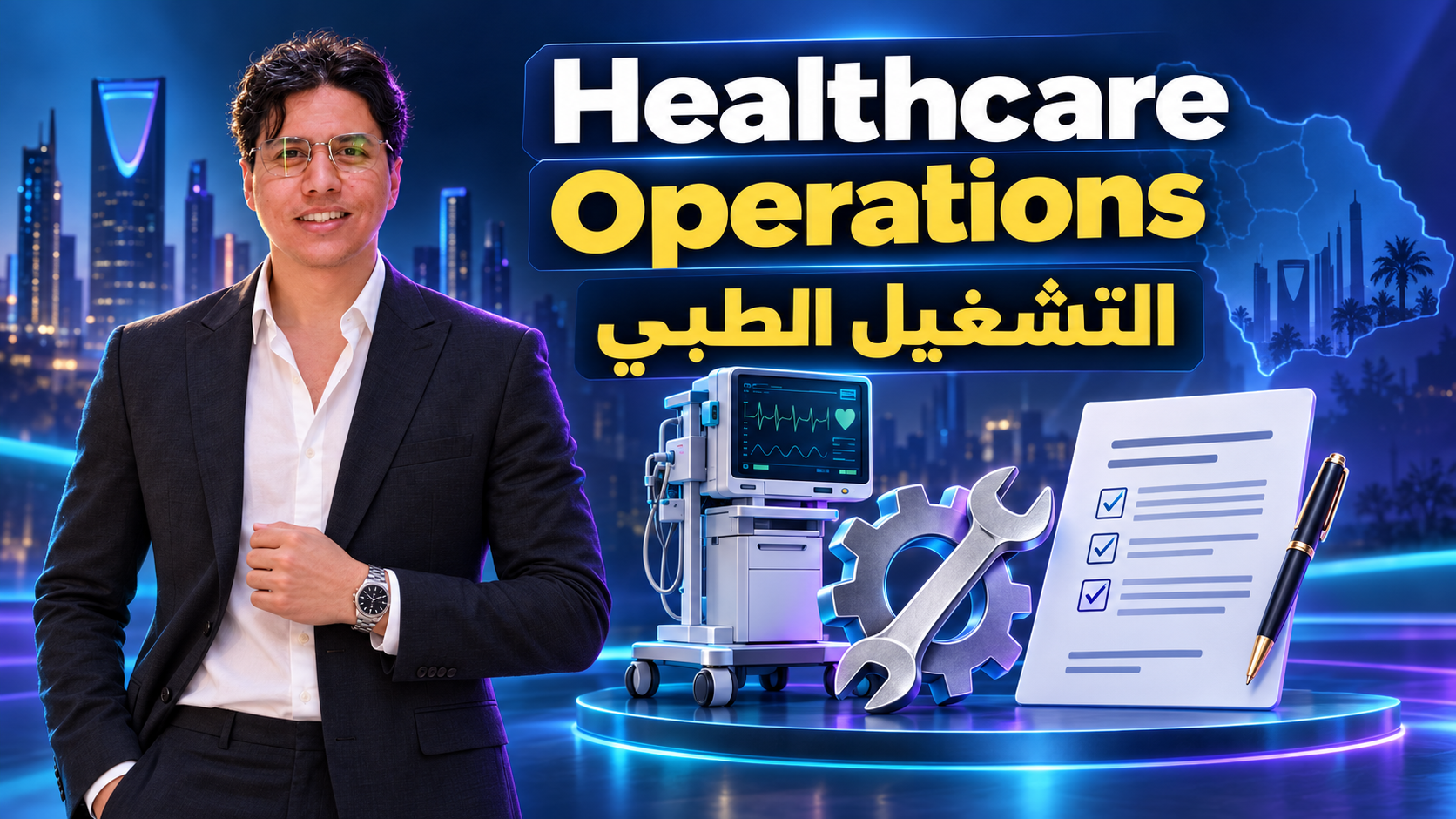
Scientific & Medical Equipment House (SMEH, «دار المعدات») has moved a Riyadh healthcare-services project from award to signed contract. Argaam reported the development on 15 October 2026. The company’s own announcement confirms signing and receipt of its contract copy on 14 October: SAR 11,920,450.52 including VAT, over three years, for medical operations and medical-equipment maintenance at the General Security Aviation Command’s medical centers in Riyadh.
The commercial lesson for healthcare suppliers is practical: a contract announcement can establish a reference point for a service proposition, while the strength of that proposition still depends on delivery evidence. This article separates the disclosed milestone from a proposed growth and service-management approach. It does not claim access to the contract’s detailed service levels or to the client’s operating data.
What changed, and when
The company explicitly connects the signed agreement to an earlier award dated 6 August 2026, announced on 9 August. The October event is therefore a signing milestone for an existing project. Counting both announcements as separate contract wins would double-count the same business.
| Milestone | Verified date or period | What it means |
|---|---|---|
| Project award | 6 August 2026 | Earlier procurement milestone |
| Earlier award announcement | 9 August 2026 | The award entered public reporting |
| Signing and receipt of contract copy | 14 October 2026 | New milestone confirmed by SMEH |
| Argaam report | 15 October 2026 | Date of the current news report |
| Expected financial impact | From Q4 2026 | Company expectation, not a reported result |
Source: SMEH’s contract announcement, with the current news date from Argaam. The disclosed duration is three years; it does not establish an exact service-expiry date. The company also states there are no related parties.
Read the money at the right level
The precise disclosed value is SAR 11,920,450.52 including VAT, approximately SAR 11.92 million. That is the total contract amount across its stated term. It is not a quarterly revenue figure, a net-profit contribution or evidence of cash already collected. The announcement supplies no contract-level profit margin, collection schedule or allocation of revenue by quarter.
SMEH expects an effect on its results from Q4 2026. The word “expects” matters: it is a forward-looking company statement. Multiplying the headline value into a growth forecast, or dividing it evenly across twelve quarters and presenting the result as guidance, would add assumptions the announcement does not support. A single contract also cannot establish the size or growth rate of the Saudi healthcare-outsourcing market.
For a commercial team, keep separate fields for award value, signed value, operational progress, invoiced amounts and collections. Finance should own the accounting interpretation. A sales dashboard that combines these stages into one “revenue” number creates a false sense of certainty and makes later reconciliation harder.
The service proposition spans operations and equipment reliability
The disclosed scope combines medical operations with equipment maintenance. A useful supplier proposition should explain how responsibilities connect across those activities: who receives a fault report, who assesses urgency, who coordinates the response and who confirms closure. These are recommended questions for comparable services, not claims about unpublished terms in SMEH’s agreement.
The problem for buyers is often the gap between a broad promise and an observable operating process. A phrase such as “comprehensive healthcare solutions” gives procurement little to evaluate. A clearer proposal identifies the covered service, exclusions, staffing responsibilities, escalation route and evidence available for review. Any response-time or uptime commitment must come from an approved scope and demonstrated capability.
The marketing task is to make that process understandable without overstating it. An illustrative workflow can help a buyer see the handoffs. A properly authorized case study can later show measured execution. Neither should imply access to a named client’s confidential facilities, personnel or medical information.
Build a credible healthcare B2B evidence pack
Start with a factual one-page service description. Separate public contract facts from the supplier’s own operating model. Include a dated scope summary, an accountable service contact and a description of how performance is reviewed. Avoid presenting an award announcement as a client testimonial or permission to use its logo.
Next, agree internally which measures can support commercial claims. Candidate measures include preventive-maintenance tasks completed on time, unresolved faults by age, time to restore service and repeated failures. Each needs a definition, denominator, reporting period and data owner. These are proposed measures, not published SMEH results or contractual obligations.
For example, a maintenance-completion percentage needs both the number of tasks completed on time and the number due in the same period. Without that denominator, a large completed-task count may conceal an expanding backlog. Keep clinical outcomes separate from equipment-service metrics unless a valid study supports a relationship.
Turn interest into qualified demand
For suppliers pursuing comparable work, use Arabic and English service pages that describe capabilities precisely and direct prospective organizational buyers to a suitable contact. A useful inquiry form asks about service scope, location and procurement stage. It should not invite patients to submit medical information through a general business-development form.
Test the proposition with a bounded group of relevant organizational prospects. Track qualified conversations, progression to a technical review and the reasons opportunities do not progress. Record the period and the number of opportunities behind every rate. More website traffic alone does not establish stronger demand for a specialized operating contract.
Review commercial promises with delivery and finance before expanding promotion. If prospects repeatedly ask about a capability the team cannot demonstrate, improve the offer or clarify its boundary before buying more attention. This connects growth spending to what the organization can reliably provide.
Strategic takeaway
The new fact is a signed, three-year SAR 11.92 million VAT-inclusive contract, following an earlier award. Its broader value as a marketing example is the discipline it demands: distinguish stages, describe the service clearly, and support future claims with measured delivery. Sustainable healthcare B2B growth depends on the buyer being able to understand and verify the promise.
This is operational and marketing analysis, not investment advice. No conclusion about SMEH’s share value, future profitability or service quality follows from this announcement alone. The cover is an original illustrative composition, not documentary imagery of the project.
Sources
- Argaam: contract-signing report, 15 October 2026
- SMEH: primary contract announcement and disclosed financial-impact expectation
- Saudi Exchange: official announcement linked by SMEH. The company’s reproduced announcement was used for verification; the Exchange page was not independently readable during this review.
Comments
No published comments yet.