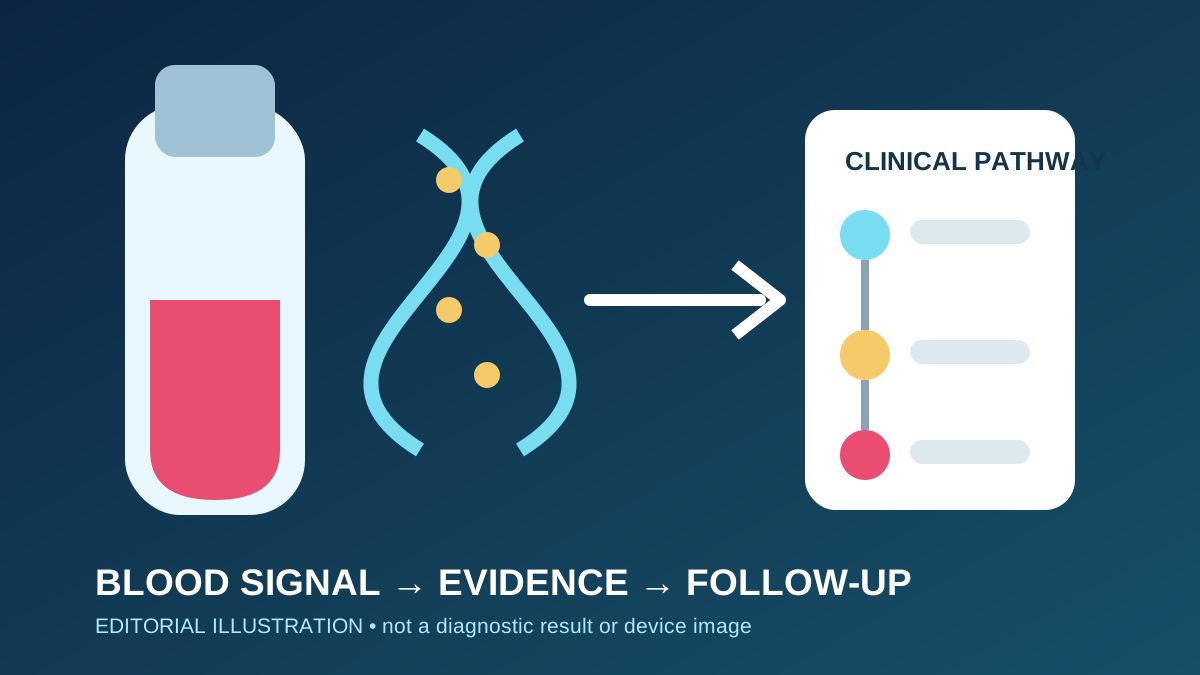
The US FDA's Molecular and Clinical Genetics advisory panel voted on 23 September 2026 that GRAIL's Galleri multi-cancer early-detection test was safe and effective and that its benefits outweighed its risks. The FDA is not required to follow that recommendation, so Galleri is not yet an FDA-approved screening test. The FDA meeting record and FDA panel questions define the proposed use and the evidence under review.
How the test is intended to work
Galleri analyzes cell-free DNA from a blood sample with next-generation sequencing. It looks for cancer-associated methylation patterns and, when it detects a signal, predicts a likely cancer signal origin to guide follow-up. It is intended for adults aged 50 or older. A positive result is not a diagnosis and requires further imaging, procedures or specialist assessment; a negative result does not exclude cancer or replace established single-cancer screening.
GRAIL says the test can detect signals associated with more than 50 cancers and identify the likely origin of a detected signal with high accuracy. Those company performance claims must be interpreted alongside evidence uncertainty. Reuters reported that a UK trial did not significantly improve early detection or reduce all late-stage diagnoses under its primary comparison, while later analysis showed fewer stage IV diagnoses in 12 deadly cancers by the third screening round. Researchers still do not know whether this screening approach reduces cancer mortality. Reuters summarized the evidence and coverage debate on 2 October.
Approval is only one part of market adoption
The test is currently sold in the United States as a laboratory-developed test and generally requires out-of-pocket payment. FDA approval could open a route toward broader reimbursement, but payers will still assess clinical benefit, downstream diagnostic costs and eligibility. The commercial market is therefore not simply the number of people over 50 multiplied by the test price.
Health systems also need diagnostic capacity. A screening program that identifies more signals creates demand for imaging, biopsy, pathology, counseling and navigation. Without a defined follow-up pathway, patients can face anxiety, delay or unnecessary procedures while providers absorb operational costs.
A responsible readiness framework
Before offering any multi-cancer screening product, a provider should establish eligibility criteria, informed-consent language, result communication, referral ownership and a maximum time to diagnostic resolution. Model expected positive results, available imaging and specialist slots, false-positive workups and patient out-of-pocket exposure. Track time to follow-up, completed diagnostic workups, cancers confirmed, stage distribution, complications and patient-reported anxiety.
Marketing must never describe the test as a diagnosis, a guarantee or a replacement for mammography, colon screening or other guideline-based programs. The service page should state the current regulatory status and explain what happens after either result.
GCC implications
Gulf health systems may see demand from preventive-health and executive-screening programs. Adoption should wait for local regulatory authorization, evidence review and payer policy. A credible program would combine laboratory quality, oncology referral networks, Arabic and English counseling and data governance rather than importing a test as a premium wellness product.
Karim's strategic takeaway
The opportunity is not a dramatic blood-test campaign; it is a trustworthy pathway from eligibility to explanation, result and diagnostic closure. Healthcare brands that communicate uncertainty honestly and prove follow-up performance will create more value than those that advertise the largest number of detectable cancers.
Comments
No published comments yet.