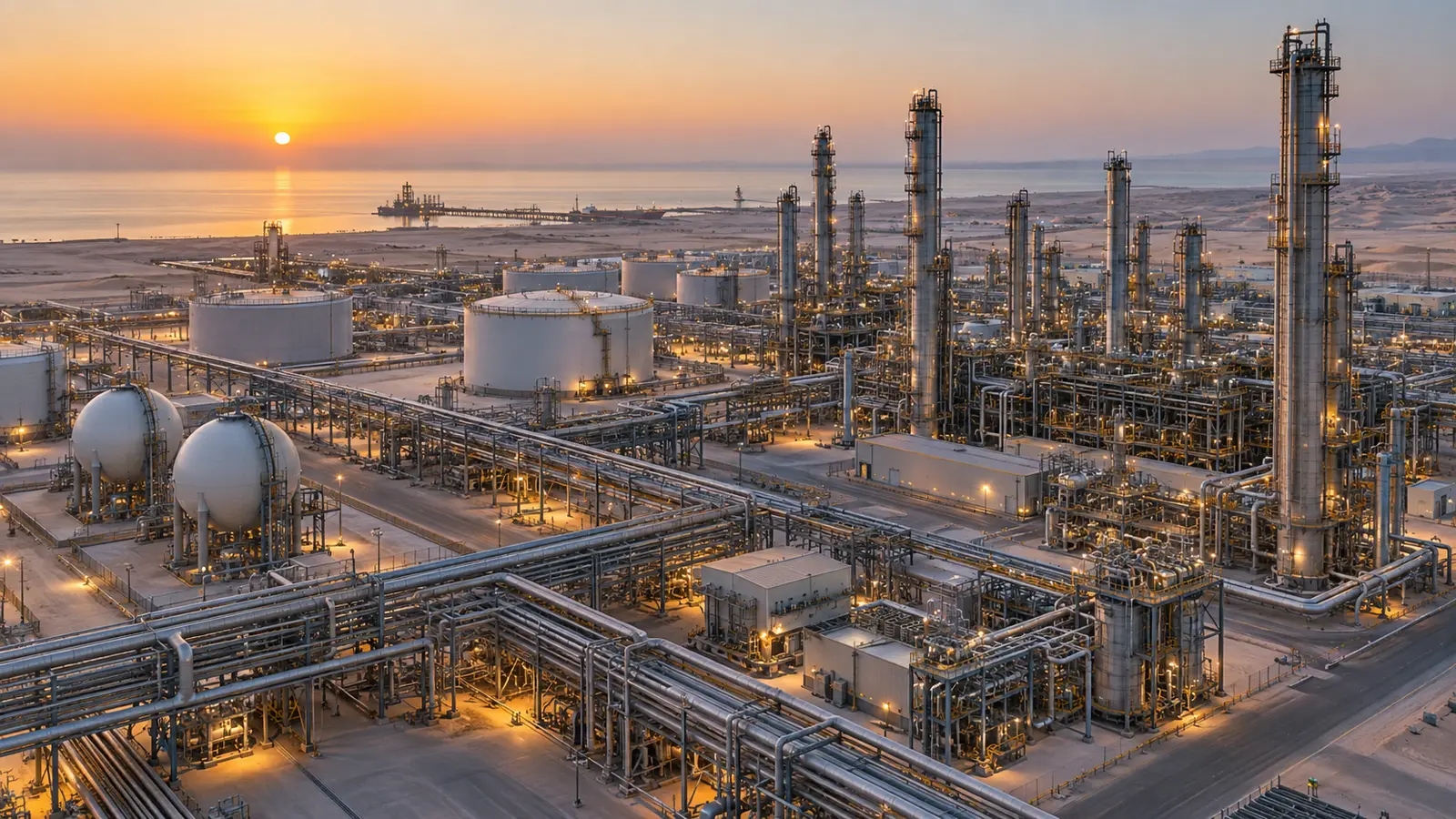
Dow is considering an exit from its 35% holding in Sadara Chemical Company, the approximately $20 billion joint venture it built with Saudi Aramco in Jubail. No sale has been agreed, and possible outcomes range from an Aramco purchase to a new strategic or financial investor.
The review matters beyond one shareholder. Sadara is a major piece of Saudi Arabia's downstream industrial system, capable of producing more than three million metric tons of chemicals and plastics a year. Its next ownership structure could influence investment, market access and the way its output connects to manufacturing customers.
What is under review
Reuters reported on 9 September 2026 that Dow is assessing options for the stake, while stressing that no final decision has been made. Saudi Aramco owns the remaining 65%.
Dow reported a negative investment balance of $793 million in Sadara at 30 June. The review arrives during weak global chemical demand, oversupply and higher operating and logistics costs. Those conditions make the economics of large, export-oriented assets harder even when their engineering capability remains strategically valuable.
Why the asset still matters to Saudi industry
Sadara is not simply a commodity plant. Its product range can support plastics, packaging, construction materials, automotive components and other conversion industries. That makes the quality of the next owner important: capital alone is less useful than customer access, technical expertise and a plan to pull more production into Saudi manufacturing.
A buyer with strong Asian distribution could improve export reach. A downstream industrial partner could instead deepen local demand. Aramco could also use greater control to simplify decisions and align the complex more closely with its broader chemicals strategy.
The questions suppliers and customers should ask
Customers should monitor operating continuity, credit terms, product availability and contract conditions rather than react to the headline alone. The review is not evidence of an agreed shutdown or immediate supply change.
Saudi industrial policy leaders should evaluate any transaction against three outcomes: improved utilisation, more local conversion and more resilient routes to international demand. The most valuable ownership change would strengthen all three.
Karim's strategic takeaway
The strategic opportunity is to convert a difficult cycle into a better commercial architecture. Saudi Arabia gains most if Sadara becomes more connected to end markets and local manufacturers, not merely if one shareholder is replaced by another. For businesses around the complex, the practical move is scenario planning: protect supply now while identifying where a new owner could open customers, products or investment.
Comments
No published comments yet.