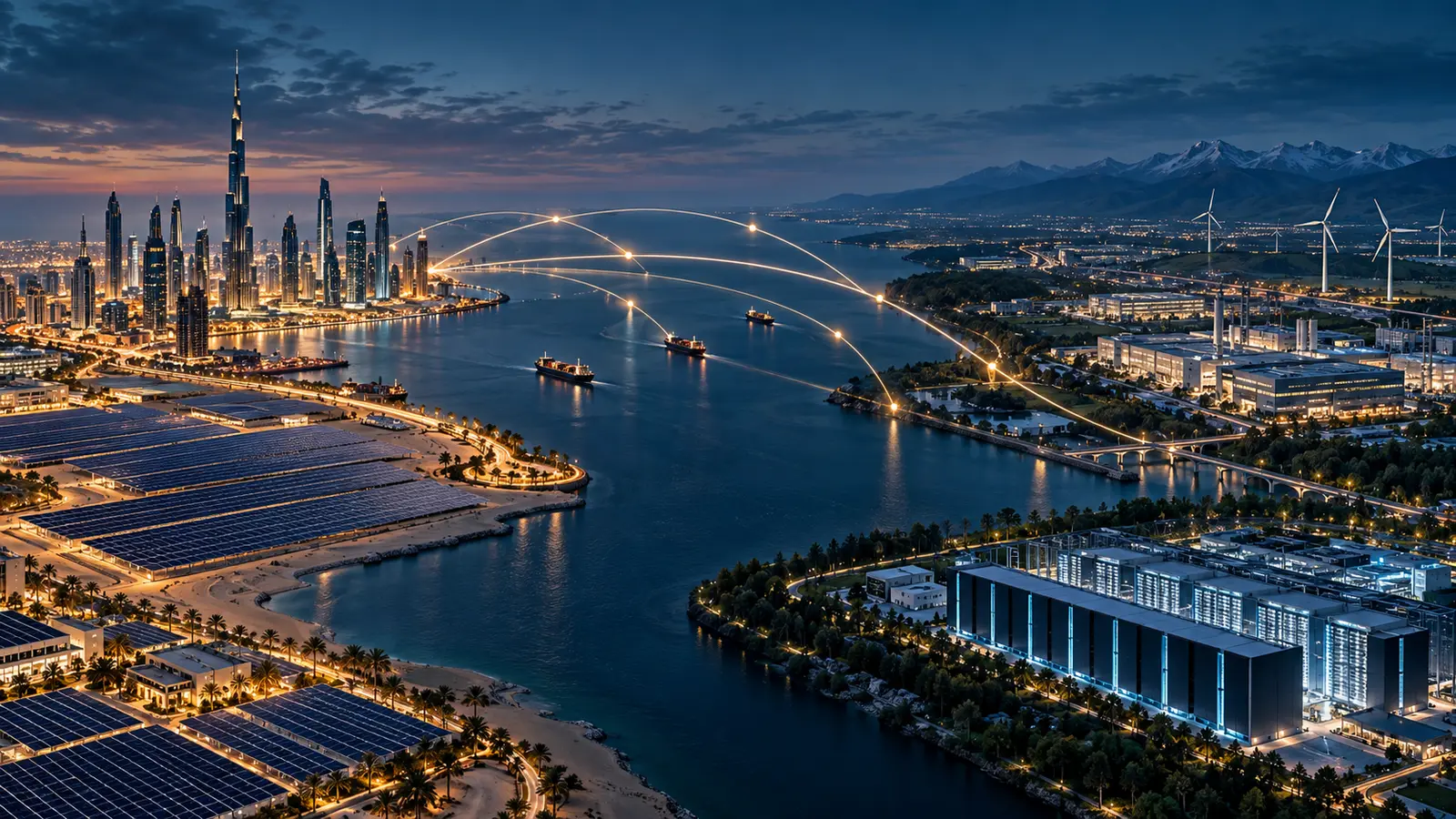
The UAE has moved its German partnership from broad intent to a quantified investment platform. It plans an additional €40 billion of investment in Germany, on top of an existing position of about €34 billion, while companies from the two countries signed 29 agreements worth more than €9.4 billion.
This is a material update to the preliminary deal pipeline discussed a day earlier. The value now lies in how capital, energy, digital infrastructure, transport access and industrial expertise may reinforce one another.
What the new package contains
Reuters reported on 10 September 2026 that the agreements cover areas including digital infrastructure and data centres with capacity approaching one gigawatt, alongside energy, trade and defence cooperation. Emirates also received additional rights for scheduled services between Berlin and Dubai.
The size of the commitments does not mean every project will arrive at once. Each investment will still depend on financing, permitting, power, customer contracts and execution. But the package creates a clearer pipeline for businesses that can supply or operate the underlying systems.
Where the commercial layers sit
Data centres create demand for power, cooling, grid connections, cybersecurity, construction and specialised maintenance. Renewable-energy and hydrogen projects need equipment, certification, transport and industrial offtakers. New flight access can support business travel, tourism and high-value logistics.
The opportunity is therefore distributed across supply chains. GCC companies do not need to be the headline investor to participate; they can provide regional distribution, operating expertise, customer access or project sites.
How businesses should position themselves
The strongest proposal will specify a measurable role. A technology vendor might offer a pilot that reduces data-centre cooling cost. A logistics company might map a corridor for time-sensitive industrial components. A tourism brand might build demand around the additional air link.
Risk management is equally important. Firms should define intellectual-property ownership, local service responsibilities, energy assumptions and performance standards before scale.
Karim's strategic takeaway
The UAE–Germany relationship is becoming an operating platform rather than a collection of diplomatic announcements. For Gulf businesses, the advantage lies in being the connector that can localise German capability and extend it into regional markets. The practical next step is to choose one announced value chain and present a funded, measurable use case—not a generic partnership deck.
Comments
No published comments yet.