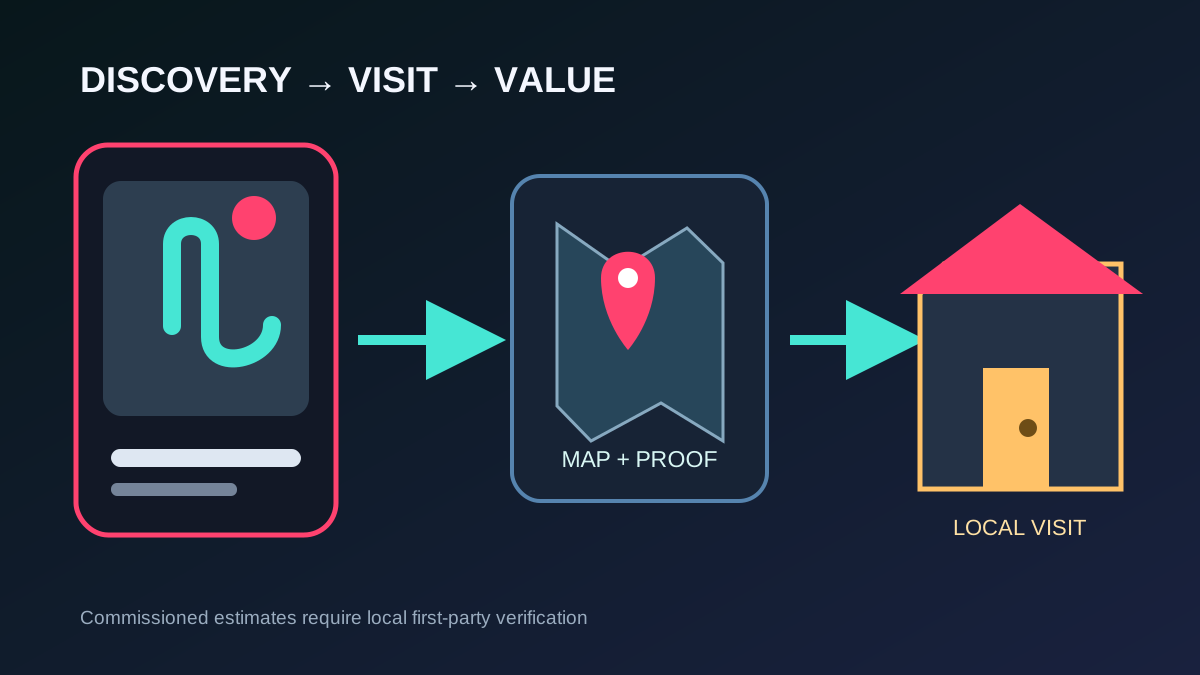
TikTok published a US economic-impact study on 1 October 2026 estimating that activity supported by the platform contributed $81 billion to US GDP and supported 410,000 jobs in 2025. The TikTok newsroom summary says PF Global estimated that 27 million Americans visited an independent shop, café or restaurant for the first time after seeing it on TikTok, generating $4.7 billion in local spending.
Read the numbers correctly
These are modeled estimates, not audited transactions attributed one by one to the platform. The report was commissioned in connection with TikTok and combines economic modeling with survey responses. Self-reported sales improvement can reflect selection bias, memory errors and the fact that stronger businesses may be more likely to use TikTok actively. The numbers are therefore evidence of a meaningful discovery channel, not a guaranteed return benchmark for another market.
The most useful mechanism is visible beneath the headline: a person sees a local experience, searches for more detail, checks location or proof, and then visits, books or buys. Video is performing part of the job once assigned to local search, reviews and word of mouth. Businesses that make the transition from inspiration to action easy are more likely to capture value.
What this means for GCC businesses
The US estimates cannot be imported into Saudi Arabia or the UAE. Platform penetration, local-search behavior, Arabic content supply, travel distance, payment preferences and category regulation differ. Yet the operating hypothesis is highly testable in restaurants, tourism, retail, beauty and elective healthcare: a useful video can create demand for a place, not only for an online product.
Healthcare requires a distinction between discovery and clinical suitability. A patient may discover a clinic through TikTok, but the booking path must present qualifications, realistic expectations, pricing context and an appropriate consultation rather than promise an outcome in the feed.
A local-discovery measurement design
Choose five location-led videos: a neighborhood guide, service demonstration, staff expertise, common question and customer-experience walkthrough. Give each a unique booking link or code and keep the offer constant. At reception or checkout, capture the first discovery source and the last action source separately. Review qualified enquiries, direction requests, appointments, attendance, transaction value and repeat visits after 30 days.
Use a geographic holdout where possible: run concentrated content and paid support around one catchment area while keeping a comparable area unchanged. This will not create laboratory certainty, but it is stronger than asking followers whether they like the videos.
Karim’s strategic takeaway
Do not use the $81 billion figure in a GCC sales forecast. Use it to justify a disciplined experiment that connects TikTok discovery to CRM, maps, calls and physical attendance. The competitive advantage lies in proving the local conversion chain with first-party data.
Comments
No published comments yet.