
On November 18, Spaceback announced general availability of Interactive Display Units in a company release distributed by Business Wire. The units can reuse a brand’s social content in formats such as quizzes or polls. The new development is the playable format, not Spaceback’s earlier ability to repurpose social creative for display.
Choose a useful interaction
Take a furniture retailer with a social post showing two desk sizes. A useful interaction is choosing the space available and seeing which desk dimensions to consider. A generic wheel might generate more touches but answer none of the questions that hold back a purchase. Keep the activity short, be clear that it is an ad, and provide a direct route to the same product page for people who prefer not to play. Check usage rights for the original images and audio; permission for an organic post does not by itself establish permission for a paid placement elsewhere.
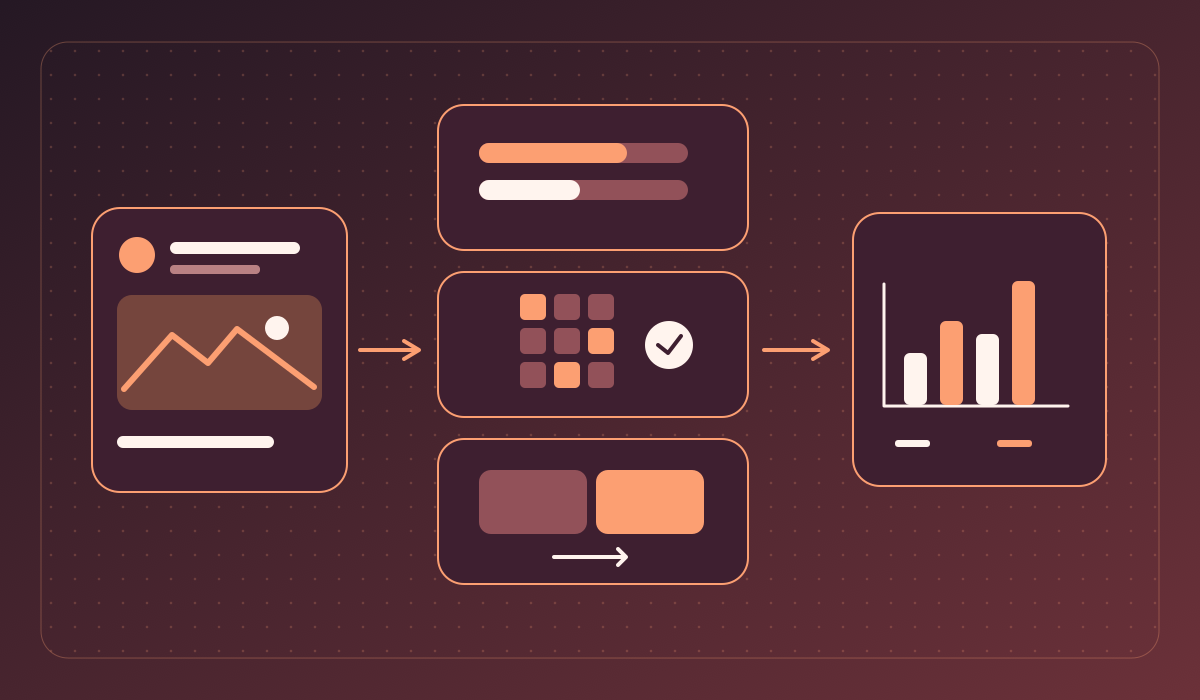
Original site diagram showing how a post can become several measurable interactive formats. It contains no campaign results.
Compare the same offer
Build a static version and a playable version from the same material. Set the same offer, destination, audience eligibility, time period and buying constraints. Where feasible, randomly allocate exposure and prevent overlap. If the formats cannot share inventory or differ on price, record those differences and interpret the result as a comparison of packages, not a clean creative effect. Before launch, verify that the action works on a phone, the static fallback makes sense, and the ad does not hijack scrolling.
Separate play from progress
In a synthetic example, each version receives 20,000 impressions. The playable version records 1,200 qualified starts and 600 completions: 6% of impressions start the activity and 50% of starts finish. Yet the static ad produces 300 verified landing visits and 30 orders, compared with 280 visits and 28 orders from the playable ad. Both have 10% orders per verified visit; the static ad produced more visits and orders in this sample. If each costs $600, the observed cost per order is $20 and about $21.43, respectively. Those small counts do not establish a reliable winner.
Check what the events actually mean
Count a start only after a deliberate action, not after rendering. Distinguish a completed interaction from the outbound click and use landing-page records to validate visits. Define the attribution window before reviewing outcomes and separate repeat visits from distinct orders. Inspect discrepancies by placement and device. A cramped placement may register many touches due to its layout rather than useful engagement; looking only at an aggregate interaction rate would conceal that issue.
Agree on an expansion rule
If the goal is qualified product discovery, set a minimum observation window and use verified downstream behavior as the main decision signal. Keep starts and completions as diagnostics. Review costs and compatibility for the actual placements rather than assuming every buying route is equivalent. Expand when results and usability both justify it. If people complete the activity but rarely reach the landing page, use that evidence to revise the activity or keep the static format; more play is not automatically more value.
Comments
No published comments yet.