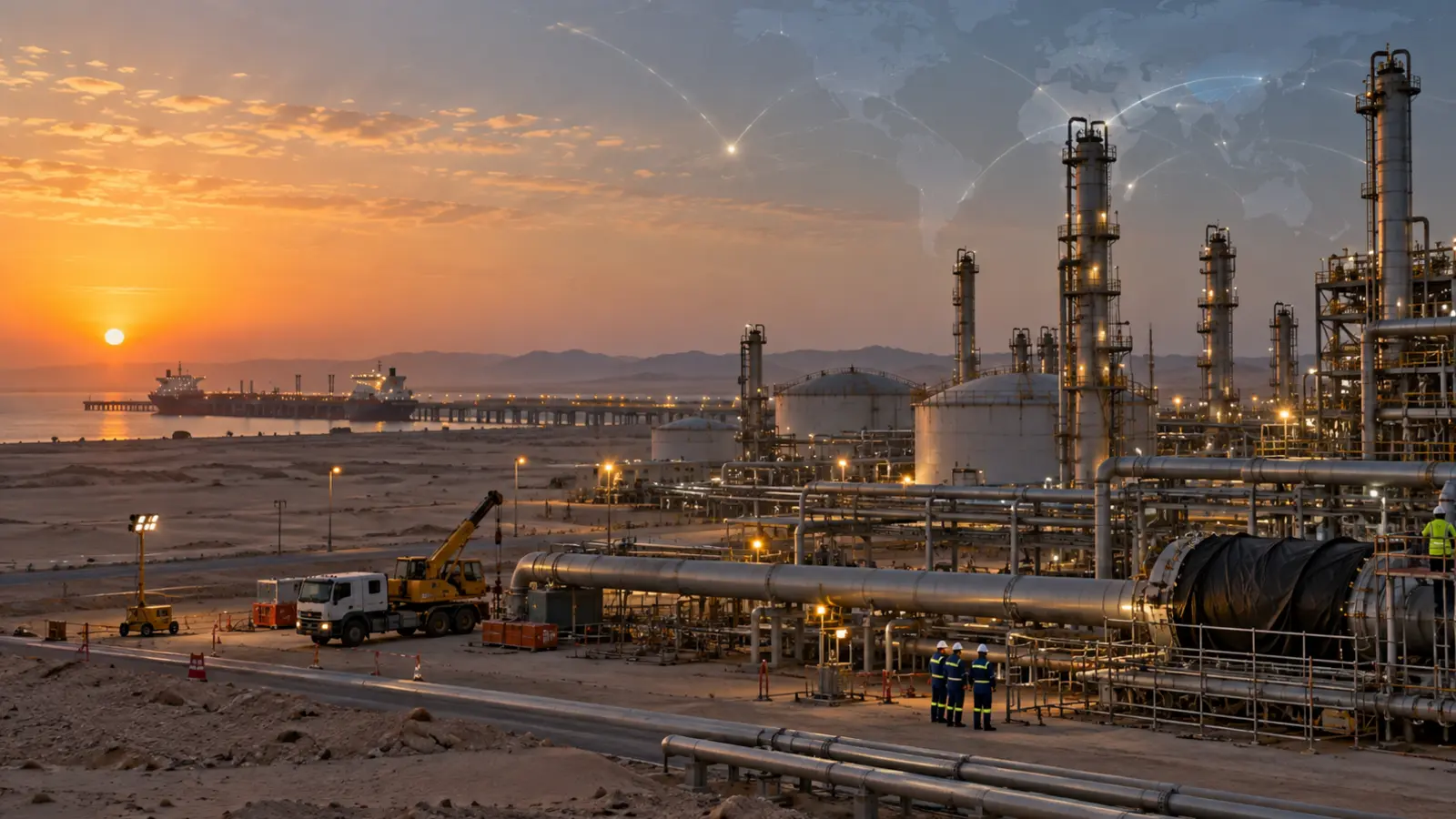
A new wave of missile and drone attacks on Saudi cities and energy infrastructure has moved regional risk from scenario planning into day-to-day commercial decisions. The immediate market signal was visible in oil: Brent crude approached $100 per barrel as traders priced a higher probability of supply disruption around the Gulf and the Strait of Hormuz.
For Saudi and GCC businesses, the question is no longer whether geopolitical volatility can affect operations. It is how quickly higher energy, shipping and insurance costs will move through inventory, pricing, customer demand and marketing commitments.
What changed in the latest escalation
Reuters reported on 8 September 2026 that Houthi strikes hit four cities in southern Saudi Arabia, injured 73 people and caused fires at oil facilities. The attacks represented a material expansion of the conflict’s direct impact on the Kingdom.
By 9 September, Reuters reported that Brent was nearing $100 as attacks on energy and shipping assets increased the market’s risk premium. The price movement matters because fuel and freight costs influence almost every commercial category, even when a company does not buy oil directly.
Markets remained cautious rather than panicked
The initial equity response was comparatively measured. Saudi Arabia’s benchmark index closed 0.1% higher on 8 September, while Saudi Aramco gained 0.8%. That suggests investors had not moved into broad capitulation, but it should not be interpreted as proof that operating risk is contained.
Equity markets can absorb a short shock while supply chains experience slower, more uneven consequences. Freight surcharges, route changes, insurance restrictions and supplier lead times may take days or weeks to appear in management reporting.
The commercial transmission chain
The likely sequence is energy cost to logistics cost, then inventory cost, then price or margin pressure. Retail, automotive, construction, healthcare supplies, food and e-commerce are especially exposed to physical fulfilment. Service businesses may feel the effect through transport, utilities and changing household confidence.
Marketing teams also face a timing problem. A promotion planned under one cost structure may become unprofitable by the time demand arrives. A campaign can damage the brand when it promises availability or delivery that operations cannot maintain.
A practical response for Saudi businesses
Commercial leaders should create at least three short-term scenarios based on energy prices, route availability and supplier lead times. Each scenario should define pricing authority, minimum stock, promotional limits and the customer communication required when delivery changes.
Media and sales plans should use live operational signals. High-volume campaigns for constrained products should be paused or redirected, while messaging for available alternatives can be accelerated. Healthcare organisations should separately protect critical medicines and devices whose interruption carries clinical consequences.
Karim’s strategic takeaway
Resilience is now part of growth strategy. The strongest companies will not stop marketing; they will connect marketing to inventory, margin and fulfilment in real time. Honest promises and fast adaptation can protect trust when competitors continue selling against assumptions that are no longer true.
Comments
No published comments yet.