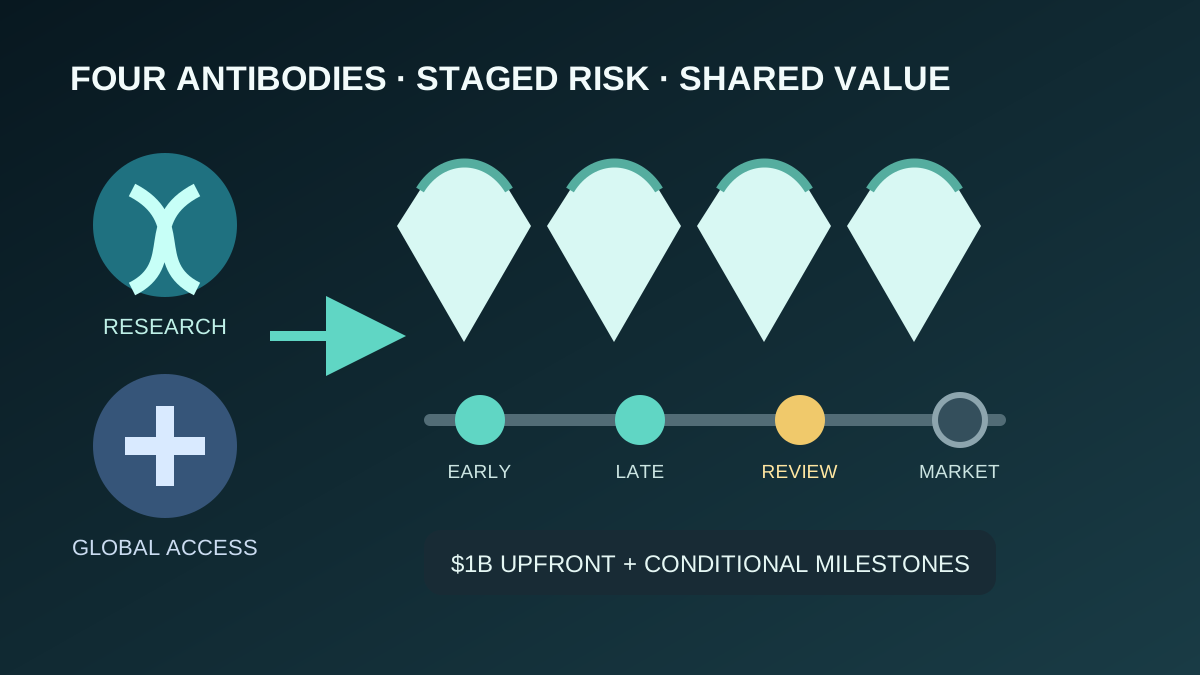
Sanofi and Regeneron agreed on 1 October 2026 to co-develop four antibody medicines targeting type 2 inflammation. According to Reuters’ account of the agreement, Sanofi will pay $1 billion upfront and up to $7 billion through development, regulatory and commercial milestones. The companies will share development costs and future profits equally; Regeneron leads research and Sanofi handles global sales if products are approved.
Why the headline is not the cash paid today
“Up to $8 billion” combines a fixed upfront payment with conditional payments that may never be earned. One candidate, REGN20423, is in early-stage testing for atopic dermatitis; the other three are expected to enter clinical testing in 2027. Safety, efficacy, differentiation, manufacturing and regulatory review all remain ahead. The structure shifts part of the risk into milestones while still assigning a substantial value to access and collaboration.
The deal also settles prior litigation and resets a partnership that produced Dupixent. Strategically, Sanofi is trying to deepen a successful biological pathway while preparing for eventual pressure on the older product’s exclusivity. This is portfolio management, not evidence that the new candidates will reproduce Dupixent’s outcome.
Who may benefit if the science succeeds
Patients with diseases driven by type 2 inflammation could gain options designed around different targets, dosing intervals or combinations. Specialists and providers may gain a broader treatment toolkit. The companies gain a shared discovery-to-commercialization system: Regeneron contributes research capability, while Sanofi contributes global market access.
Payers and hospital groups will demand comparative evidence. A new antibody must show more than biological activity; it may need better outcomes, convenience, safety, adherence or total cost than established care. High headline investment can also raise pressure to position a product aggressively, making balanced education essential.
A readiness plan for GCC health organizations
Do not build a service line around experimental candidates. Instead, map current eczema, asthma and related inflammatory-care pathways: diagnostic delay, referral patterns, biologic eligibility, payer authorization, adherence and follow-up. Establish real-world outcome measures now so future therapies can be evaluated against a local baseline.
Medical teams should monitor registered trials and peer-reviewed data rather than promotional summaries. Procurement and payer teams can model scenarios for cold chain, administration, patient support and authorization, while communications teams prepare disease education that does not imply approval or superiority.
Karim’s strategic takeaway
The commercial lesson is platform depth: one successful partnership can generate knowledge, infrastructure and trust that support the next portfolio. For GCC providers, the defensible response is not early promotion; it is owning the patient pathway and the outcomes data that determine whether any future medicine creates value.
Comments
No published comments yet.