What changed and why it is more than a media-policy footnote
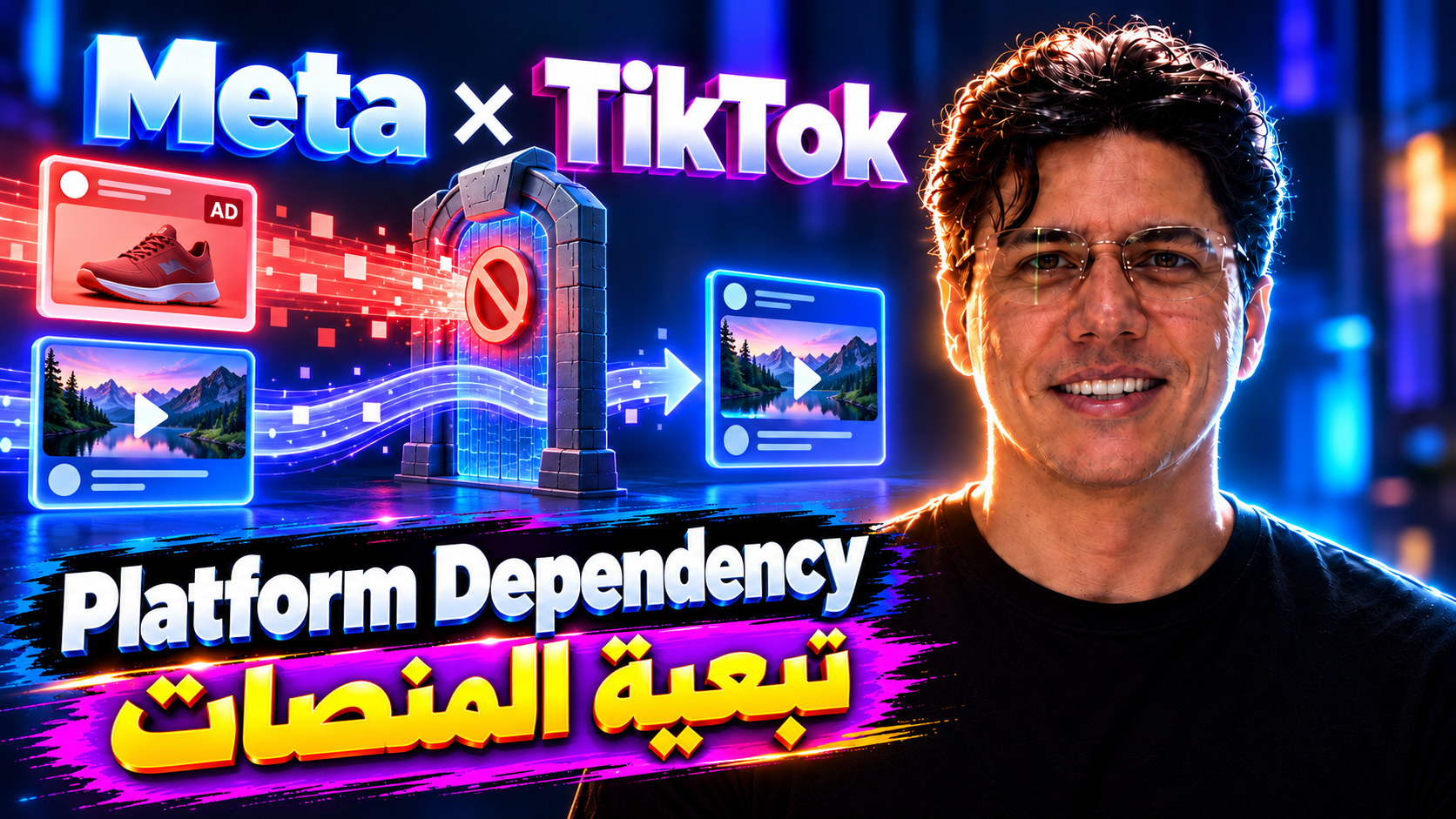
Meta has stopped ByteDance and TikTok from buying advertising across Facebook and Instagram in the United States, Canada, Egypt, Indonesia, Japan, Thailand and Vietnam. The restriction also covers third-party advertisements that send people to TikTok, according to reporting published on 8 October 2026 by Reuters and The Verge. That second detail is commercially important: this is not only a rule about which company may open an ad account. It limits a paid acquisition route whose destination is a rival social platform.
The immediate story is a platform conflict, but the useful lesson is about concentration risk. A marketer can own the campaign idea, creative files and landing-page data while still renting every critical distribution junction. The source platform may set the auction rules, the destination platform may control conversion access, app stores may mediate installation, and measurement vendors may interpret the handoff. A policy change at any junction can break a campaign without changing consumer demand. The ban therefore belongs in a growth-risk register, not only a social-media news file.
The restriction is geographically selective. Teams should not assume one global rule, and they should not use a result from an unaffected market as proof that a blocked route still works elsewhere. Campaign governance must be country specific, account specific and destination specific. The correct first action is to verify current platform documentation and account notices, then freeze affected cross-platform launches until the legal, policy and measurement owners confirm an allowed route.
How the paid cross-platform mechanism worked
A typical cross-platform growth loop starts with an audience on one network and finishes with an action on another. A brand might advertise a TikTok creator series on Instagram, promote a TikTok profile to an established Facebook customer base, or use Meta's targeting and auction to seed attention for a short-video activation. The ad impression, click and optimization event sit inside Meta's infrastructure, while the destination experience, follow, view or engagement sits inside TikTok. The advertiser joins two systems through a URL and a measurement plan.
That connection creates three layers of dependency. First is eligibility: the source platform decides whether the advertiser, creative and destination are permitted. Second is optimization: the source platform needs a reliable event that represents value. A click to another social app may be observable, but downstream viewing quality or a follow may be harder to feed back, so the algorithm can optimize a proxy rather than the business result. Third is attribution: both platforms can report activity, yet neither view alone proves incrementality. A high click-through rate can coexist with weak qualified attention, and a rise in TikTok followers can include people who would have arrived organically.
The new restriction closes the first layer before bidding begins in the named markets. Creative quality cannot compensate for ineligibility. Changing copy while keeping the same prohibited destination is not a recovery plan, and routing through a misleading intermediary creates policy, trust and measurement risk. The safer response is to redesign the journey around owned destinations or permitted native objectives rather than trying to disguise the handoff.
Who benefits, who loses and what remains uncertain
Meta reduces paid support for a direct competitor and may retain more user activity inside its own products. TikTok loses a configurable acquisition channel in the affected countries. Agencies lose a familiar bridge between audience pools, while advertisers with strong owned channels gain relative resilience. Publishers, creators and retailers that rely on one social profile as the final destination carry the highest operational exposure because a platform policy can remove their acquisition path overnight.
The decision does not prove that all organic links to TikTok are blocked, that every ByteDance product is treated identically in every market, or that the policy will remain permanent. It also does not demonstrate that Meta inventory is less effective for ordinary campaigns. Those are separate questions. The confirmed fact is the reported paid-ad restriction in the specified countries. Teams should label everything else as an assumption and maintain a dated evidence log, because enforcement detail, appeal routes and geography can change.
For consumers, the effect may be subtle. They will see fewer paid prompts moving them from Meta apps to TikTok, but they can still encounter creators, references and organic discovery. For regulators, the episode illustrates how a large platform can influence competition through advertising access. A marketer does not need to take a legal position to recognize the strategic implication: media access is a revocable dependency.
A 72-hour response plan for active campaigns
Start with an inventory, not a broad pause. Export every live and scheduled Meta ad whose advertiser, creative or final URL is connected to ByteDance or TikTok. Record market, account, objective, spend, final URL, redirect chain, optimization event, audience and owner. Separate campaigns in the seven named markets from unaffected geographies. Preserve screenshots and export performance before editing so the team has an audit trail and a clean comparison period.
Next, classify the business purpose. Some ads are trying to grow a TikTok audience; some are promoting a creator partnership; some merely use TikTok as evidence while the real conversion occurs on an owned site. The recovery route differs. Audience-growth campaigns may need native TikTok acquisition or organic creator distribution. Commerce campaigns should land on a product or content page the brand controls. Partnership campaigns may be rebuilt as native Meta creative, provided rights and disclosures allow it. Do not replace one broken URL with another until the measurement owner defines the new success event.
Then inform stakeholders with precise language. Say which markets and routes are affected, what is paused, what evidence supports the decision and when the next review occurs. Avoid declaring a worldwide ban if the evidence is regional. Finance should know the unspent budget, creative teams should know which assets remain usable, and client or executive teams should receive a decision rather than a stream of platform speculation.
Redesigning the funnel around owned assets
The durable architecture is source platform to owned value to optional social continuation. An owned landing page can carry the campaign promise, consent controls, first-party analytics, an email or WhatsApp opt-in where lawful, and links to multiple community destinations. It should not be a thin redirect page created only to evade a platform rule. It must give the visitor genuine value: a guide, product explanation, event registration, tool, offer or evidence hub.
This design improves continuity and measurement. The source network can optimize to a meaningful event on the owned property. The brand can use consistent UTM parameters, server-side event validation where appropriate and a clearly defined conversion. A visitor may still choose TikTok later, but the brand has not made a rival social profile the sole conversion surface. The same landing page can support search, direct traffic, creator links and other paid channels, reducing duplication.
For healthcare organizations in Saudi Arabia and the GCC, the owned layer is even more important. A clinic should not push sensitive patient questions into public social comments or collect health details through an uncontrolled form. The landing experience needs approved claims, clear service scope, consent language, secure booking and a privacy review aligned with local rules. Social media can create awareness; clinical and personal interactions should move to approved channels. The policy event is therefore an opportunity to repair governance, not simply replace traffic.
A measured replacement test
Build a four-cell test rather than moving all budget at once. Cell one is the historical cross-platform route, retained only where it is allowed and ethically suitable. Cell two is a native Meta content or lead objective. Cell three sends traffic to an owned content page. Cell four uses creator or community distribution without paid cross-platform redirection. Match markets, audience maturity, creative theme and time window as closely as practical.
Define the primary metric before launch. If the goal is qualified demand, use cost per qualified inquiry, booking or completed registration, not outbound clicks. If the goal is audience development, use retained viewers, opted-in subscribers or repeated site visits. Add guardrails: policy rejection rate, landing-page speed, bounce or engaged-session rate, consent completion, lead validity and response time. A replacement that produces cheap clicks but creates unusable leads is not a recovery.
Use at least one incrementality-oriented technique. A geographic holdout, audience split or time-boxed pause can reveal whether the new route adds outcomes rather than reallocating people who would convert anyway. Small teams can begin with a disciplined pre/post comparison and explicit limitations. Larger advertisers should use randomized or matched-market designs when available. Report confidence and sample limitations instead of treating a short spike as a durable effect.
Creative and operational implications
Cross-platform promotion often reuses a frame designed for the destination network. Once the destination changes, the creative must change too. A Meta-native video should deliver its core value without requiring the viewer to leave for context. An owned-page ad should make a clear promise that the landing page immediately fulfills. Creator content requires usage rights, disclosure and a versioning plan so the brand can deploy it lawfully across channels.
Create a modular asset system: a verified claim library, short and long video cuts, stills, captions, landing-page modules and market-specific disclaimers. Store source files and rights centrally. If another platform route closes, the team can reconstruct the campaign without recreating every asset. This is business continuity for marketing operations.
The media team should also establish a destination-eligibility check in launch QA. Confirm the final URL, redirects, app deep link, geography, advertiser identity and current policy. Add a named owner and timestamp. A checklist will not prevent a platform from changing its rules, but it reduces the chance that the team discovers the change through rejected ads after a campaign deadline.
GCC interpretation
Egypt is explicitly included in the reported group, which makes the issue directly relevant to MENA operations. Saudi Arabia and the UAE were not named in the cited reports, so regional teams must not extend the rule by assumption. At the same time, GCC brands frequently run Arabic and English creative across shared agency accounts, regional audiences and cross-border creator programs. One market's restriction can therefore contaminate workflows, approvals and reporting even when another market remains technically eligible.
Use separate country-level campaign structures and destination registers. Record where a creator resides, which rights cover which market, and whether the final experience is localized. Keep Arabic copy natural rather than translating a global workaround. If Egypt is part of a regional buy, isolate it until eligibility and destination are confirmed. The goal is not fragmentation for its own sake; it is controlled evidence and the ability to change one market without disrupting all others.
Karim's strategic decision
Karim should treat the event as a prompt to sell platform resilience as a measurable operating capability. The strategic product is a cross-platform dependency audit: map every paid source, destination, conversion event, data owner and policy gate; score each path by replaceability and business impact; then design an owned-channel alternative for the highest-risk routes. That service is especially valuable for healthcare, education and creator-led businesses whose reputation and lead quality matter more than raw traffic.
The immediate client recommendation is simple: do not chase a hidden workaround. Preserve evidence, pause prohibited routes, redirect investment toward native or owned-value journeys, and test replacements against qualified outcomes. The longer-term recommendation is stronger: no brand should allow one social profile to become its only audience asset, measurement layer or conversion destination. Platform reach remains useful, but resilience begins where the brand controls the experience, consent and customer relationship.
Limits and watchlist
This analysis relies on reports published on 8 October 2026 and should be updated if Meta or TikTok releases detailed public policy language, expands the geography or changes enforcement. The reports do not provide campaign-level performance evidence, market-by-market appeal procedures or a permanent duration. Those gaps matter. A policy story can move faster than formal documentation, and individual accounts may receive different notices.
Maintain a weekly watchlist for four items: official policy text, geography, treatment of third-party advertisers, and allowed destination patterns. Document any account-level enforcement separately from general news. Re-test only after the policy owner approves the route. The decision standard is not whether an ad can technically be submitted; it is whether the route is permitted, transparent, measurable and consistent with the brand's long-term control of demand.
Comments
No published comments yet.